
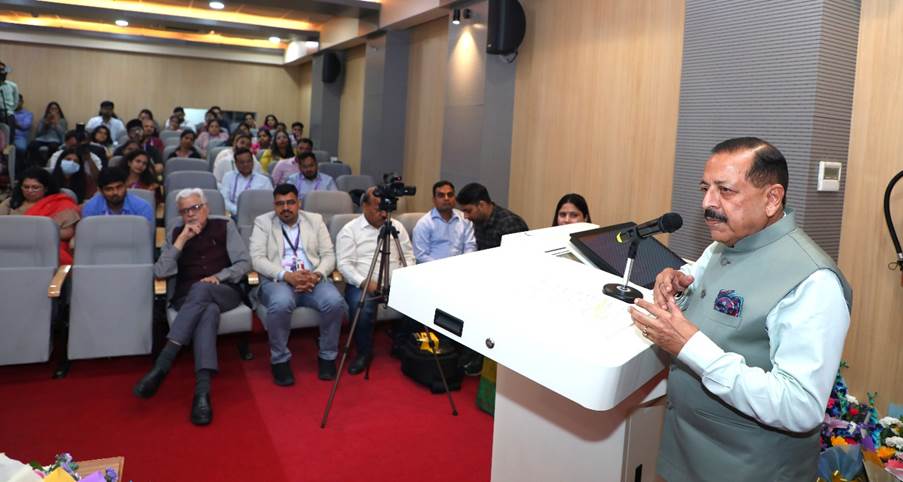
In a major advancement towards self-reliance in pharmaceuticals and biotechnology, India has unveiled its first indigenously developed antibiotic, “Nafithromycin.” This innovative molecule targets resistant respiratory infections and is especially advantageous for at-risk populations like cancer patients and individuals with uncontrolled diabetes. Union Minister Dr. Jitendra Singh announced this milestone during the inauguration of a three-day medical workshop focused on leveraging Artificial Intelligence (AI) for multi-omics data integration and analysis.
Pioneering Indigenous Antibiotic Development
Nafithromycin: A Symbol of Atmanirbhar Bharat
Nafithromycin marks India’s inaugural antibiotic fully conceptualized, developed, and clinically validated domestically. This achievement stems from a collaborative effort between the Government of India’s Department of Biotechnology (DBT) and the esteemed pharmaceutical firm Wockhardt. It effectively combats the escalating issue of antimicrobial resistance in respiratory tract infections.
Dr. Jitendra Singh showcased this as an exemplary model of industry-academia collaboration propelling India’s biopharmaceutical sector forward. He underscored the need to nurture such partnerships to cultivate a resilient, self-sustaining innovation ecosystem.
Revolutionary Advances in Gene Therapy
Successful Indigenous Trial for Hemophilia Treatment
Complementing this, India has made a groundbreaking stride in gene therapy with the successful completion of its first indigenous clinical trial for Hemophilia. Backed by the DBT and executed at Christian Medical College (CMC) Vellore, a leading non-governmental hospital, the trial demonstrated a 60–70% correction rate and zero bleeding episodes in participants.
These results have been featured in the renowned New England Journal of Medicine, highlighting India’s rising prominence in cutting-edge biomedical research. Dr. Singh also revealed that India has sequenced more than 10,000 human genomes, with ambitions to scale this to one million, fostering further genomic breakthroughs.
Launching the AI-Driven Medical Workshop
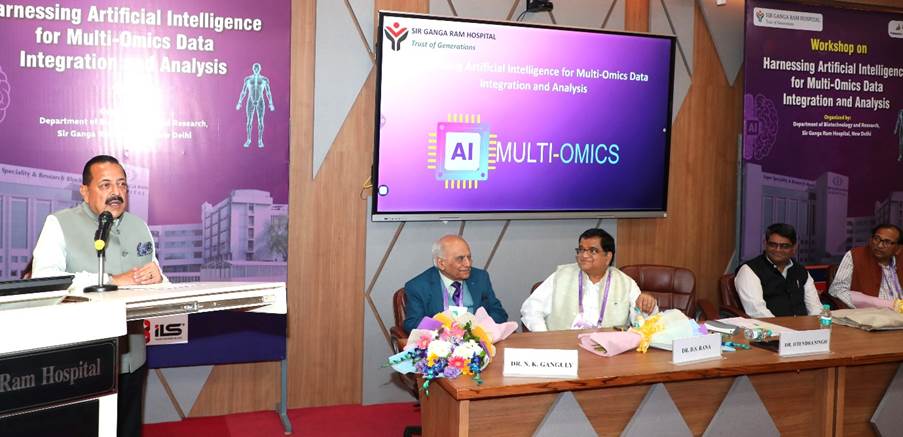
Integrating AI with Multi-Omics Data
Dr. Jitendra Singh officially launched the three-day workshop entitled “Harnessing Artificial Intelligence for Multi-Omics Data Integration and Analysis.” He emphasized AI’s transformative impact on healthcare accessibility, governance, and decision-making.
The Minister illustrated AI’s real-world applications, including hybrid mobile clinics that extend healthcare to rural and remote regions, promoting equity. He also mentioned the AI-powered grievance redressal mechanism by the Department of Administrative Reforms and Public Grievances (DARPG), achieving a 97–98% weekly resolution rate and boosting citizen satisfaction.
Fostering a Self-Sustainable Innovation Framework
Shifting from Government Dependency
To attain global acclaim in research and innovation, Dr. Singh advocated for a self-sustainable ecosystem bolstered by private sector involvement and philanthropic contributions. He observed that leading nations in science prioritize innovation-led models over excessive government funding.
A pivotal step is the Anusandhan National Research Foundation (ANRF), allocated ₹50,000 crore over five years, with ₹36,000 crore sourced from non-governmental entities. This represents a significant evolution in India’s R&D strategy, harmonizing with international best practices.
AI’s Pivotal Role in Healthcare and Governance
Encouraging Interdisciplinary Collaborations
The Minister commended institutions like Sir Ganga Ram Hospital for merging AI, biotechnology, and genomics to enhance healthcare delivery. He called for stronger synergies among government bodies, private hospitals, and research institutions to realize the vision of Viksit Bharat @2047.
Dr. Singh concluded that India is ushering in an era of self-reliance in biotechnology, AI, and genomic medicine. The fusion of innovation, collaboration, and compassion will propel India towards becoming a developed nation and a frontrunner in global science and technology.
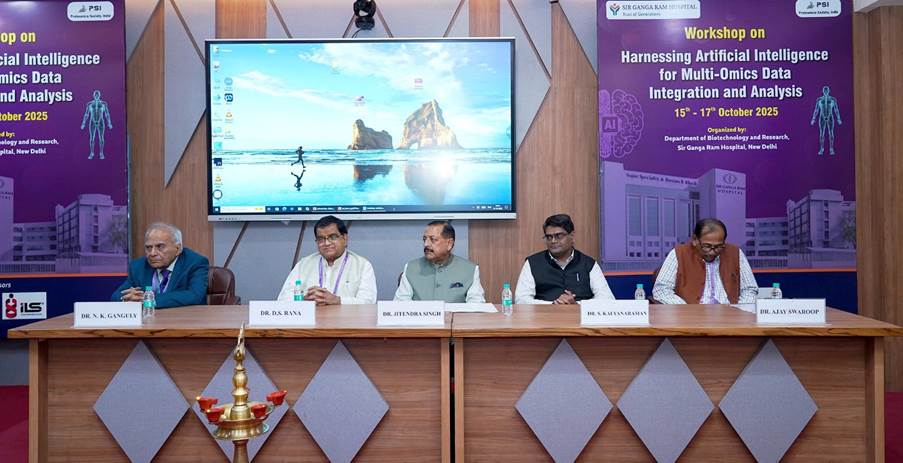
The event featured distinguished attendees, including Dr. Shiv Kumar Kalyanaraman (CEO, ANRF), Dr. N.K. Ganguly, Dr. D.S. Rana, and Dr. Ajay Swaroop.
India Biotech, Nafithromycin, Indigenous Antibiotic, Hemophilia Gene Therapy, AI in Healthcare, Dr Jitendra Singh, Department of Biotechnology, Wockhardt, Anusandhan National Research Foundation, Viksit Bharat Discover India’s latest biotech achievements, including the indigenous antibiotic Nafithromycin for resistant infections and successful gene therapy for Hemophilia, announced at an AI-focused medical workshop by Union Minister Dr. Jitendra Singh.