Important Facts of the News
- UK Middle East Minister Hamish Falconer visited Lebanon from 3-4 November 2025.
- Falconer inaugurated a new LAF operating base in South Lebanon, funded by the UK.
- The UK has built over 80 LAF bases along the Syrian border in previous years.
- UK aid to Lebanon in 2025 totals £33.5 million.
- Support includes humanitarian aid, education, and gender-based violence prevention.
- Partnerships strengthened with Lebanese Red Cross, UNICEF, and Government of Lebanon.
- Falconer met Lebanon’s President, Prime Minister, Foreign Minister, and Armed Forces Commander.
- UK reaffirmed commitment to Lebanon’s reforms, security, and 2026 parliamentary elections.
UK backs Lebanon’s stability with new LAF base and aid projects
Hamish Falconer, the UK’s Minister for the Middle East, wrapped up a two-day visit to Lebanon, underscoring Britain’s continued investment in the nation’s security and humanitarian needs. This was his first official visit to Lebanon, which took place from 3 to 4 November 2025.
A key highlight was the opening of a newly constructed base for the Lebanese Armed Forces (LAF) in South Lebanon, funded by the United Kingdom. The facility is intended to support a permanent operational presence of the LAF in the region and improve their readiness. This construction aligns with the broader UK initiative that has helped establish more than 80 similar bases along the Syrian border, boosting Lebanon’s border control and national integrity.
Humanitarian partnerships and education support
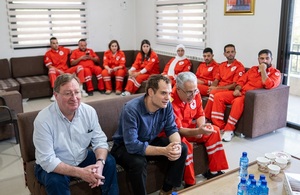
The Minister visited the Lebanese Red Cross centre in Tebnine, recognising the collaboration between the British Red Cross and Lebanese Red Cross to improve emergency preparedness and disaster response. In Seddiqine, he toured a UNICEF-supported community centre that offers educational and child protection services to vulnerable children.
These programmes are funded as part of the UK’s £33.5 million aid package to Lebanon for 2025. The aid is directed toward supporting basic needs, education, and gender-based violence prevention, helping Lebanon enhance its national social protection systems in partnership with local authorities.
Diplomatic engagements with Lebanon’s leadership
Falconer also met with major political leaders including President Joseph Aoun, Prime Minister Nawaf Salam, Foreign Minister Youssef Rajji, and LAF Commander General Rodolph Haykal. Discussions revolved around Lebanon’s ongoing reforms, security, and prospects for parliamentary elections in 2026.
Reflecting on his visit, Falconer said that the UK is contributing to peace and security across the Middle East through diplomacy, humanitarian assistance, and defence cooperation. He noted the severe impacts of conflict in Lebanon and highlighted the UK’s role in supporting the resilience of the Lebanese Armed Forces and restoring education access for children.
British Ambassador to Lebanon, Hamish Cowell, joined Falconer during the visit, reaffirming the UK’s long-term view on Lebanon’s stability and sovereignty.
Conclusion
Minister Falconer’s trip signals a strong reinforcement of the UK’s commitment to aiding Lebanon through security support, humanitarian projects, and collaboration on policy reforms, especially in the lead-up to the country’s crucial parliamentary elections in 2026.