IMF Managing Director Addresses G20 Leaders’ Summit in Johannesburg
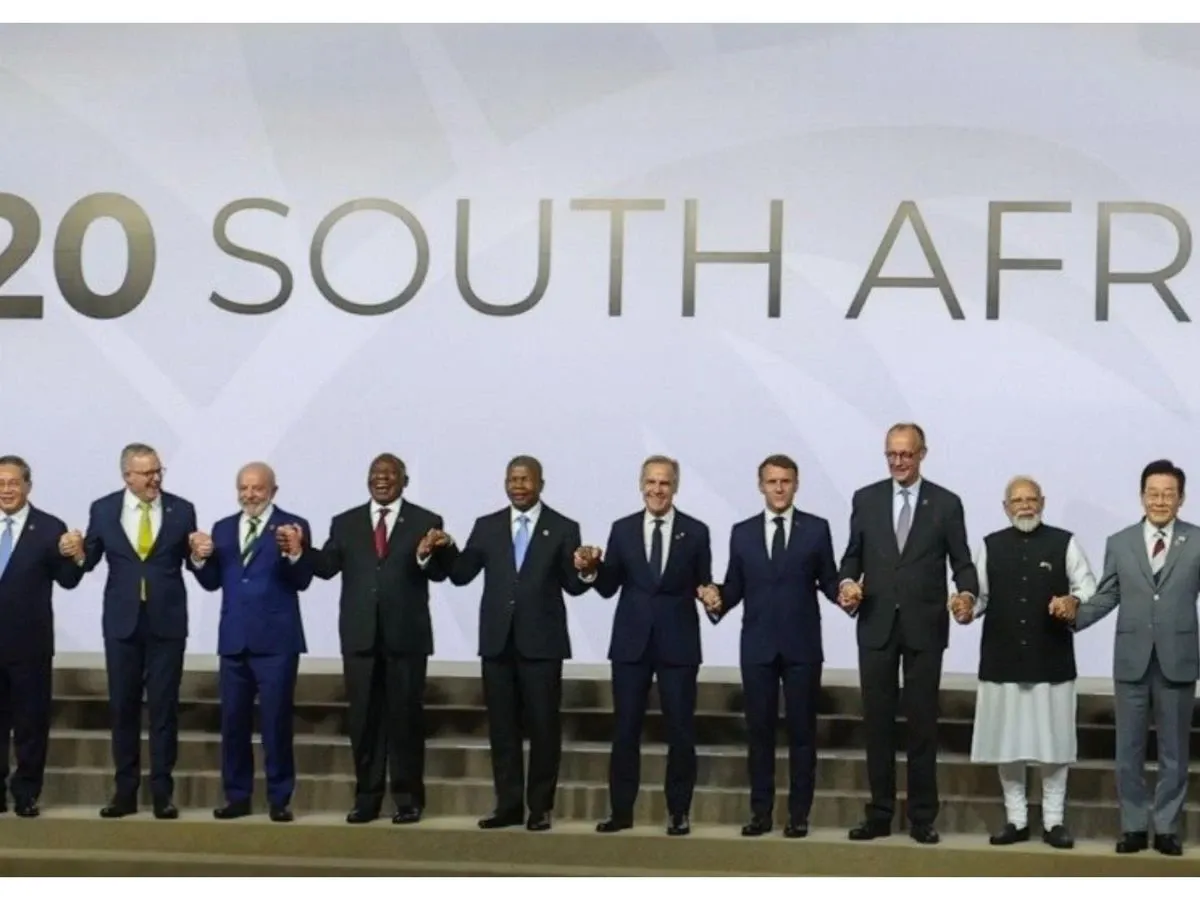
International Monetary Fund Managing Director Kristalina Georgieva delivered remarks at the G20 Leaders’ Summit in Johannesburg, South Africa, where she expressed appreciation to President Cyril Ramaphosa, the Government of South Africa, Minister Godongwana, and Governor Kganyago for their roles in facilitating discussions on global economic issues.
G20 Leaders Convene in Africa for the First Time
Georgieva noted that the gathering marked the first time G20 Leaders met in Africa. She stated that the discussions reflected significant policy shifts and global transformations, with a central focus on building resilience.
Global Economic Outlook and Domestic Reforms
According to Georgieva, the global economy is performing better than anticipated but still below the required level. She highlighted that resilience has been supported by a strong private sector and strengthened policies and institutions, yet global growth remains below pre-covid levels and debt is high, particularly for poorer countries.
She emphasized the role of geopolitical tensions, demographic and technological changes, and severe climate events in creating heightened uncertainty. Georgieva stated that building resilience requires domestic reforms, including credible and sustainable government actions, restoring policy buffers, protecting institutional integrity, and addressing internal imbalances.
She added that structural reforms are necessary to encourage private sector growth and remove unnecessary regulations.
Need for Strong Policy Cooperation
Georgieva stressed the importance of policy cooperation, stating that coordinated action is essential during periods of uncertainty. She underlined the significance of maintaining trade as a driver of growth through updated rules that reflect the digital economy and global diversity.
She reported that efforts to mobilize public and private financing should continue, noting the IMF’s decision to increase its permanent quota resources by 50 percent. Georgieva expressed appreciation to those who supported the increase, which enhances the IMF’s ability to assist member countries.
She said progress has been made on debt issues under the Common Framework but called for faster and more predictable restructuring processes. She added that the IMF has adjusted its policies to better assist countries in reducing debt and acknowledged South Africa’s leadership in the G20, particularly regarding the October Declaration on Debt.
Georgieva stated that the IMF is providing a record level of financing to its members, including 50 programs, 21 of which are in sub-Saharan Africa. She said the institution tailors guidance to each country’s circumstances and supports them through capacity development.
AI’s Economic Impact and Readiness Challenges
Georgieva discussed the importance of structural reforms, debt sustainability, and addressing global imbalances. She said slow productivity growth has contributed to weaker overall growth but noted that AI has the potential to boost economic output by nearly 1 percent.
She cautioned that AI is spreading rapidly, affecting an estimated 60 percent of jobs in advanced economies, 40 percent in emerging markets, and 26 percent in low-income countries. She described AI as creating significant shifts in labor markets.
Georgieva outlined an IMF index that measures AI readiness across four areas: digital infrastructure, skills and adaptable labor markets, diffusion of AI across the economy, and ethics and regulation. She said countries show wide variation in performance across these dimensions.
She highlighted the need to prioritize domestic policies that enhance AI readiness, including skills development, infrastructure improvements such as reliable power supply, and tax frameworks that encourage innovation without disadvantaging workers.
Georgieva also emphasized the importance of establishing global ethical and regulatory standards, led by the United Nations, and supporting developing countries to prevent widening disparities in AI adoption.
She concluded by acknowledging President Ramaphosa for his leadership and hospitality during the summit.