India highlights collaboration potential with Canada in critical minerals, clean energy and emerging technologies
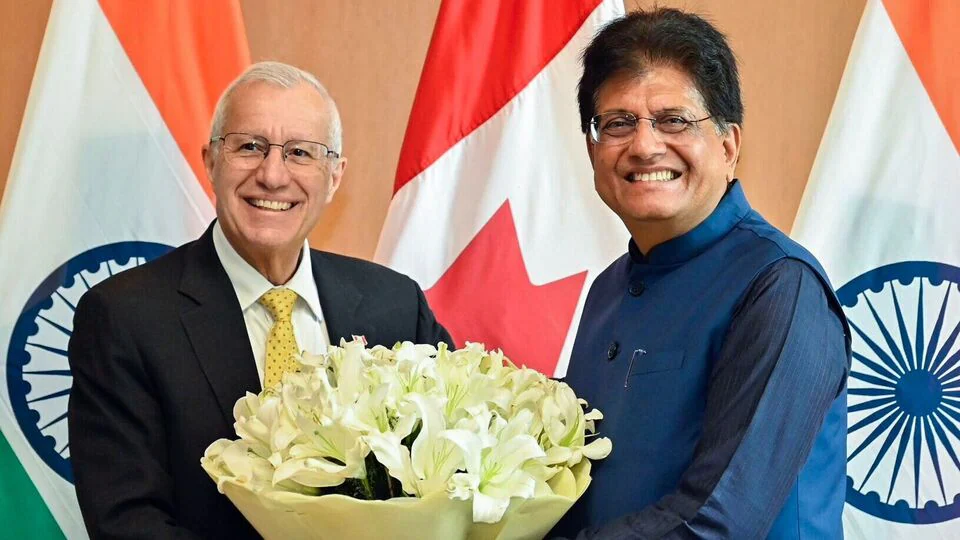
India and Canada to accelerate CEPA negotiations to enhance trade and investment
Union Minister of Commerce and Industry, Shri Piyush Goyal, addressing the Indo-Canadian Business Chamber in New Delhi today, stated that India sees considerable potential for collaboration with Canada in critical minerals, mineral processing technologies, clean energy, nuclear energy and supply-chain diversification. He said that India offers key strengths in emerging technologies such as artificial intelligence, quantum computing, machine learning and next-generation data centres, supported by the world’s largest annual pool of STEM graduates. He noted that Canada and India are natural partners whose complementary capabilities offer opportunities for businesses and investors in both countries.
He said that the India–Canada partnership continues to be rooted in mutual trust, democratic values and a shared focus on development. He added that the bilateral relationship remains strong, with expanding engagement in trade, investment and emerging sectors.
Referring to the recent meeting between Prime Minister Shri Narendra Modi and Canadian Prime Minister Mr. Mark Carney during the G20 Summit, Shri Goyal said that both leaders agreed to begin negotiations for a high-ambition Comprehensive Economic Partnership Agreement and double bilateral trade by 2030. He said that CEPA reflects confidence between the two countries, reinforces investor trust and offers a structured mechanism for addressing issues based on mutual respect.
Shri Goyal said that India’s national power grid of 500 GW, including 250 GW of clean energy capacity, provides the resilience required for AI-driven infrastructure. He noted that India aims to double clean energy capacity to 500 GW by 2030, positioning the country as a reliable and sustainable partner, and said that India is among the few democracies capable of offering 24-hour clean energy at globally competitive rates.
Referring to the seventh Ministerial Dialogue held earlier this month with Canada’s Minister of International Trade, Shri Goyal said that both sides agreed to reinvigorate business-to-business engagement and explore two-way business delegations. He noted the continued inflow of Canadian investments into India, particularly through Canadian pension funds, and the rising interest of Canadian companies in expanding their operations in India.
Shri Goyal highlighted India’s strong economic fundamentals, stating that the country has moved from the “Fragile Five” to being among the world’s top five economies. He said that India is expected to become the world’s third-largest economy in the next 2–2.5 years, supported by low inflation, a strong banking system, high foreign exchange reserves, rapid infrastructure expansion and a growing capital market. He said that India’s stock market has expanded nearly four-and-a-half times in the last 11 years, indicating investor confidence in the economy.
He said that India’s development model is based on macroeconomic stability, inclusive and sustainable growth and welfare measures that ensure participation of 140 crore citizens in national progress. He added that India is driven by a young, skilled and aspirational population, and that the country’s economic momentum is poised to remain strong for decades.
Shri Goyal outlined a five-pronged strategy to further deepen India–Canada relations. He stressed the importance of turning dialogue into implementation through actionable steps, sector-specific plans and measurable outcomes. He called for revitalising the CEO Forum to strengthen business-to-business cooperation and urged Canadian involvement in India’s upcoming AI Summit. He encouraged collaboration in innovation, citing India’s strong IPR ecosystem, large datasets and cost-effective innovation environment, supported by the recently announced USD 12 billion fund for research and development.
The Minister said that both countries should identify focused areas of cooperation, including critical minerals, clean energy, aerospace, defence and manufacturing under the Make in India initiative. He said that Canadian innovation together with Indian capabilities can create opportunities for both sides.
Shri Goyal invited Canadian businesses to partner in India’s goal of becoming a developed nation by 2047. He said that India provides a stable, transparent and opportunity-rich environment for long-term collaboration and expressed confidence that India–Canada relations will continue to strengthen in the coming years.