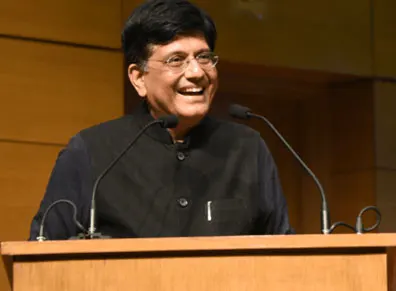
Government Reiterates Commitment to Quality Manufacturing and Industrial Reforms at Udyog Samagam 2025
The Union Minister of Commerce and Industry, Shri Piyush Goyal, reaffirmed the Central Government’s commitment to ensuring quality manufacturing and industrial growth during the second edition of Udyog Samagam 2025, organized by the Department for Promotion of Industry and Internal Trade (DPIIT). Addressing Industries and Commerce Ministers from 14 States and Union Territories, he underscored that Quality Control Orders (QCOs) play a pivotal role in making superior-quality products available to consumers while curbing substandard imports. He cited the successful implementation of QCOs on toys and plywood as key examples.
Emphasizing Centre–State cooperation, Shri Goyal called for effective implementation of industrial incentives through third-party mechanisms and timely disbursal to build trust within the industry. He highlighted the need for transparent systems, competitive power tariffs, and self-certification to promote ease of doing business. Appreciating the Madhya Pradesh model of offering ready-built industrial facilities at nominal rates, he urged other States to adopt similar initiatives to generate employment and foster industrial confidence.
The Minister also stressed on sustainability and environmental responsibility, urging industries to align their manufacturing practices with the Prime Minister’s “Zero Effect, Zero Defect” vision. Referring to the fisheries sector, he mentioned government support under the PM Matsya Sampada Yojana for cold storage and cooperative-based deep-sea vessel procurement, while encouraging States to promote innovation, women’s participation, and startup growth.
At the event, DPIIT recognised States and Union Territories for their achievements under the Business Reforms Action Plan (BRAP) 2024. Uttarakhand and Punjab were named top achievers across five reform areas, while Andhra Pradesh, West Bengal, Jammu & Kashmir, Kerala, Tamil Nadu, Madhya Pradesh, Telangana, Rajasthan, Jharkhand, and Chhattisgarh performed strongly in four reform areas. Maharashtra, Assam, Himachal Pradesh, Haryana, Odisha, and Uttar Pradesh excelled across three reform areas.
Under BRAP 2024, reforms were assessed across 434 points, supported by an extensive national feedback process involving 5.83 lakh businesses and over 1.33 lakh interviews. States were evaluated based on evidence of implementation and user experience, with 70 percent weightage given to user feedback. This robust framework ensured transparency and reflected real-world impact of reforms across business domains.
Healthcare Affordability and Inclusive Growth Highlighted at CII Health Summit
At the 22nd CII Annual Health Summit in New Delhi, Shri Piyush Goyal emphasized the government’s priority on healthcare affordability and accessibility. He noted that the reduction of GST on health and life insurance from 18 percent to zero, and lower import duties on medical devices and essential medicines, have substantially benefited citizens by making healthcare more affordable.
The Minister highlighted that the government is open to considering further reductions in duties on essential medicines based on industry feedback. Stressing that India is a “listening government,” he invited inputs from healthcare stakeholders to strengthen both domestic healthcare delivery and medical tourism.
Shri Goyal cited the success of Jan Aushadhi Kendras, now numbering over 10,000, in providing affordable generic medicines and sanitary products. He underscored that India’s healthcare model must remain equitable and inclusive, ensuring domestic citizens are not deprived while expanding medical tourism.
Highlighting the growth of India’s medical infrastructure, Shri Goyal noted that the number of AIIMS has increased from 7 to 23 and medical colleges from 387 to 706 since 2014. He also mentioned that by 2029, the government plans to further expand medical education to meet the growing demand for doctors. Initiatives such as Ayushman Bharat have made nearly 700 million people eligible for free healthcare, and the inclusion of all senior citizens above 70 years under free treatment has strengthened social security in healthcare.
He encouraged hospitals to dedicate a small portion of their services to foreign patients, contributing part of the revenue to Ayushman Bharat or CSR initiatives to balance inclusivity with growth. Highlighting India’s competitive edge, he said that medical treatments in India cost one-third or even one-fourth of similar procedures abroad, supported by skilled doctors, nurses, and caregivers.
Shri Goyal urged healthcare institutions to expand training for nurses and caregivers to meet global demand and invited Non-Resident Indian doctors to contribute to India’s healthcare ecosystem. He suggested integrating India’s traditional wellness systems with modern medicine through the “Heal in India” initiative, blending Yoga, Ayurveda, meditation, and spiritual tourism to position India as a global wellness destination.
Concluding his address, the Minister stated that India’s healthcare strength lies in its combination of modern medical excellence, traditional wellness, and compassionate care, making the nation poised to become the world’s foremost destination for affordable and holistic healthcare.