Cyber Security Innovation Challenge 1.0 Launched by MeitY
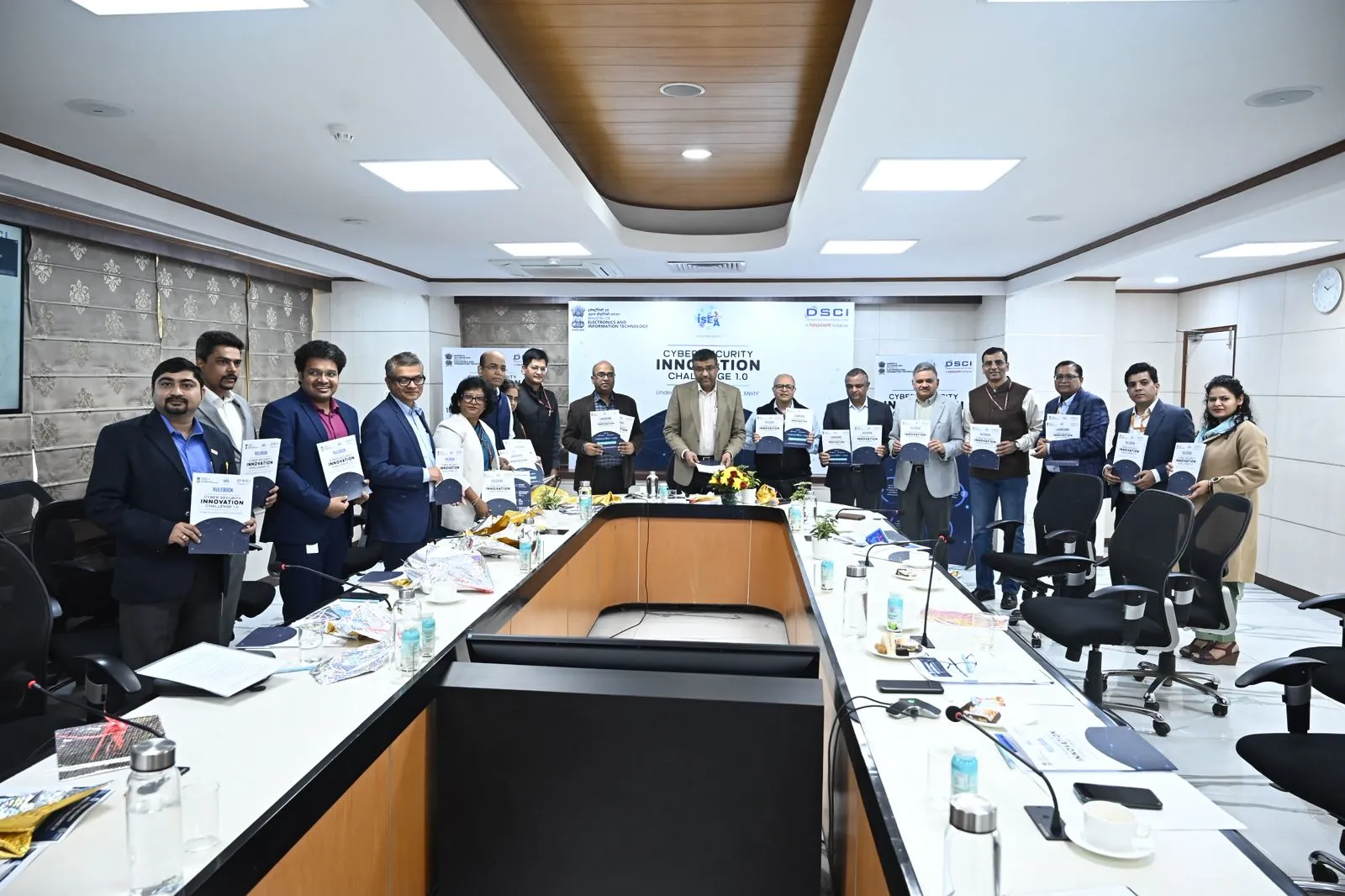
The Ministry of Electronics and Information Technology (MeitY), along with the Data Security Council of India and the Centre for Development of Advanced Computing Hyderabad, introduced the Cyber Security Innovation Challenge 1.0 for students and researchers under the Information Security Education and Awareness Initiative.
Launch of the Initiative
Shri S Krishnan, Secretary, Ministry of Electronics and Information Technology, inaugurated Cyber Security Innovation Challenge 1.0 under the Information Security Education and Awareness Project. The launch event took place at Electronics Niketan, MeitY, New Delhi on 24.11.2025 in the presence of officials, industry representatives and academic institutions.
Shri Krishnan released the concept video, website and registration portal (https://innovation.isea.app/cyber_security_innovation_challenge) and the Rule Book of the challenge. He highlighted the need for a national cyber security strategy focused on raising awareness of emerging risks and enhancing technical strengths. He stated that the initiative introduces students to real-world cyber security challenges, fosters skilled professionals, promotes cyber security as a viable career, and encourages product-oriented solutions to strengthen India’s cyber resilience. He added that cyber security requires a whole-of-nation approach, aligning with the Prime Minister’s vision of a whole-of-government strategy. Recognizing the participation of MeitY, CERT-In, NSCS, AICTE, C-DAC, DSCI and leaders from academia and industry, he noted the importance of supporting promising ideas beyond the Minimum Viable Product stage and enabling them to evolve into scalable solutions through collaboration with startups and industry partners.
Insights from Stakeholders
Shri Vinayak Godse, CEO of the Data Security Council of India, explained the five-stage structure and detailed problem statements of Cyber Security Innovation Challenge 1.0, prepared after extensive discussions between DSCI, C-DAC and the Information Security Education and Awareness team. He said the initiative helps students and researchers develop innovative and entrepreneurial skills from early stages. He noted that domain-specific problem statements cater to the needs of critical sectors such as BFSI, telecom and healthcare, and that diversity support aims to promote widespread participation. He expressed confidence that the challenge will help advance research-driven product development in the cyber security domain.
Prof V Kamakoti, Director of the Indian Institute of Technology Madras, stated that the innovation challenge reflects an improved understanding of key concerns and enables the development of impactful solutions. He said the ten domain-specific problem statements align with national cyber security requirements and call for fresh approaches.
Prof Sukumar Nandi, Senior Professor at the Indian Institute of Technology Guwahati, said the launch of Cyber Security Innovation Challenge 1.0 represents the combined efforts of MeitY, C-DAC, DSCI and 50 institutions under the Information Security Education and Awareness Project, who collaborated to identify and refine problem statements to guide students in creating innovative solutions.
Shri Narendra Nath, Joint Secretary, National Security Council Secretariat, discussed the risks associated with increased technological dependence and emphasized the importance of strengthening technological sovereignty under Atmanirbhar Bharat. He appreciated the initiatives carried out under the Information Security Education and Awareness Project and commended the challenge for advancing indigenous capabilities and solutions.
Dr. Sanjay Bahl, Director General, CERT-In, highlighted the Information Security Education and Awareness Project’s role in encouraging innovation that enables a shift from reactive responses to proactive security. He said the platform connects research institutions, academia and industry, and that solutions developed in academic settings are expected to reach the market as deployable products. He emphasized that building Aatmanirbharta in cyber security is essential as the country undergoes rapid digital transformation.
Focus Areas of CSIC 1.0
Cyber Security Innovation Challenge 1.0 aims to promote indigenous, research-based cyber security solutions within academic institutions and is open to students and researchers. The challenge is centered on problem statements across ten domains that include Computer and Network Security, Mobile Device Security, Systems and Software Security, Hardware Security, Security in Futuristic Technologies, Cryptography, Security in Distributed Wireless Networks, Cyber Forensics, Governance, Operations and Services and Fintech Security. The five-stage structure is designed to support ideas from initial concepts to a Minimum Viable Product.
The challenge seeks to strengthen the cyber security innovation ecosystem by providing mentorship to the top 20 teams through expert-led webinars on technical subjects, pitching and hands-on sessions by industry professionals. More details about the challenge are available at https://www.dsci.in/content/cyber-security-innovation-challenge-10.
About the Information Security Education and Awareness Project
The Information Security Education and Awareness Project is an initiative of the Ministry of Electronics and Information Technology for developing human resources in information security and raising awareness about cyber hygiene and cyber security among the public. The project focuses on preparing skilled personnel to support safe and trusted cyberspace. It is implemented by 50 academic and autonomous institutions including IITs, NITs, IIITs, C-DAC, NIELIT Centres and Technical Universities, and is supported by C-DAC Hyderabad and the Data Security Council of India as nodal agencies. More information is available at https://isea.gov.in/.
About the Data Security Council of India
The Data Security Council of India is a not-for-profit industry body on data protection, established by Nasscom, working toward promoting safety and trust in cyberspace through best practices, standards and initiatives in cyber security and privacy. The organization collaborates with government agencies, law enforcement bodies, industry sectors including IT-BPM, BFSI, CII and telecom, as well as industry associations, data protection authorities and think tanks for public advocacy, thought leadership, capacity building and outreach. More details can be found at https://www.dsci.in/.
About C-DAC
The Centre for Development of Advanced Computing is a leading research and development organization under the Ministry of Electronics and Information Technology engaged in work related to information technology, electronics and associated fields. As an institution involved in high-end research and development, C-DAC has contributed to India’s information technology sector by building capabilities in emerging technologies and creating IT products and solutions for various sectors. Additional information is available at https://www.cdac.in/.
“`html