MoHUA and IIT Kanpur Launch Second Cohort of 32 Clean-Tech Startups for Swachh Bharat
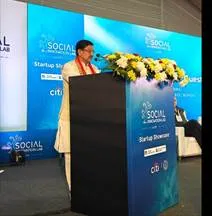
The Ministry of Housing and Urban Affairs (MoHUA), in collaboration with the Startup Incubation and Innovation Centre (SIIC) at IIT Kanpur, launched the second cohort of startups in the sanitation and waste-management sector during the Swachhata Startup Conclave on 24th November 2025 in New Delhi. The Minister of State for MoHUA, Shri Tokhan Sahu, inaugurated the second cohort of startups for Swachhata.
India, ranked third globally in terms of startup growth, hosts over 100 unicorns, driven by a technology and innovation culture extending from metropolitan to tier-2 and tier-3 cities. Building on this momentum, MoHUA aims to leverage startups to enhance urban sanitation and waste-management solutions.
Ministry Initiatives and Startup Engagement
Shri Tokhan Sahu highlighted the Ministry’s efforts under the Swachh Bharat Mission–Urban (SBM-U), noting that over the past decade, waste management has shifted from conventional methods to technology-driven solutions. He stated that engagement with startups is enabling young innovators to contribute to cleaner urban environments, generate employment, and support revenue creation.
Shri Sahu emphasized the development of a national exchange platform connecting startups, urban local bodies (ULBs), investors, and stakeholders to address challenges and deploy indigenous solutions. The platform aims to provide supportive policies and market access to accelerate innovation and strengthen the startup ecosystem in waste management.
Urban Startup Growth and Waste Management
Rapid urbanization has increased the demand for smarter service delivery, with startups across fintech, e-commerce, ed-tech, health-tech, and mobility transforming ULB operations. Key cities such as Bengaluru, Hyderabad, Mumbai, and Delhi-NCR are leading this growth, while smaller cities are increasingly contributing. Over 5,000 waste-management startups have been supported by the Department of Promotion of Industry and Internal Trade (DPIIT), enhancing urban sustainability and service delivery nationwide.
Launched in 2014, SBM-U has reshaped India’s urban sanitation ecosystem, focusing on eliminating open defecation and advancing scientific waste management. The mission’s second phase promotes garbage-free cities through waste segregation, recycling, circular economy initiatives, and innovation, while ensuring the safety and dignity of sanitation workers.
Startup Contributions to Waste Management
SBM-U has facilitated the adoption of technology-driven solutions across the waste management value chain. Startups such as Arc Robotics, ReCircle, EcoKaari, Padcare, Uneako, Muddle Art, and Kabbadiwala are providing mechanized cleaning, smarter waste tracking, circular-economy solutions, and innovative business models. These ventures are contributing to cleaner urban environments.
The mission supports locally developed, cost-effective innovations and business models through R&D investments and technology challenges, promoting ‘Vocal for Local’ and ‘Make in India’ initiatives.
Swachhata Startup Challenge and Cohort 2
The Swachhata Startup Challenge, launched in 2022, connects startups, investors, financial institutions, and ULBs. Cohort 1 received over 230 applications, resulting in the selection of 30 startups for techno-financial support. This led to a revenue increase of eleven-fold and a six-fold increase in funding support, with nearly 20 percent of women-led startups engaged. Cohort 2, selected from over 400 applications in 2024, includes 32 startups focused on innovative sanitation technologies. The partnership with SIIC, IIT Kanpur provides infrastructure, R&D facilities, mentorship, investor connections, bootcamps, and knowledge sessions for these startups.
Cohort 1 startups have treated over 300 lakh liters of wastewater, managed more than 63,000 MT of waste, cleared 15,000 MT of street garbage, and processed 200 MT of biodegradable waste. These startups have a combined valuation of over ₹500 crore and have created more than 2,000 employment opportunities.
Focus Areas and Support for Cohort 2
The 32 startups in Cohort 2 focus on circular waste management, segregation, desludging, and waste-to-energy. They are supported with mentorship, infrastructure, and market access through IIT Kanpur and ULB partnerships. The initiative aims to scale effective sanitation solutions nationwide, establishing MoHUA and IIT Kanpur as a key platform for waste-tech deployment.
The Ministry intends to strengthen the waste-management startup ecosystem by creating a unified platform for solution exchange. This will enable ULBs to identify challenges, while startups provide tailored innovations, supported by enabling policies that facilitate business operations and adoption of clean technologies.