TRENDS, Global Imams Council Host Forum in Canadian Parliament
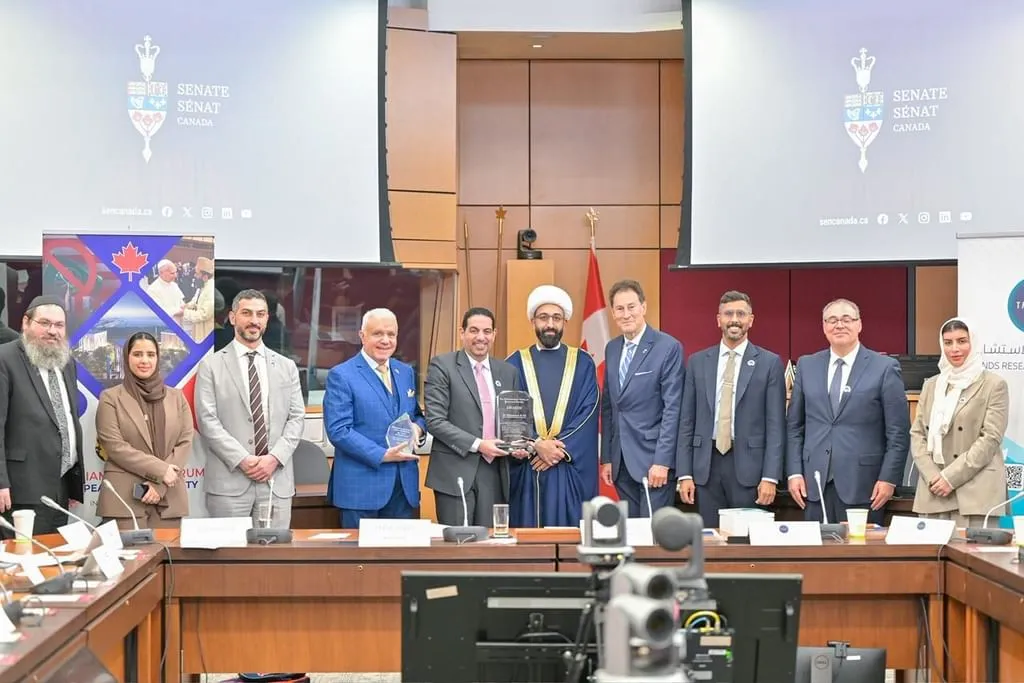
ABU DHABI A global press conference broadcast by CPAC television and a high-level parliamentary forum in Ottawa focused on knowledge, dialogue, and religious cooperation as key elements in international efforts to counter extremism and promote peaceful coexistence.
Hosted by the Canadian Parliament and Senate, the meetings were organised by TRENDS Research and Advisory in collaboration with the Global Imams Council. The events marked the final day of the TRENDS Research Tour to Canada, conducted at the invitation of Canadian MP Shuvaloy Majumdar and Senator Leo Housakos.
The press conference featured Imam Mohammed Tawhidi, Advisor on Counter-Extremism at TRENDS, and researcher Shamsa Arif Al-Qubaisi. Tawhidi described the partnership between TRENDS and the Global Imams Council as one of active cooperation, noting their joint participation in international forums. He highlighted the UAE’s model of tolerance, stating it aligns with Canada’s values of pluralism and justice.
Al-Qubaisi shared key data on TRENDS’ research output, which includes more than 1,000 research papers, 40 books, and over 300 international agreements with institutions such as Microsoft and the University of Cambridge.
The Parliamentary Forum on Promoting Peaceful Coexistence and Combating Extremism was convened at the Canadian Senate, attended by parliamentarians, diplomats, religious leaders, academics, and policy experts. The TRENDS delegation was led by CEO Dr Mohammed Abdullah Al-Ali.
Senator Housakos opened the forum, highlighting the role of parliaments as a primary line of defence against extremist ideologies. In his keynote address, Dr Al-Ali called for a principled, evidence-based approach to countering extremist thought. He presented TRENDS’ new 35-volume Encyclopedia of the Muslim Brotherhood and announced forthcoming research on the group’s influence in Canada over the past six decades.
Dr Al-Ali highlighted the UAE’s efforts in countering extremist networks and referenced the Abrahamic Family House and the Abraham Accords as models for effective peace initiatives. He outlined opportunities for collaboration with Canadian institutions in research, capacity building, and the promotion of moderate religious leadership.
The forum’s first session examined the impact of Muslim Brotherhood extremism in Canada. Dr Wael Saleh, Director of the TRENDS Virtual Office in Canada, analysed the group’s discourse using Austin’s Speech Act Theory, demonstrating how its rhetoric legitimises violence. Researcher Badriya Al-Riyami presented an English-language paper discussing the incompatibility between the Brotherhood’s ideology and the principles outlined in the Human Fraternity document and the Abraham Accords.
The second session explored the Abraham Accords as a framework for regional peace. Researcher Shamsa Al-Qubaisi highlighted TRENDS’ growing partnerships in Canada, including collaborations with major universities and ongoing studies in education and data analysis.
Canadian MPs Melissa Lantsman and Anthony Housefather stated that the Accords provide an opportunity for Canada to enhance its engagement in the Middle East. Representatives from civil society and policy institutions discussed integrating tolerance into community practices.
At the conclusion of the forum, the Parliamentary Forum for Peace and Security presented an honorary award to Dr Al-Ali in recognition of his leadership in advancing global understanding through research and TRENDS’ role in promoting tolerance and international cooperation. Under the dome of Parliament in Ottawa, he was also named Personality of the Year for his contributions to countering extremism and guiding TRENDS as a global research institution.
The event concluded with a question-and-answer session reflecting Canadian interest in regional dynamics and the challenges posed by political Islam.