IMF Staff Concludes 2025 Article IV Mission to the Sultanate of Oman
Oman has shown resilience amid global uncertainty, renewed geopolitical tensions, and oil price volatility in 2025. The economy continues to grow, supported by strong nonhydrocarbon activity and low inflation. Fiscal and external indicators remain favorable, and public debt has declined. Progress continues under Oman Vision 2040 through initiatives related to social protection, labor market flexibility, business environment improvements, state-owned enterprise reforms, and developments in digital and renewable sectors. The banking system remains stable, and further financial sector development is viewed as important for supporting economic diversification and private-sector expansion.
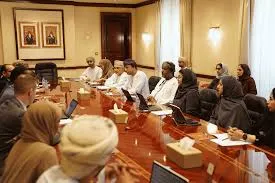
An International Monetary Fund staff team led by Abdullah AlHassan held the 2025 Article IV consultation discussions in Muscat from November 9 to 24, 2025. At the end of the mission, AlHassan issued a statement outlining recent economic developments, projections, and reform priorities.
Recent Economic Performance
According to the statement, economic growth remained firm in 2024 and the first half of 2025. Expansion in manufacturing, wholesale and retail, logistics, construction, and agriculture and fishing supported overall performance, while hydrocarbon GDP declined due to OPEC+ production limits. Inflation eased to 0.6 percent in 2024 and stood at 0.9 percent between January and October 2025. The fiscal balance recorded a surplus of 3.3 percent of GDP in 2024, and the current account registered a surplus of 3.2 percent of GDP. Government debt reached 36.1 percent of GDP by September 2025.
Outlook and Risks
The economic outlook is described as favorable, with growth expected to rise during 2025–26 as oil production cuts are reversed and nonhydrocarbon sectors continue to expand. Inflation is projected to remain low and move toward 2 percent over the medium term. Fiscal and external positions are expected to stay strong, with fiscal surpluses likely to continue. The current account is projected to move into deficit from 2025 to 2027 due to lower oil prices before gradually returning to surplus as oil output increases toward capacity and nonhydrocarbon exports improve. Global uncertainty and geopolitical tensions are highlighted as potential risks to growth and fiscal and external indicators.
Fiscal Policy and Reforms
The authorities maintain their commitment to fiscal discipline. The nonhydrocarbon primary deficit is estimated to narrow by 2 percent of nonhydrocarbon GDP in 2025, supported by spending restraint and improved revenue collection. Priority areas include advancing tax administration modernization, implementing VAT e-invoicing, and introducing a personal income tax on high-income earners in 2028. Further reforms, such as rationalizing non-essential current spending, phasing out untargeted energy subsidies while protecting vulnerable groups, strengthening the medium-term fiscal framework, and developing a sovereign asset–liability management framework, are identified as important for sustaining fiscal stability and enhancing policy credibility.
Monetary and Financial Sector Developments
The exchange rate peg is viewed as appropriate for maintaining low and stable inflation. Implementation of the Monetary Policy Enhancement Project, including the introduction of an Omani Rial standing deposit facility and the operationalization of the interest rate corridor, along with a gradual shift toward a full treasury single account, is expected to reinforce monetary policy transmission.
The banking sector continues to display strength, supported by solid capital and liquidity buffers and stable profitability. Ongoing efforts to enhance the macroprudential framework, strengthen regulatory data and supervisory capacity, improve the financial safety net and crisis management mechanisms, and deepen capital markets are considered essential for protecting financial stability and promoting financial sector development.
Progress Under Oman Vision 2040
Reform efforts linked to Oman Vision 2040 continue to move forward. The 11th Development Plan provides an opportunity to accelerate diversification, raise productivity, and expand private-sector employment for Omanis. Key areas of focus include labor market reforms, improvements to the business environment, enhanced market competition to increase private-sector participation, stronger SME support, deeper trade integration, renewable energy initiatives, and further digital transformation, including preparations for AI readiness.