Important Facts of the News
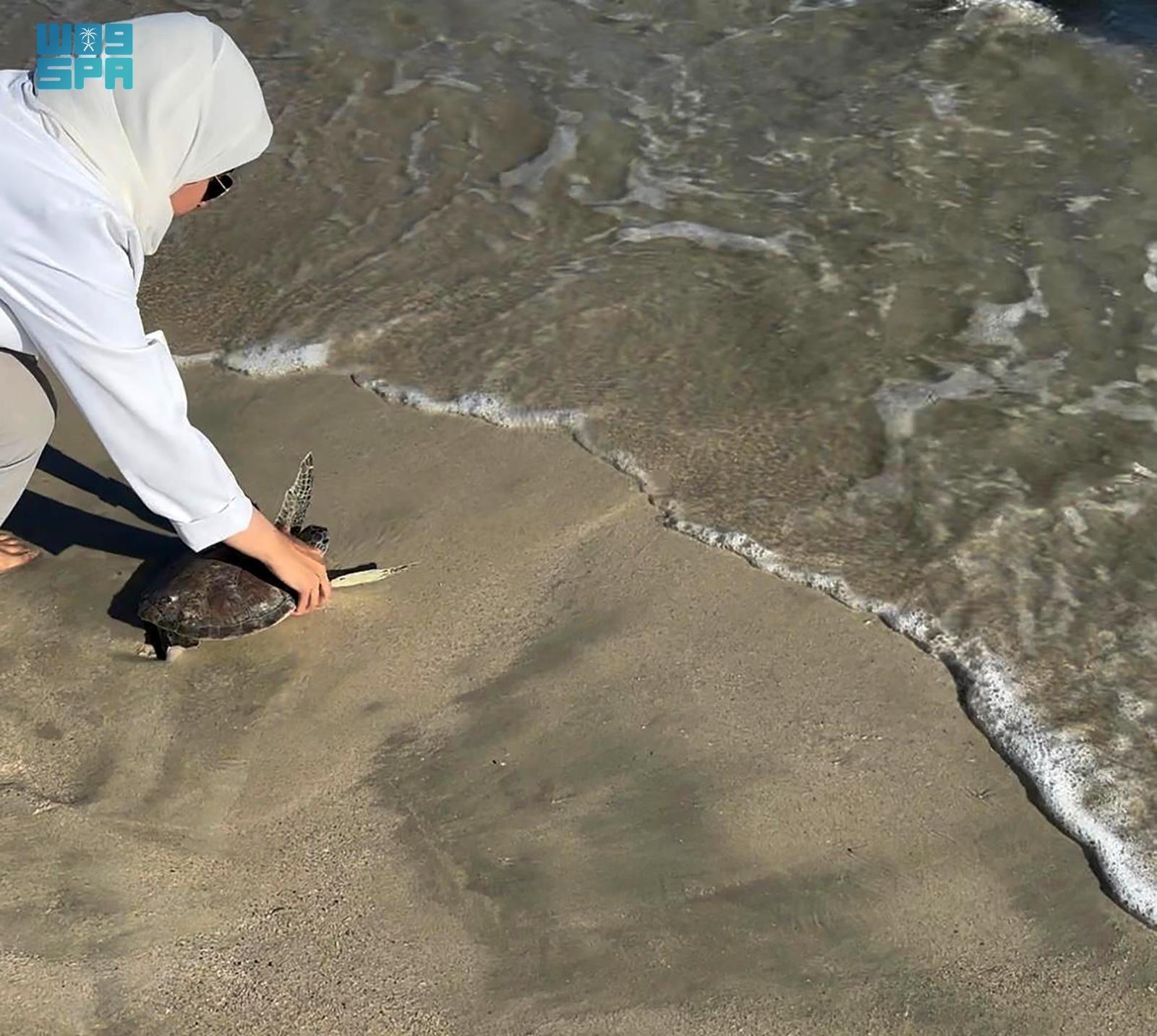
- Two sea turtles, a loggerhead and a green turtle, were released on Abu Ali Island.
- Release marks the first rehabilitated marine animal release in the Arabian Gulf under the center’s initiatives.
- Turtles were found exhausted on the Arabian Gulf coast and received months of veterinary care.
- Medical evaluation revealed stress, internal bacterial infection, and buoyancy issues.
- The loggerhead turtle was fitted with an Argos satellite tracker for post-release monitoring.
- The initiative supports wildlife conservation and marine biodiversity in the region.
Saudi Arabia Releases Treated Sea Turtles Back into the Wild
In a significant stride for wildlife rehabilitation, the National Center for Wildlife in Saudi Arabia has returned two sea turtles—a loggerhead and a green turtle—to their natural habitat near Abu Ali Island. They were released in the Jubail Marine protected area after receiving months of intensive care.
From Rescue to Recovery
The initiative began when a report was received about two exhausted sea turtles spotted on the Arabian Gulf coast. They were immediately transported to specialized veterinary facilities for diagnosis and care. Medical tests and X-ray examinations revealed high stress levels, bacterial infections, and buoyancy imbalances in both turtles.
Following a carefully designed rehabilitation plan, the turtles regained their health and were cleared for release. The loggerhead turtle was equipped with an Argos satellite tracker to allow scientists to follow its movements and examine migration behavior, contributing valuable data to ongoing marine studies.
A Boost for Marine Biodiversity
This release marks the first time that rehabilitated marine creatures have been reintroduced into the Arabian Gulf under the center’s conservation programs. The step is part of broader efforts to restore endangered species and bring balance to the marine environment.
The National Center for Wildlife underscored its commitment to strengthening biodiversity and protecting native species through continuous monitoring and targeted rehabilitation programs.
Conclusion
The successful recovery and release of these marine turtles signal renewed hope for species conservation in Saudi waters. As the turtles find their way through the Gulf, the team continues to monitor their journey, furthering scientific knowledge and supporting long-term ecological health.
As marine conservation initiatives expand, such actions pave the way for sustainable biodiversity management in the country and beyond.