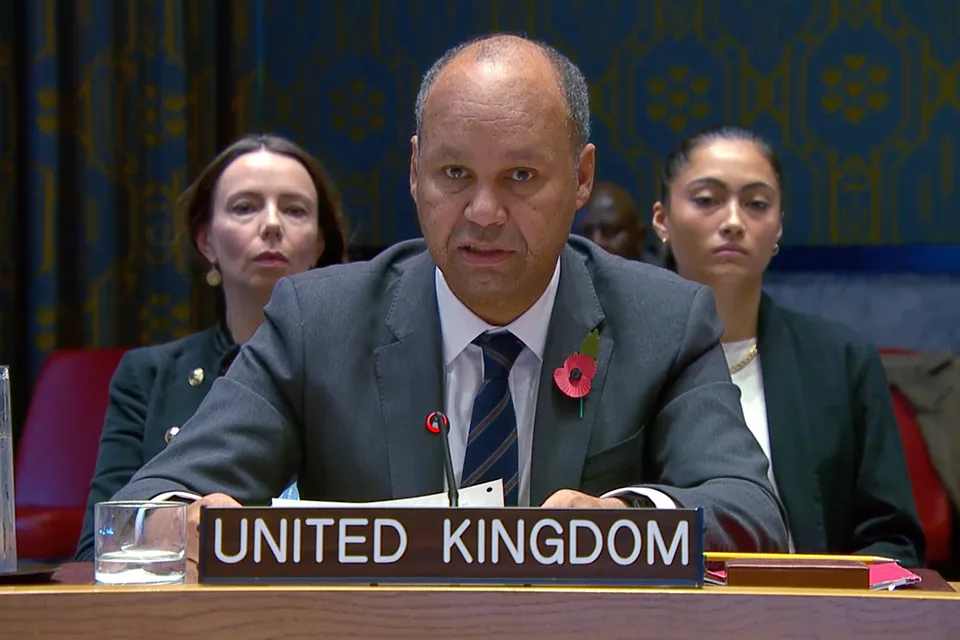
United Nations, New York, November 10, 2025: The United Kingdom has called small arms trafficking a major transnational threat, urging global cooperation to strengthen arms control mechanisms and prevent illicit weapons diversion. The statement was made by Ambassador James Kariuki CMG, UK Chargé d’Affaires to the United Nations, during a UN Security Council meeting on small arms and light weapons.
Illicit Weapons Trade Endangers Global Security
Ambassador Kariuki highlighted that the diversion of small arms persists across the entire weapon lifecycle—from manufacturing and transfer to storage and eventual use. Factors such as porous borders, inadequate stockpile management, and emerging technologies like 3D printing have intensified this challenge. Disrupting this pattern, he noted, is vital for safeguarding lives in conflict-affected regions and curbing armed violence.
UK Strengthens Regional Arms Control Efforts
Emphasizing that small arms trafficking transcends borders, the UK reaffirmed its support for capacity-building and regional collaboration to enforce arms embargoes, improve weapon tracing, and enhance stockpile management. Through the UK-supported AmTag pilot programme, Somalia has become the first nation to deploy chemical taggants, rendering its national ammunition stockpiles fully traceable.
The UK also endorsed regional efforts like the African Union’s Silencing the Guns initiative. It continues to fund the Nairobi Protocol review led by the Regional Centre on Small Arms and Light Weapons (RECSA) and the UN Institute for Disarmament Research (UNIDIR), demonstrating its ongoing commitment to regional disarmament and security.
Role of Multilateral Frameworks and Emerging Technologies
Kariuki reiterated the importance of multilateral frameworks such as the Programme of Action (PoA), the Arms Trade Treaty (ATT), the Global Framework, and the UN Register of Conventional Arms. These instruments, he stated, are crucial for preventing arms diversion, ensuring responsible transfers, and reinforcing national control systems.
The UK announced its participation in the Programme of Action’s expert group on emerging technologies to address challenges posed by polymer, modular, and 3D-printed weapons. The group aims to enhance weapon marking and tracing systems to counter illicit manufacturing and transfers.
Gendered Impact of Illicit Weapons
Drawing attention to the humanitarian impact, Kariuki noted that illicit arms diversion disproportionately affects women and girls. The United Nations estimates that 70 to 90 percent of conflict-related sexual violence incidents involve weapons and firearms. He emphasized that effective conventional arms control plays a critical role in preventing such violence and that women must be central to peace and security efforts.
UK’s Continued Commitment to Disarmament
Marking the 25th anniversary of the Women, Peace and Security agenda, the UK reaffirmed its pledge to enhance sanctions enforcement, strengthen arms control, and support post-conflict disarmament and stabilization initiatives worldwide. Ambassador Kariuki concluded that addressing small arms trafficking is essential to achieving sustainable peace and security.