Twenty-Five Years of Women, Peace and Security
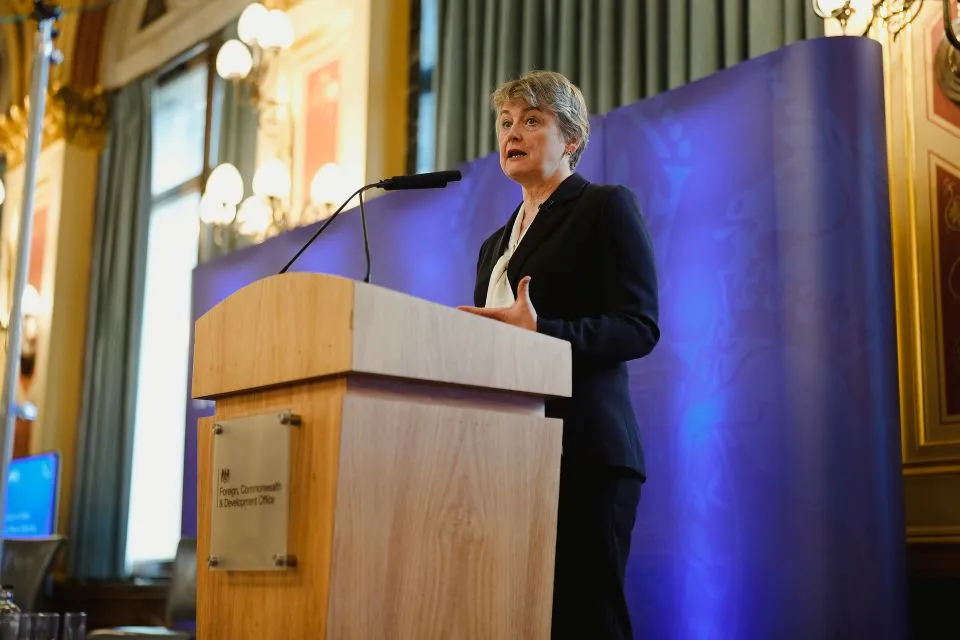
Foreign Secretary Yvette Cooper MP delivered an address marking the 25th anniversary of the Women, Peace and Security agenda.
Recognition of Contributions
She welcomed attendees and acknowledged the women whose efforts have shaped work in this field. She also recognised Her Royal Highness the Duchess of Edinburgh for her engagement and for highlighting the experiences of women facing difficult circumstances. Cooper expressed appreciation to those who have long advocated for women affected by conflict.
Historical Significance of Resolution 1325
Cooper noted that the anniversary reflects the determination of women who spoke out during conflict. She said that twenty-five years ago the international community listened to these voices and recognised that women are not only victims of war but essential participants in building peace. She stated that excluding women increases the likelihood of peace efforts failing and violence re-emerging.
She described UN Security Council Resolution 1325 as a milestone, marking the first time the Security Council stated that women’s roles, experiences and perspectives must be central to conflict response and peacebuilding. She expressed pride that the UK helped secure the resolution and has worked since then to advance its aims, including as penholder and through support for women peacebuilders. She highlighted that the first UK national action plan was adopted almost twenty years ago and that such plans continue.
Importance of Broader Engagement
Cooper emphasised that progress involves more than government action. She highlighted the roles of grassroots organisations, campaigners, community networks, researchers, humanitarians, businesses and peacebuilders, along with cooperation across countries and communities. She acknowledged the contributions of those present at the event.
Examples of Women’s Leadership in Peacebuilding
She noted that over the last twenty-five years women have helped stop violence and build fairer peace processes. She referenced Monica McWilliams and Pearl Sagar of Northern Ireland, Leymah Gbowee in Liberia and women from Ruta Pacífica de las Mujeres in Colombia as examples of such contributions. She said these cases provide lessons for future work and looked forward to discussions on the way forward.
Current Global Challenges
Cooper stated that progress faces serious challenges. She said women made up only around one-sixth of participants in peace talks last year and in some situations were excluded completely. She described the present as a period of significant instability, noting that more countries are experiencing violent conflict than at any point since the Second World War.
She said women and girls are often most affected. She referenced events in Sudan, including reports of rape used as a weapon of war in El Fasher and accounts of sexual violence against women, teenagers and children. She noted that the UN’s humanitarian chief Tom Fletcher recently described the experiences of survivors he met. She said the number of women living in or near conflict zones has nearly doubled in fifteen years and that up to 30% of women and girls in such areas are estimated to have endured sexual violence, including rape, abduction or sexual slavery. She said these abuses cause stigma and trauma that can last for generations. She added that worsening conflict has coincided with stalled or reversed progress.
Renewing the Women, Peace and Security Agenda
Cooper said it is time to reinvigorate the commitments set out in Resolution 1325 and affirmed her intention to place this agenda at the centre of UK foreign policy.
Addressing Impunity for Sexual Crimes
She said the UK is increasing efforts to challenge impunity for conflict-related sexual crimes. She noted that the UK is providing technical support to Ukrainian authorities for war crimes investigations and has funded specialist investigators for UN fact-finding missions in Ukraine, Sudan, the Democratic Republic of Congo and Myanmar. She said the UK recently secured agreement at the UN Human Rights Council for an urgent inquiry into alleged crimes in El Fasher. She added that the International Alliance for preventing sexual violence, currently chaired by Ukraine, will continue to support work combating silence and stigma surrounding sexual violence.
Strengthening Humanitarian Responses
Cooper said humanitarian efforts must better address the specific effects of crises on women and girls. She highlighted the situation in Gaza, where pregnant and breastfeeding women face acute malnutrition and lack reproductive health services. She noted that the UK has provided £3m to the UN to support pregnant women and new mothers and aims to work with Jordan to enable the movement of its neonatal field hospital into Gaza. She added that wider support must include safe shelter, healthcare and assistance for survivors of sexual violence.
Supporting Women’s Participation in Peace Processes
Cooper said women’s representation in peacebuilding must be strengthened. She highlighted UK support for women peacebuilders in Yemen, Afghanistan and Somalia, as well as efforts to promote their participation in processes related to Syria and Sudan. She said the UK will introduce a no-tolerance approach to reprisals and work with the UN to condemn violence against women for speaking out.
Commitment to Future Action
She said that with these priorities and broader collaborative efforts, renewed momentum can be brought to the commitments of Resolution 1325. She referenced the UK government’s mission to address violence against women and girls, including an aim to halve such violence within the next decade. She said she intends to reflect this mission in foreign policy through support for women globally in resisting violence, expanding opportunities and increasing political participation. She concluded by saying that peace, security and prosperity require women to participate without fear or violence.