Ministry of Jal Shakti to Host “Vision for Sujalam Bharat” Summit 2025 on 28–29 November in New Delhi
Union Minister C.R. Paatil to Inaugurate Summit, Outlining Roadmap for Water Security and Climate Resilience
Union Minister of Jal Shakti, Shri C.R. Paatil, will inaugurate the “Vision for Sujalam Bharat” Summit 2025 at Bharat Mandapam, New Delhi, on 28 November 2025.
The Ministry of Jal Shakti is organising the Departmental Summit on “Vision for Sujalam Bharat” on 28–29 November 2025. The initiative aligns with the vision presented by Prime Minister Shri Narendra Modi at the Fourth National Conference of Chief Secretaries, which outlined six thematic summits to bring together officers from both the Centre and States, including junior cadres. The Sujalam Summit aims to support evidence-based policy making, sectoral reforms, and cooperative federalism. As part of NITI Aayog’s series of six thematic Departmental Summits, the Ministry of Jal Shakti leads the national water sector theme, covering source sustainability, drinking water security, sanitation, groundwater management, irrigation efficiency, and integrated rural–urban water management.
Consultations Across Six Core Thematic Areas
For the Vision for Sujalam Bharat, the Ministry conducted extensive consultations across six thematic areas between September and October 2025.
Rejuvenation of Rivers and Springs
Focus: Ensuring continuous and clean water flow, spring-shed management, catchment protection, wetland restoration, riverfront development, and community-led river stewardship.
Workshop Details: Held on 30 September 2025 in virtual mode, with participation from 592 officials representing 26 States, including Chief Engineers, Superintending Engineers, Commissioners, and officers from Water Resources, Sanitation, Agriculture, and Nagar Nigam Departments.
Greywater Management and Reuse
Focus: Promoting circular water use through financing models, pricing frameworks, nature-based solutions, septage management, and reuse in domestic, industrial, and urban sectors.
Workshop Details: Conducted on 22 September 2025 in virtual mode, with 532 participants including State Nodal Officers, Mission Directors, senior department officials, engineers, PRI members, SHGs, technical experts, and development partners.
Technology for Efficient Water Management
Focus: Adoption of digital tools, AI-driven water monitoring, micro-irrigation, loss reduction, leak detection, and precision agriculture for demand-side water management.
Workshop Details: Held on 24 September 2025 in virtual mode, with around 500 representatives from Central and State Government agencies, including CWC, WRD, Irrigation, Groundwater, RDPR, Agriculture, Dam Safety, MGNREGA, SBM(G), Atal Bhujal, WALMI, ACIWRM, CEEW, and officers from nearly all States/UTs.
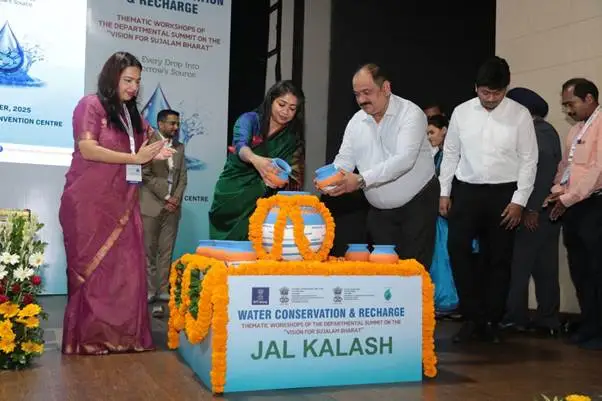
Water Conservation and Recharge
Focus: Community-led groundwater governance, managed aquifer recharge, revival of traditional systems, and LiFE-aligned behavioural interventions.
Workshop Details: Organised on 7 October 2025 in physical mode at the NDMC Convention Centre, attended by over 250 participants from State Water Departments, Irrigation, PHED, Rural Development, Groundwater Departments, WALMI, Zila Panchayats, Soil & Water Conservation, and partner organisations.
Sustainability of Drinking Water Supply
Focus: Ensuring adequate and safe drinking water through source sustainability planning, climate-resilient infrastructure, community-based O&M, and digital governance tools.
Workshop Details: Conducted on 26 September 2025 in virtual mode, with over 800 delegates, including 10 Mission Directors, more than 20 senior engineers, district officials, Gram Pradhans, VWSC members, and technical partners such as Biome and GuruJal.
Community and Institutional Engagement for Behaviour Change
Focus: Strengthening community institutions, frontline workers, and inter-departmental convergence to ensure long-term sustainability of water assets.
Workshop Details: Held on 1 October 2025 in virtual mode, with 155+ participants including 20 senior officers, 45 district administrators, 30 technical experts, and 60 field-level implementation officials from multiple States and departments.
Insights and Key Priorities
Across the six thematic workshops, more than 2,800 participants shared insights, emerging challenges, best practices, and actionable recommendations. The Ministry has consolidated these contributions into a comprehensive report outlining pathways to accelerate water sustainability in India. The consultative process identified five key priorities: strengthening source sustainability, scaling groundwater recharge, enhancing modern and nature-based solutions, revitalising community institutions, and fostering inter-departmental convergence to improve programme delivery.
Summit Participation and Focus
The two-day Summit will include representatives from Central Ministries, States and Union Territories, technical experts, Panchayat members, NGOs, Self-Help Groups, community organisations, and recipients of the National Water Awards and Jal Sanchay Jan Bhagidari Awards. Discussions will focus on recommendations from the thematic workshops.
The Vision for “Sujalam Bharat” Summit 2025 brings together policymaking authorities and grassroots actors, from Central and State Secretaries to frontline workers engaged with communities. The Summit aims to facilitate open dialogue, align strategy with execution, and generate practical recommendations for water and sanitation governance.
The event reflects India’s commitment to building water security through integrated planning, community participation, and sustainable practices, supporting progress towards a Sujalam and Sustainable Bharat.