DDWS Organises First Multilingual Sujal Gram Samvad; Villagers Share Stories of Transformation under Jal Jeevan Mission (JJM)
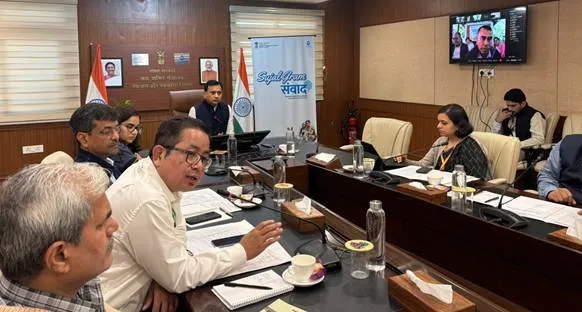
A first-of-its-kind platform connecting Gram Panchayat headquarters villages, districts, States/UTs, and Department of Drinking Water & Sanitation (DDWS), Ministry of Jal Shakti through regional-language dialogue.
People across the country listen to grassroots voices and experiences in their own languages.
The inaugural Sujal Gram Samvad, organised by DDWS today, emerged as a national platform where villagers from across 12 States/UTs narrated – in their regional languages – their stories of struggle, determination, and transformation under JJM.
Village representatives described how access to safe tap water has improved health, reduced water-borne diseases, enabled girls to attend school regularly, freed women from hours of water collection, and strengthened livelihood opportunities. Communities narrated how they came together to repair motors and pipelines, ensure uninterrupted supply, conduct water quality testing, promote water conservation, support user-charge collection, and establish grievance redressal systems.
These stories – shared in Odia, Tamil, Hindi, Gujarati, Marathi, Punjabi, Mizo, Rajasthani, Manipuri, Telugu, Maghi and Bundelkhandi – were heard across the country by over 1,500 participants. More than 800 people joined interactively, while another equal number connected via YouTube, making the Samvad a truly national listening platform.
Live interaction in Odia
A live interaction in Odia took place between the Secretary, DDWS and representatives of Belagam Village, District – Ganjam, Odisha.
Stories From the Villages: Voices of Transformation
Odisha – Belagam Village, District ‒ Ganjam
The Samvad opened with Belagam village, where villagers explained how user-fee collection, water quality testing, and community-level monitoring have strengthened daily water supply. The Secretary, DDWS interacted with them in Odia, appreciating their community leadership and women’s involvement.
Madhya Pradesh – Beohari Village, District ‒ Seoni
Villagers from Beohari shared how they work collectively to keep motors functional, repair pipelines, address electricity issues, and run awareness drives on saving water and preventing leakages. They spoke of healthier children and reduced drudgery for women.
Rajasthan – Nirjharana Village, District ‒ Dausa
Representatives from Nirjharana narrated in Rajasthani how JJM has changed their daily lives – bringing dignity, certainty, and better health. Smt. Swati Meena Naik, Joint Secretary, National Jal Jeevan Mission (NJJM), interacted with them in the local language, appreciating their traditional practices, water conservation measures, and community-led management of the water supply system.
Tamil Nadu – Alinjivakkam Village, District – Tiruvallur
Villagers from Alinjivakkam spoke about how regular tap water supply has improved family health and reduced the need for women to walk long distances. The Village Water & Sanitation Committee (VWSC) works closely with the Anganwadi Centres (AWC) and ASHA workers to mobilise the community, promote safe water practices, and strengthen participation in the village water supply system.
Maharashtra – Sarola Village, District – Pune
Sarola villagers shared how tap connections have improved health, sanitation, and daily routines. Women spoke of time saved due to doorstep water availability, which has opened opportunities for income generation and self-help group activities. They also highlighted regular water quality monitoring.
Mizoram – Khawruhliian Village, District – Aizawl
In Mizo, villagers of Khawruhliian explained how their Gram Panchayat ensures operation & maintenance (O&M) of water supply schemes, despite terrain challenges. They highlighted their work on spring protection, pipeline repair, and community monitoring to maintain uninterrupted service.
Punjab – Parcha Village, District – Gurdaspur
Speaking in Punjabi, villagers described how consistent tap supply has eased daily life and reduced stress on women. They also talked about regular water quality checks, plantation drives near water sources, and women’s groups managing daily operations.
Gujarat – Takhatgadh Village, District – Sabarkantha
Villagers shared that their user-charge collection system is firmly in place. The state team highlighted how Primary Agricultural Credit Societies (PACS) are supporting the Gram Panchayat in managing and strengthening the village water supply system.
Manipur – Lairenjam Village, District – Imphal West
Speaking in Manipuri, representatives discussed how JJM has improved health, reduced drudgery, and provided dignity to women. They explained their practices in monitoring water quality, repairing pipelines, and mobilising the community.
Bihar – Kachariyadih Village, District – Nawada
Representatives described how safe tap water access has reduced water-borne illnesses and improved lives of children and mothers. They shared how their Panchayat maintains water sources and promotes water-quality awareness.
Andhra Pradesh – Enamadala Village, District – Eluru
They explained how the village regularly monitors water quality and performs systematic testing through their laboratory. Prompt action is taken on leaks or supply issues to ensure safe, uninterrupted drinking water.
Uttar Pradesh – Banka Pahari Village, District – Jhansi
Villagers described their journey from water scarcity to reliable tap connections, and spoke about the role of Jal Sahelis in mobilising the community, promoting conservation, and monitoring supply systems.
Across all 12 States/UTs, communities broadly described how they monitor water quality, manage local assets, conserve water, plant trees, improve source protection, and maintain grievance redressal mechanisms, showing strong grassroots ownership.
DDWS team engagement
The DDWS team interacted with representatives from Khawruhliian village, District – Aizawl, Mizoram, in the Mizo language.
Institutional Participation and Support
Shri K. V. S. Choudhary, Managing Director – Madhya Pradesh Jal Nigam, attended the Samvad session via video conference.
District administrations and the State Water & Sanitation Missions (SWSM) played a critical role in enabling villages: guiding source sustainability and O&M planning, convergence with MGNREGA, facilitating water quality testing, and promoting community good practices.
State-Wise Participation from Gram Panchayat Headquarters Villages
The following villages participated through structured 15-minute regional-language segments:
- Odisha (Odia): Belagam, District – Ganjam
- Madhya Pradesh (Hindi): Beohari, District – Seoni
- Manipur (Meitei/Manipuri): Lairenjam, District – Imphal West
- Rajasthan (Rajasthani/Marwari): Nirjharana, District – Dausa
- Tamil Nadu (Tamil): Alinjivakkam, District – Tiruvallur
- Andhra Pradesh (Telugu): Enamadala, District – Eluru
- Punjab (Punjabi): Parcha, District – Gurdaspur
- Gujarat (Gujarati): Takhatgadh, District – Sabarkantha
- Maharashtra (Marathi): Sarola, District – Pune
- Mizoram (Mizo): Khawruhliian, District – Aizawl
- Bihar (Magahi): Kachariyadih, District – Nawada
- Uttar Pradesh (Hindi/Bundelkhandi): Banka Pahari, District – Jhansi
A Platform for Shared Learning Across Governance Levels
One of the objectives of the Sujal Gram Samvad was to ensure that good practices shared by villages are adopted and scaled by district administrations and State Missions. Dialogue with District Collectors / District Magistrates and State Mission Directors helped align local efforts with broader policy and governance frameworks.
In his inaugural speech, the Secretary, DDWS said: “The framework of Sujal Gram Samvad has been designed to listen to Gram Panchayats, understand their challenges, learn from their good practices, and recognise their leadership on the ground.”
After each village’s presentation, the Additional Secretary & Mission Director (AS&MD), NJJM, interacted with the village team, the District Collector / District Magistrate, and the State Managing Director. He emphasised operation & maintenance of rural water supply systems; convergence with MGNREGA; source sustainability & water conservation; regulated supply; water quality testing; grievance redressal; Panchayat dashboard use; user-charge collection; and commissioning protocols.
In his closing remarks, the AS&MD highlighted three action points:
- Use of the Panchayat Dashboard: Gram Panchayats must regularly log in, track water supply details, and submit feedback or issues.
- Training of village youth, especially girls: Gram Sabhas should identify youth for technical training to manage village assets independently.
- Protection of all drinking water sources: He emphasised long-term sustainability, referencing the revised MGNREGA Guidelines (S.O. 4288(E), 23 Sept 2025) mandating water-related expenditure for recharge, harvesting, and source protection. :contentReference[oaicite:0]{index=0}
The Samvad was chaired by the Secretary, DDWS, Shri Ashok K.K. Meena, and attended by AS&MD, NJJM, Shri Kamal Kishore Soan; JS-NJJM, Smt. Swati Meena Naik; senior DDWS officers; District Collectors / District Magistrates; State Managing Directors; and members from SWSM and DWSM across all States/UTs, along with village representatives.
Regional-Language Dialogue Strengthens Trust
The multilingual format allowed communities to speak in their native tongues, fostering trust and authenticity. It deepened the connection between the grassroots and institutions and enabled officials to gain direct insight into ground realities.
Going forward, the Sujal Gram Samvad will be held periodically to enable continuous, structured, and inclusive dialogue between villages, districts, States, and DDWS. These efforts will continue with other States as well.