Government Implements Four Labour Codes to Streamline Labour Laws
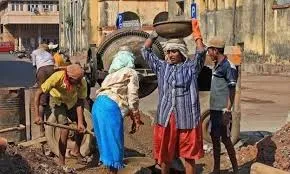
The Government of India has announced that the Code on Wages 2019, the Industrial Relations Code 2020, the Code on Social Security 2020 and the Occupational Safety, Health and Working Conditions Code 2020 will come into effect on 21 November 2025. These Codes replace 29 earlier labour laws with the aim of modernising labour regulations, strengthening worker welfare and aligning the labour framework with current employment trends. The initiative is intended to support a workforce prepared for future needs and promote resilient industries under labour reforms for Aatmanirbhar Bharat.
Context of Labour Law Consolidation
Many of India’s labour regulations were established during the pre-Independence and early post-Independence period, between the 1930s and 1950s, when economic conditions and work structures differed considerably from today. While several major economies updated and consolidated their labour laws in recent decades, India continued to operate under numerous separate and sometimes outdated provisions across 29 Central labour laws. These fragmented frameworks created challenges in adapting to changing economic conditions and new forms of employment, increasing uncertainty and compliance requirements for both workers and industries. The implementation of the four Labour Codes addresses this long-pending issue by replacing colonial-era systems and aligning with contemporary global practices. Together, the Codes aim to support both employees and enterprises by creating a protected, efficient and future-ready workforce.
Benefits Across Key Sectors
Fixed-Term Employees
Fixed-term employees will receive benefits equivalent to permanent workers, including leave, medical and social security entitlements. Gratuity will be available after one year instead of five. The Codes ensure equal wages for fixed-term and permanent staff and encourage direct hiring while reducing excessive reliance on contractual roles.
Gig and Platform Workers
Definitions for gig work, platform work and aggregators have been introduced. Aggregators are required to contribute 1 to 2 percent of annual turnover, subject to a 5 percent ceiling on the amount paid or payable to gig and platform workers. A Universal Account Number linked to Aadhaar will allow portable and easily accessible welfare benefits across states.
Contract Workers
Fixed-term employment is expected to improve employability and extend social security and legal protections similar to those available to permanent employees. Gratuity will be provided after one year of continuous service. Principal employers will be responsible for health and social security benefits for contract workers, who will also receive free annual health check-ups.
Women Workers
The Codes prohibit gender discrimination and guarantee equal pay for equal work. Women may work night shifts and undertake all categories of work, including underground mining and heavy machinery operations, subject to consent and required safety measures. Women’s representation in grievance committees is mandatory and the definition of family for female employees has been expanded to include parents-in-law.
Youth Workers
Minimum wages are assured for all workers. Appointment letters are compulsory, supporting formal employment and social security. Workers must receive wages during leave. The Central Government’s floor wage will ensure a basic standard of living for all employees.
MSME Workers
All MSME workers are covered under the Social Security Code 2020, with eligibility based on employee count. Minimum wages are ensured for all. Workers will have access to facilities such as canteens, drinking water and rest areas. Provisions include standard working hours, double wages for overtime, paid leave and timely payment of wages.
Beedi and Cigar Workers
Minimum wages are guaranteed. Working hours are set between 8 and 12 per day, with a weekly limit of 48 hours. Overtime beyond these limits requires consent and must be paid at twice the normal wage rate. Timely wage payment is assured and workers become eligible for bonus after 30 days of work in a year.
Plantation Workers
Plantation workers are covered under the OSHWC Code and the Social Security Code. The Codes apply to plantations with more than 10 workers or those larger than 5 hectares. Safety training is mandatory for handling chemicals and protective gear must be provided. Workers and their families are entitled to full ESI medical facilities and educational facilities for children.
Audio-Visual and Digital Media Workers
Workers in digital and audio-visual fields, including electronic-media journalists, dubbing artists and stunt performers, will receive full benefits. Appointment letters must specify designation, wages and social security entitlements. Wage payment must be timely. Overtime beyond prescribed hours requires consent and must be paid at double the normal rate.
Mine Workers
The Social Security Code recognises certain commuting accidents as employment-related under specific time and place conditions. Central standards have been notified for occupational safety and health. Free annual health check-ups will be provided. Working hours are limited to 8 to 12 hours per day and 48 hours per week.
Hazardous Industry Workers
Annual free health check-ups are mandatory for all workers. National safety standards will be framed by the Central Government. Women may work in all establishments, including hazardous sectors, with equal opportunities. Safety committees must monitor worksites and ensure safe handling of hazardous chemicals.
Textile Workers
Migrant workers, whether directly employed, contractor-based or self-migrated, will receive equal wages, welfare benefits and PDS portability. Claims for pending dues may be raised for up to three years. Overtime must be paid at double wages.
IT and ITES Workers
Salaries must be released by the seventh of every month. Equal pay is mandated and participation of women is supported, including permission to work night shifts with safeguards. Disputes regarding harassment, discrimination or wages must be resolved promptly. Social security benefits are guaranteed through fixed-term employment and mandatory appointment letters.
Dock Workers
Dock workers will receive formal recognition and legal protection. Appointment letters will ensure access to social security benefits. All workers, including contract and temporary workers, will receive provident fund, pension and insurance benefits. Employers must fund annual health check-ups and provide medical facilities, first-aid arrangements and sanitary infrastructure.
Export Sector Workers
Fixed-term workers in the export sector will receive gratuity, provident fund and other social security benefits. Workers may avail annual leave after 180 days of work in a year. Timely wage payment is mandatory, with no unauthorised deductions or wage ceilings. Women may work night shifts with consent and required safety arrangements, including surveillance, secure transport and security measures. Overtime must be paid at double wages.
Additional Reforms Under the Labour Codes
The Codes introduce a national floor wage to ensure employees do not earn below a minimum living standard. They mandate gender-neutral pay and enhance job opportunities while prohibiting discrimination against all workers, including transgender persons. The inspector-cum-facilitator model prioritises guidance and compliance support. Dispute resolution will be quicker through two-member Industrial Tribunals, with an option to approach tribunals directly after conciliation. Single registration, licence and return requirements replace multiple filings. The National OSH Board will develop harmonised safety and health standards. Establishments with 500 or more workers must create safety committees. Revised applicability limits for factories reduce regulatory obligations for smaller units while maintaining worker protections.
The Government will engage with the public and stakeholders while framing rules, regulations and schemes under the Codes. During the transition, relevant provisions of existing labour Acts and their associated rules, notifications and standards will continue to remain in effect.
Social security coverage in India has expanded significantly over the past decade, rising from about 19 percent of the workforce in 2015 to more than 64 percent in 2025. The implementation of the four Labour Codes represents another step in extending social security and enabling portability of benefits across states and sectors. With expanded protections and greater mobility of entitlements, the Codes place workers, including women, youth, unorganised, gig and migrant employees, at the centre of labour governance. Reduced compliance burdens and modern work arrangements are expected to support employment, skilling and industry growth.