
Overview
Nestled in Northeast India, Tripura is renowned for its lush landscapes, vibrant culture, and rich heritage. With approximately 60% forest cover and 24% cultivated land, the state thrives on agriculture and related industries. Known as the “Daughter of Mother Nature,” Tripura excels in horticultural crops like pineapple and jackfruit, tea production, and sericulture, supported by its favorable climate. The state’s handloom and handicraft traditions are also significant. Recent GST reductions from 12-18% to 5% have invigorated these sectors, enhancing competitiveness, supporting rural livelihoods, and expanding market reach for local artisans, farmers, and producers.
Key Impacts of GST Reductions
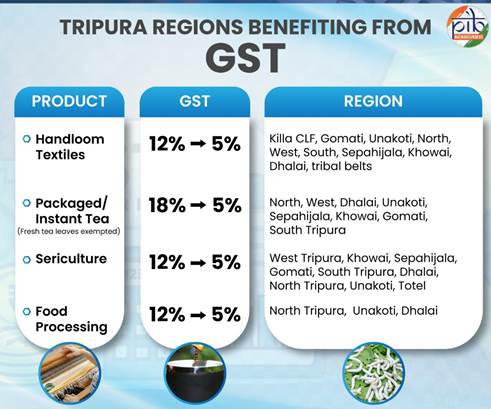
The GST cuts have significantly lowered tax rates, benefiting Tripura’s core industries:
- Handloom Textiles: GST on handloom fabrics and stitched apparel reduced from 12% to 5%, aiding over 1.37 lakh households.
- Tea Industry: GST on packaged and instant tea slashed from 18% to 5%, supporting 54 tea estates and 2,755 small growers.
- Sericulture: GST on silk handicrafts dropped from 12% to 5%, benefiting 15,550 farmers.
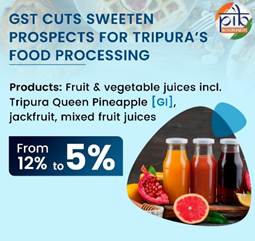
- Food Processing: GST on juices, including Queen Pineapple, reduced from 12% to 5%, supporting 2,848 processing units.
Handloom Textiles: Preserving Tradition
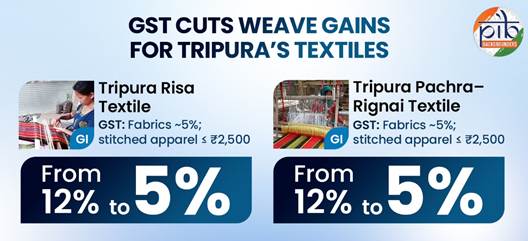
Tripura Risa Textile
The Tripura Risa, a GI-tagged handwoven textile, is a cultural cornerstone for Tripuri tribal communities. Crafted primarily by women using loin or backstrap looms, it serves as headgear, a stole, or an upper garment and is a symbol of respect in ceremonies. Supported by the Tripura Rural Livelihood Mission, Risa textiles cater to domestic markets. The GST reduction from 12% to 5% on fabrics and stitched apparel (priced up to ₹2,500) enhances affordability, boosts competitiveness, and supports the livelihoods of rural women while preserving cultural heritage.
Tripura Pachra–Rignai Textile
Another GI-tagged textile, the Pachra–Rignai, is woven across Tripura’s tribal belts and symbolizes cultural identity. The Rignai (skirt) and Pachra (wrap) are everyday and ceremonial attire. Sold through Purbasha, the Tripura Handloom & Handicrafts Development Corporation, and online platforms, these textiles benefit from a GST cut from 12% to 5% for stitched sets (₹1,001–₹2,500). This reform enhances marketability, supports artisans, and promotes cultural preservation.
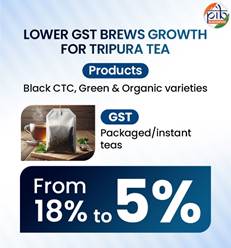
Tea Industry: Growing Global Reach
Tripura’s tea sector, spanning 54 estates and 2,755 small growers, produces black CTC, green, and organic teas. Sold primarily through Guwahati and Kolkata auctions, Tripura tea also reaches domestic markets and exports to Bangladesh, the Middle East, and Europe. The GST reduction from 18% to 5% on packaged and instant tea lowers costs, making it more competitive and accessible. This reform strengthens the value chain, benefiting growers, workers, and distributors.
 Source: Press Information Bureau, Government of India
Source: Press Information Bureau, Government of India
Source: Press Information Bureau, Government of India
Source: Press Information Bureau, Government of India
Source: Press Information Bureau, Government of India
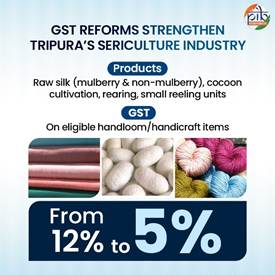
Sericulture: Empowering Rural Farmers
Tripura’s sericulture sector supports 15,550 farmers engaged in mulberry and non-mulberry silk cultivation across multiple districts. From cocoon rearing to raw silk production and small-scale reeling, this industry is a vital rural livelihood source. The GST reduction from 12% to 5% on silk handicrafts enhances affordability and market competitiveness, supporting small producers and promoting sustainable growth.
Food Processing: Adding Value to Agriculture
Tripura’s food processing sector, driven by small farmers, focuses on the GI-tagged Queen Pineapple and other tropical fruits like jackfruit. Supported by schemes like PM-FME, the state hosts 2,848 processing units. Between 2018–2025, over 73 metric tons of pineapple were exported to Dubai, Oman, Qatar, and Bangladesh, with 15,000 metric tons supplied domestically. The GST cut from 12% to 5% on fruit juices, including Queen Pineapple juice, lowers costs, boosts competitiveness, and supports export growth.
Conclusion
The GST reductions from 12-18% to 5% have revitalized Tripura’s handloom, tea, sericulture, and food processing sectors. By lowering costs and enhancing market access, these reforms empower artisans, farmers, and small producers, particularly tribal women. From Risa and Pachra–Rignai textiles to Queen Pineapple products, Tripura’s rural economy is strengthened, positioning the state as a key contributor to Northeast India’s growth.
Keyword: Tripura GST Reforms
Meta Description: Discover how GST reductions from 12-18% to 5% are boosting Tripura’s handloom, tea, sericulture, and food processing sectors, empowering rural livelihoods and enhancing market competitiveness.