PM Addresses Inauguration of Skyroot’s Infinity Campus
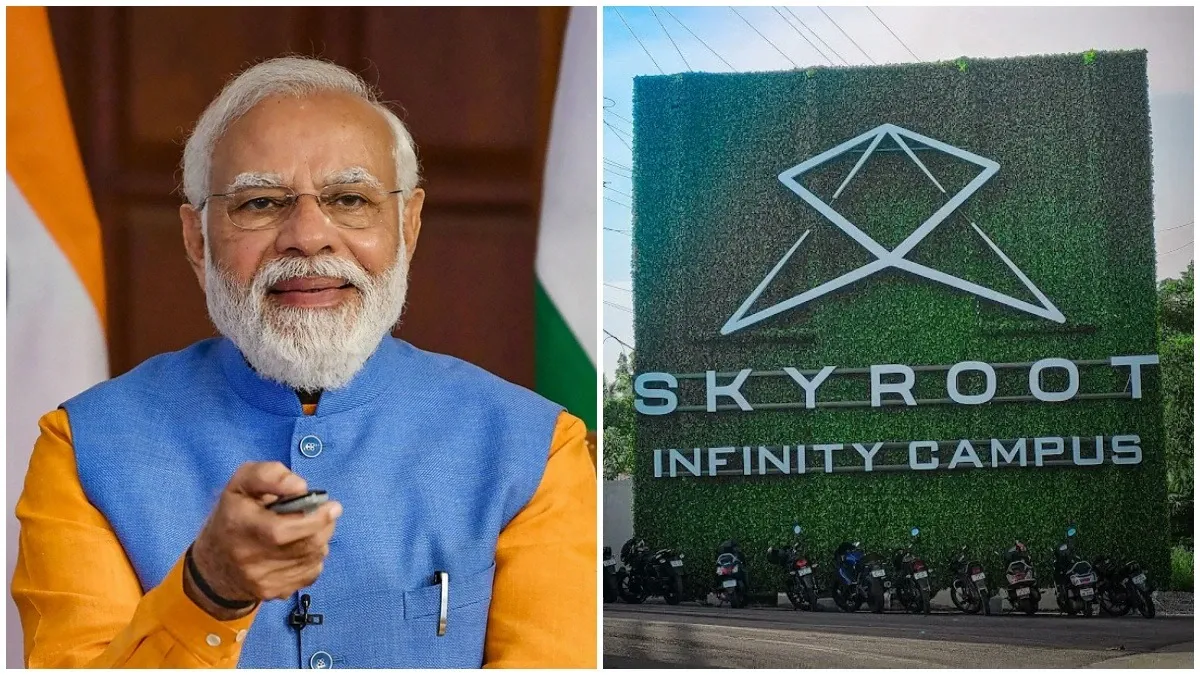
The Prime Minister delivered an address at the inauguration of Skyroot’s Infinity Campus via video conference. He was joined by Cabinet Minister G. Kishan Reddy, Andhra Pradesh Industry Minister T. G. Bharat, IN-SPACe Chairman Pawan Goenka, members of the Skyroot team, dignitaries, and attendees.
Remarks on Space Sector Developments
The Prime Minister stated that the country is experiencing a significant opportunity in the space sector, with the private sector taking a major step forward in Bharat’s space ecosystem. He noted that Skyroot’s Infinity Campus represents the nation’s new approach, innovation, and the strength of its youth. He said that young innovators are demonstrating increased risk-taking ability and entrepreneurship, and that the event reflects Bharat’s potential to become a leader in the global satellite launch ecosystem. He extended congratulations to Pawan Kumar Chandana and Naga Bharath Daka, describing them as an inspiration for aspiring space entrepreneurs.
He recalled that Bharat’s space journey began with limited resources, yet the nation’s ambitions remained expansive. He referred to the early days when rocket components were transported on a bicycle, highlighting that the scale of dreams is shaped by determination rather than resources. He acknowledged ISRO’s longstanding contribution and said Bharat has established credibility, capability, and value in the space sector.
Reforms and Expansion of the Space Ecosystem
The Prime Minister said the global space sector is expanding rapidly and now supports communication, agriculture, marine monitoring, urban planning, weather forecasting, and national security. He explained that the government introduced major reforms, opening the space sector to private innovation and creating a new Space Policy. He added that the government connected startups and industry with innovation, established IN-SPACe, and opened ISRO facilities and technology to startups. He said these efforts have transformed Bharat’s space ecosystem over the past six to seven years into an open and innovation-driven space.
He noted that the nation’s youth prioritize the national interest and take advantage of opportunities. He said the opening of the space sector encouraged Gen-Z involvement, with more than 300 space startups contributing to the future of the country’s space journey. He described meeting many startups that began with small teams and limited resources, yet pursued ambitious goals. He said this spirit has fueled Bharat’s private space transformation, with Gen-Z talent creating new technologies in propulsion systems, composite materials, rocket stages, and satellite platforms. He added that Bharat’s private space talent is gaining global recognition and attracting investment.
Global Demand and Emerging Opportunities
The Prime Minister highlighted the rising global demand for small satellites, increasing launch frequencies, and new entrants in satellite services. He said space has become a strategic asset and that the global space economy is expected to expand significantly. He described this as an opportunity for the nation’s youth.
He stated that Bharat possesses advanced engineering talent, high-quality manufacturing, world-class launch sites, and an innovation-driven mindset. He said these strengths make Bharat’s space capabilities both cost-effective and dependable, resulting in rising global interest in satellite manufacturing, launch services, and technology partnerships in Bharat.
Role of Startups and Deep-Tech Growth
The Prime Minister connected developments in the space sector to a broader startup wave in the country over the past decade across sectors including FinTech, AgriTech, HealthTech, ClimateTech, EduTech, and DefenceTech. He said Bharat has become the world’s third-largest startup ecosystem, with startups emerging not only from major cities but from smaller towns and villages. He noted that there are now more than 1.5 lakh registered startups, many of which have become unicorns.
He said the country is advancing beyond apps and services toward deep-tech, manufacturing, and hardware innovation, particularly in the semiconductor sector. He said government initiatives are reinforcing the nation’s technological future, with semiconductor fabrication units, chip manufacturing, and design hubs developing rapidly. He described these efforts as supporting self-reliance and strengthening Bharat’s role in the global supply chain.
Future Reforms and Research Initiatives
The Prime Minister said the scope of reforms continues to grow. He stated that the government is taking steps to open the nuclear sector to greater private participation, creating opportunities in small modular reactors, advanced reactors, and nuclear innovation. He said this will strengthen the country’s energy security and technological capabilities.
He emphasized the importance of research for shaping the future and outlined government initiatives designed to expand opportunities for young researchers. He referred to the establishment of the National Research Foundation, the “One Nation, One Subscription” initiative for journal access, and the 1 lakh crore rupee Research, Development and Innovation Fund. He also noted that more than 10,000 Atal Tinkering Labs have been established and that plans are underway to create 50,000 additional labs.
Vision for Bharat’s Space Aspirations
The Prime Minister said the coming era belongs to Bharat, its youth, and its innovations. He recalled speaking about space aspirations on Space Day, noting commitments to expand launch capacity in the next five years and to support the emergence of five new unicorns in the space sector. He said Skyroot’s progress demonstrates that these goals are within reach.
He assured support to young Indians, startups, scientists, engineers, and entrepreneurs, stating that the government stands with them at every step. He offered congratulations to the Skyroot team and extended his best wishes to all contributing to the nation’s space journey. He concluded by calling for collective efforts to make the 21st century the century of Bharat, both on Earth and in space.