
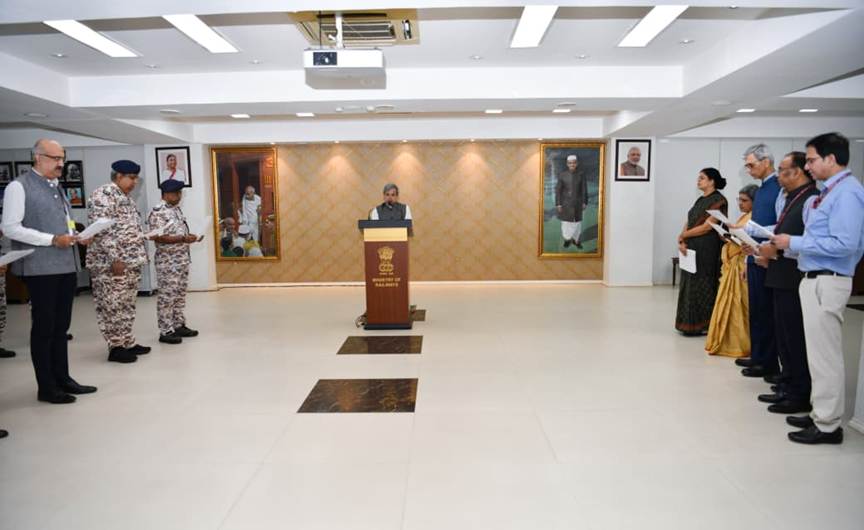
Every year, October 31 brings a special moment for every Indian to remember the man who stitched the nation together. This time, the top leadership of Indian Railways chose Rail Bhawan in the heart of Delhi to renew that promise of togetherness. Satish Kumar, who heads the Railway Board as Chairman and CEO, stood before hundreds of officers and staff to lead the National Unity Pledge.
A Morning Filled with Purpose and Patriotism
The clock had just struck morning when everyone gathered in the main hall. Officers in crisp uniforms, employees from different departments, and senior officials filled the space. There was a quiet energy in the air, the kind that comes when people know they are part of something larger than daily routines.
Satish Kumar spoke a few calm words before starting the pledge. Then, in one voice, the entire room repeated the lines that bind every citizen to the idea of one India. They promised to protect the country’s unity, keep its borders safe, and carry the message of harmony to every corner they reach. The words honoured Sardar Vallabhbhai Patel, the leader who merged more than five hundred princely states into a single nation after independence.
Standing right beside the Chairman were key figures of the Railway Board. Hitendra Malhotra, who looks after operations and business growth, joined in. Dr. Jagdish Chandra, the head of railway health services, added his voice. Aruna Nayar, the Board Secretary, stood with other senior officers, showing that the pledge was not just ceremony but a shared duty at every level.
What the Pledge Actually Says
The lines are short but carry deep meaning. Each person swore to work for national unity and security. They promised to spread the same spirit among colleagues, families, and communities. The pledge ends with a personal promise to do everything possible for the safety of the country from within. It is a reminder that unity is not a one-day event but a daily choice.
For railway employees, this promise hits close to home. Their trains connect villages in the northeast to coastal towns in the south, mountain stations in the north to desert halts in the west. Every journey they enable is a thread in the fabric of national unity. Taking the pledge inside Rail Bhawan felt like renewing the contract between the railways and the idea of India.
The Pledge Echoes Across the Railway Network
Delhi was only the beginning. As the sun moved across the sky, the same words rang out in railway offices from Kanyakumari to Kashmir. Divisional headquarters, workshop floors, station masters’ rooms, and loco sheds turned into small islands of unity. Employees paused their work, formed neat rows, and repeated the pledge in local languages where needed, but always with the same spirit.
In Mumbai, the bustling headquarters of Central Railway saw hundreds gather under the Gothic arches. In Chennai, Southern Railway staff stood in the afternoon heat to honour the day. Up in Guwahati, Northeast Frontier Railway employees braved early winter chill to take the oath. Even remote signal cabins and track maintenance gangs joined through video links or simple gatherings by the tracks.
Senior officers travelled to far-flung zones to lead the ceremony. General managers read the pledge in regional offices. Junior staff who run trains at midnight or repair coaches in dusty yards raised their hands with equal pride. The message was clear: every railway worker, no matter the rank or location, carries the duty to keep India together.
Why Sardar Patel Still Matters to Railways
Indian Railways is older than independence, but its true unity came after 1947. Princely states ran their own railway companies with different gauges, rules, and liveries. Sardar Patel’s firm hand brought them under one flag. The map of Indian Railways you see today, with standard gauge lines stretching 68,000 kilometres, is his legacy in steel and steam.
Every National Unity Day, railway employees remember that history. They see the pledge not as routine but as gratitude to the Iron Man who made their network possible. The ritual keeps alive the story of how a divided transport system became the lifeline of a united nation.
Beyond symbolism, the day strengthens workplace bonds. Officers who usually discuss timetables and budgets stand shoulder to shoulder with trackmen and clerks. The shared oath breaks hierarchy for a few minutes and reminds everyone they serve the same tricolor.
Looking Ahead with Renewed Commitment
As the ceremony ended in Rail Bhawan, officers returned to their desks with quiet resolve. Satish Kumar later walked through corridors, greeting staff and asking about their families. Small gestures, but they carried the same message of unity into everyday work.
Across the network, the day closed with canteen conversations about Patel’s life, quick quizzes for children of employees, and promises to keep the pledge alive until the next October 31. For Indian Railways, National Unity Day is more than a calendar marking. It is fuel for the long journey of keeping 1.4 billion people connected, safe, and proud of one nation.
The railways run on schedules, but they also run on shared dreams. Moments like the unity pledge make sure those dreams stay on track.