
Imagine a world where every corner gets power from the sun without anyone missing out. That is the big idea President Droupadi Murmu pushed when she spoke at the eighth meeting of the International Solar Alliance in New Delhi. Held at Bharat Mandapam, this gathering brought together leaders from 137 nations just ahead of the upcoming climate talks in Brazil.
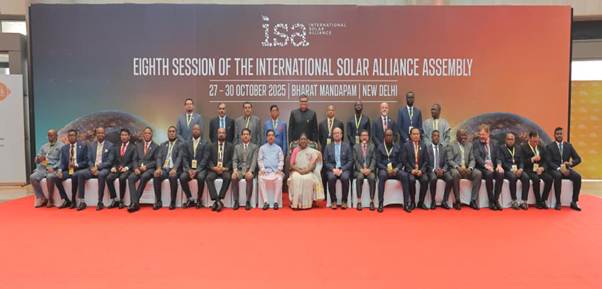
India Stays Firm on Solar Goals with All Partners
The President made it clear that India will keep working hand in hand with every member country to create a future run on sunlight. She highlighted how far the alliance has come with projects like a special fund for solar setups, help for small islands, mini power grids in Africa, and new digital tools. Now the focus must shift to making sure women, farmers, remote villages, and tiny islands all benefit equally.
She told the crowd to look past just building big plants and think about real people. Link solar power to new jobs, give women more say, boost village incomes, and bring digital access to everyone. Success should show in brighter homes, stronger families, and changed communities, not only in power numbers. Share the best tech freely and protect nature while growing solar farms, because that is why we choose clean energy in the first place.
How the Alliance Grew from Idea to Real Results
Started back at the 2015 Paris climate meet, the International Solar Alliance has turned into a strong group that gets things done. In ten years it went from dreaming big to delivering real change across countries. It follows four main paths: pulling in big money, building skills and online platforms, working close with regions and nations, and mapping out tech and rules.
Union Minister Pralhad Joshi, who heads the alliance and handles new energy in India, shared how the country blends old wisdom with modern growth. A little over ten years ago India was just starting its clean power push to light up millions of homes. Today it ranks fourth worldwide in renewable setup. Prime Minister Narendra Modi guided this shift, hitting a goal of half power from non-fossil sources five years early. Through the alliance, India speaks for developing nations and turns words into helpful steps like sharing tech and know-how.
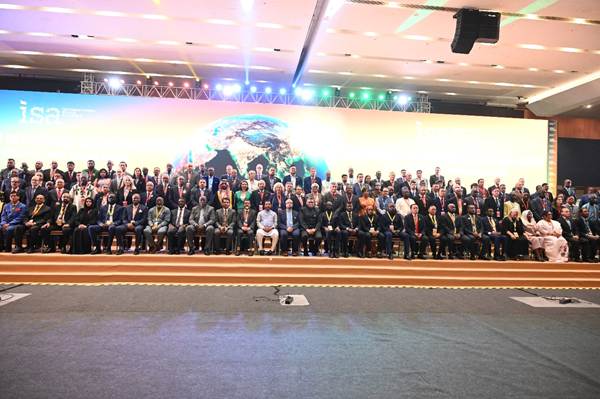
France Keeps Strong Support as Co-Founder
From the French side, Minister Eléonore Caroit sent a video note stressing how vital the alliance is for solar progress. France has co-led since the start and stays fully behind speeding up clean energy shifts. Another French official, Benoit Faraco, linked the work to Paris Agreement aims of keeping warming under 1.5 degrees. He looks forward to the alliance showing wins at the Brazil meet. France also pledged money for the Africa solar project.
Global South Takes Center Stage in Fast Solar Growth
Ashish Khanna, who runs the alliance, pointed out a stunning fact. The world needed 25 years for the first thousand gigawatts of solar, but only two years for the next thousand. It may double again in four years. Developing countries sit right in the middle of this boom. The alliance now spreads India’s wins in big projects, new ideas, and low costs to others.
New efforts include group buying for small islands, the Africa fund, a worldwide skill center, programs on recycling and waste, and a push for connecting grids across borders. These move countries from small tests to full rollout, creating lasting, fair solar systems.
India’s Own Success Lights the Path Ahead
India now stands third in making solar power. Half its total capacity comes from clean sources, reached well before the 2030 mark. This saved around 46 billion dollars in fuel imports and health costs from pollution. Over 108 thousand gigawatt-hours of sun power flowed last year. Schemes like free rooftop electricity for homes and solar pumps for farms will spread to Africa and island nations via the alliance. These put power in people’s hands, aid daily work, and reach far-off spots. It is pure teamwork among developing lands, swapping tips and growing solutions fast.
Fresh Launches That Change the Game
Several new steps kicked off at the meet. One is SUNRISE, a network to recycle old solar parts, spark fresh ideas, and link everyone involved. It turns waste into new jobs and green business.
A full program for One Sun One World One Grid will link regions. A soon-to-come study picks key connections like East Asia to South Asia, South Asia to Middle East, Middle East to Europe, and Europe to Africa. Detailed checks and rule work start in the next couple of years.
Leaders from 16 small island countries signed a basic deal for joint buying under their platform, built with World Bank help. Nations like Fiji, Maldives, Seychelles, and others commit to smarter solar buys, digital links, and skill growth for tougher energy setups.
The meet also showed off a Global Capability Centre to act like a solar tech hub in India, tying national excellence spots. An online academy uses smart tech for custom learning, opening solar knowledge to all.
Five New Reports Guide the Way Forward
Five fresh studies came out to spot trends and give solid data.
Ease of Doing Solar 2025 says last year saw over two trillion dollars in clean energy spends worldwide, with alliance countries adding 861 billion. Solar pulled in 521 billion of the 725 billion for renewables, leading the pack.
A report on Africa jobs sees solar workers jump from 226 thousand now to between 2.5 and 4.2 million by 2050. Most will fix and run systems, with half in small setups. It pushes for certified training, online courses, and cross-border teamwork.
Global Solar Trends and Outlook 2025 tracks how solar became the main clean power driver, offering key facts for leaders and funders.
A special Solar Compass on built-in panels notes most buildings in growing nations are still to come. Adding solar from the start can cut costs to normal rooftop levels with the right rules like solar-ready homes.
The Floating Solar guide expects big growth, led by Asia-Pacific, with costs at five to seven cents per unit. It hands countries custom plans fitting their land, markets, and people.
Wrap-Up Trip to See Tech in Action
The session ends with a visit to India’s biggest city battery storage in Kilokri and a live digital model of power lines in Janakpuri. These show cutting-edge ways to store and manage sun power.
All in all, this Delhi meet strengthens ties, shares smart ideas, and uses tech to bring sun-powered life to everyone. The alliance keeps proving how joint work can light up the planet fairly and green.
Focused keyword: president murmu isa assembly
Meta description: President Murmu isa assembly calls Global South to lead inclusive solar push in Delhi meet with 137 nations. India shares tech, jobs, green growth.