
Imagine standing on the Mumbai waterfront, watching massive container ships glide in while billions wait to be invested in ports and logistics. That is the picture Union Minister Nitin Gadkari painted today at India Maritime Week 2025. He put the spotlight on fresh ways to fund ship purchases and explained how the country can repeat the road sector success story in waterways.
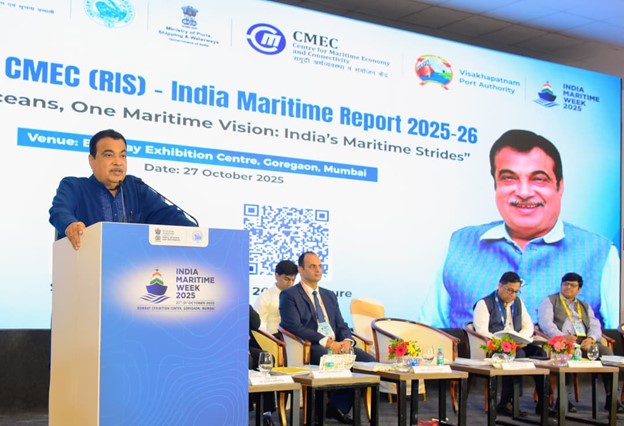
Why the Maritime World is India’s Next Big Bet
The numbers speak for themselves. India’s maritime industry touches almost USD 1 trillion, or around ₹84 lakh crore in local terms. Ports handle cargo worth crores every day, ships carry goods across oceans, and inland rivers wait to carry freight again. Yet much of this potential stays locked because money does not flow fast enough to build or buy vessels.
Gadkari shared a simple truth: the road ministry pulled in ₹1.4 lakh crore from private players by using models like Toll-Operate-Transfer, Infrastructure Investment Trusts, and public-private partnerships. Private share in road projects jumped from 10 percent to 35 percent in a few years. Apply the same logic to ships and ports, and projects finish quicker, cost less for the government, and deliver better quality.
Private Money, Public Speed
Think of it like this. Instead of the government borrowing every rupee to buy a ship, a company steps in, puts up the cash, runs the vessel for a set period, and hands it back in top shape. Everyone wins. The exchequer stays light, jobs get created, and India climbs the global shipping ladder.
Private firms bring new ideas too. They figure out how to cut fuel costs, load containers faster, or recycle old ships without harming the sea. Transparent rules and strict timelines keep things moving. That is the recipe Gadkari prescribed for maritime growth.
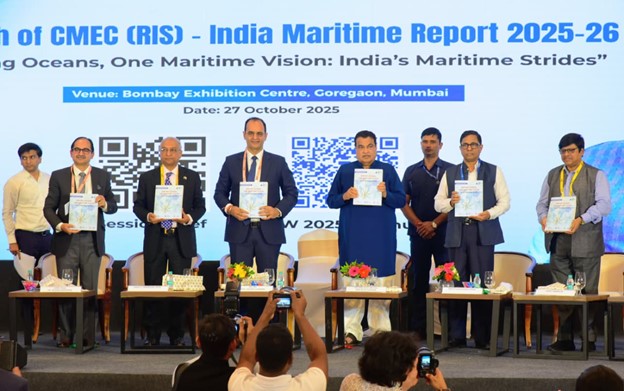
A New Report Maps the Way Forward
During the session, Gadkari unveiled the India Maritime Report 2025-26, prepared by CMEG under the Research and Information System for Developing Countries. The title says it all: “Uniting Oceans, One Maritime Vision: India’s Maritime Strides.” The document lays out clear steps to link shipbuilding hubs, repair yards, and recycling zones into a single strong chain.
Shipbuilding yards in Gujarat and Andhra Pradesh can churn out more vessels if banks and investors feel safe putting money in. Repair docks along the coast need modern cranes and skilled workers. Old ships ending their life should feed into recycling units that follow green rules. The report ties these threads together.
Sagarmala 2.0: The Big Push from the Top
Gadkari gave a big shout-out to Ports, Shipping and Waterways Minister Sarbananda Sonowal for driving Sagarmala 2.0. This upgraded plan goes beyond building jetties. It wants Indian shipyards to compete with China and South Korea, coastal villages to earn from tourism and fisheries, and rivers like the Ganga to carry coal and cement again.
Picture barges moving slowly up the National Waterway 1, easing truck traffic on highways. That is real multimodal transport. Ports will handle bigger ships with less waiting time. Coastal shipping between Chennai and Kolkata will slash road congestion and fuel bills.
Building Trust, One Project at a Time
Global investors watch three things: clear policy, honest dealings, and projects that finish on the promised date. India scores high on the first two but needs to tighten the third. Gadkari stressed that every port tender must have a finish line everyone can see. Delays kill confidence faster than high interest rates.
Take the example of the Mumbai-Goa highway. Private firms built stretches in record time because payments came on milestones, not excuses. The same rulebook can work for a new bulk carrier or a floating dock.
Jobs and Skills in the Blue Economy
Every new ship means welders, engineers, and sailors find work. Training centers near Vizag and Kochi already teach young men and women how to read ship drawings or operate robotic arms. When financing flows, these institutes expand, and unemployment drops along the coast.
Women are entering the sector too. From designing cargo holds to steering tugs, the maritime field opens doors that factories sometimes keep shut. A financed fleet creates a ripple of opportunities.
What Happens Next
Banks and funds are listening. Talks are on to set up a dedicated maritime investment trust. Rating agencies will soon grade ship projects the way they rate toll roads. Insurance companies want to cover hulls built in Indian yards. All these pieces need to click together.
By the end of the decade, India aims to rank among the top five ship-owning nations. That means more Indian flags on the high seas, more rupees staying home instead of paying foreign owners, and a stronger rupee overall.
The Mumbai event closed with handshakes and quiet optimism. Ministers, bankers, and shipyard owners left with one thought: the sea is wide, the money is ready, and the time to sail is now.
Focused keyword: ship financing
Meta description: Ship financing innovations can unlock India’s USD 1 trillion maritime sector, says Nitin Gadkari at Mumbai event. Explore investment models and Sagarmala 2.0 progress.