
The government has rolled out an exciting new program to turn skilled trainees into business owners. A fresh partnership brings together the skill development ministry’s training arm, a leading corporate foundation, and a top technical institute’s startup hub. This move targets thousands of students learning practical trades across the nation.
A New Push for Skill-Based Startups
Students at government-run skill centers now have a direct path to launch their own companies. The initiative covers everyone enrolled in instructor training or basic craft courses. With over ten thousand learners spread through thirty-three centers nationwide, the reach is massive. Special institutes dedicated to women trainees also join the effort.
While school and college innovators get plenty of backing, vocational trainees often miss out. Most finish their courses and step straight into factory jobs, teaching roles, or family businesses. This challenge changes that pattern by spotting bright ideas early and helping them grow into real enterprises.
What the Program Offers Participants
Named after the idea of encouraging fresh thinking in skills, the contest opens doors to guidance from experts. Winners receive cash awards and entry to proper startup support systems. Selected concepts move forward with market testing and business setup help. The main areas include information technology services, vehicle repair and design, clothing production, electronic devices, energy systems, and heavy machinery building.
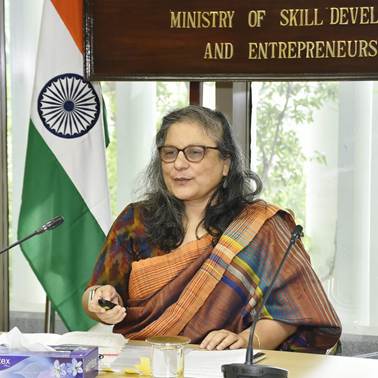
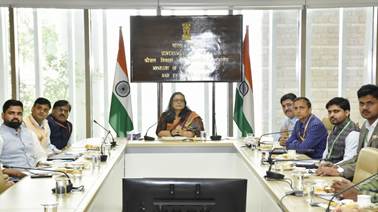
A senior official from the skill ministry highlighted the goal during the opening event. She stressed that every trained worker holds the seed of a future employer. The collaboration aims to water those seeds through structured support, aligning with national goals for self-reliance and creative growth.
Who Runs the Show Behind the Scenes
The training directorate handles daily operations for all national skill centers. It sets rules, maintains quality, and prepares new instructors. Along with state-level trade schools, the system trains more than two million people each year. Modern subjects like artificial intelligence, internet-connected devices, robot mechanics, solar power, advanced printing, and pilotless aircraft now feature in updated syllabi.
Industry partnerships play a big role too. Companies join training directly under flexible agreements. Soft skills and digital tools form compulsory parts of every course to make graduates job-ready from day one.
Role of the Corporate Partner
The foundation linked to a major finance group funds the entire activity as part of its social responsibility work. Led by experienced leaders in business and community service, it focuses on lifting under-served groups. Women feature strongly in its health, learning, empowerment, and income-generation projects across rural and urban areas.
How the Incubator Adds Value
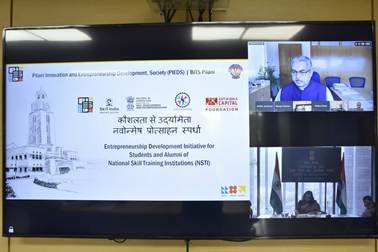
The startup center at a renowned engineering college manages the full contest. Set up with central science department grants, it backs early ventures using advanced technology. Special attention goes to women founders and teams operating from smaller towns. A team of professors and industry veterans guides each step from idea validation to funding pitches.
Why This Matters for India’s Future
Vocational streams feed the bulk of factory floors and service units. Turning even a small fraction of graduates into employers multiplies job creation. Skilled workers understand shop-floor realities better than pure academics. Their solutions often prove practical and cost-effective.
The contest runs nationwide, ensuring regional ideas get equal spotlight. Local problems in farming equipment, renewable energy gadgets, or affordable electronics can find backers. Successful models may later expand through government startup schemes or private investors.
Registration windows, selection rounds, and demo days will roll out over coming months. Centers receive toolkits to scout internal talent. Faculty members double as first-level mentors before expert panels take over.
Looking Ahead for Young Trainees
Any current student can apply with a workable concept. Teams work best but solo entries are welcome. Basic prototypes or detailed drawings strengthen chances. Past workshop projects often form the starting point.
Beyond prizes, top performers gain entry to longer incubation cycles. This includes office space, legal help, and investor meets. Some may tie up with industry for pilot production runs.
The larger vision ties skill mastery to economic independence. A welder who designs better tools or a tailor who builds smart clothing lines creates ripple effects. Jobs follow innovation, and self-employment breaks wage dependency.
As India pushes for global manufacturing share, home-grown technical solutions become crucial. Programs like this bridge classroom learning to market reality. They prove that blue-collar training can spark white-collar outcomes when channeled right.