
Rural India stands on the cusp of a quiet revolution. Three villages across Madhya Pradesh, Uttar Pradesh, and Andhra Pradesh now host a new experiment that blends local kiosks with high-speed internet. The goal remains simple: bring everyday services within walking distance of every home.
What the Pilot Actually Does
Picture a small room in the heart of a village. Inside, a villager books a doctor’s appointment on a tablet, a farmer checks soil moisture on a screen, and a student attends a live class projected on the wall. This room is the Samriddhi Kendra, the nerve centre of the entire project.
Telecom Centres of Excellence India joined hands with three local organisations to set up these centres. Digital Empowerment Foundation runs the show in Ari and Umri villages of Madhya Pradesh. I-Novate Infotech Private Limited manages Chaurawala in Uttar Pradesh. Corpus Enterprises Private Limited looks after Narakoduru in Andhra Pradesh.
Each centre rides on BharatNet’s fibre backbone. The network already reaches the village boundary; the pilot extends it inside through a local area network and free public Wi-Fi zones.
Services That Touch Daily Life
The kendras do not stop at internet access. They pack a full menu of practical help.
- Learning corners offer smart boards and virtual reality kits. Children explore lessons tied to national skill programmes.
- Farm support includes handheld soil testers, drone surveys, and apps that suggest irrigation schedules.
- Health stations let people talk to doctors online, measure blood pressure through automated machines, and store records digitally.
- Government counters guide residents through forms, certificates, and complaint registration without trips to distant offices.
- Market links connect artisans and farmers to national e-commerce platforms, including the Open Network for Digital Commerce.
- Banking windows handle cashless payments and mini-statements on the spot.
How the Partnerships Came Together
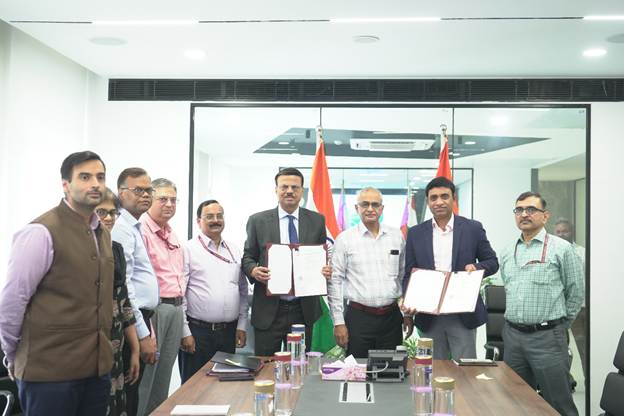
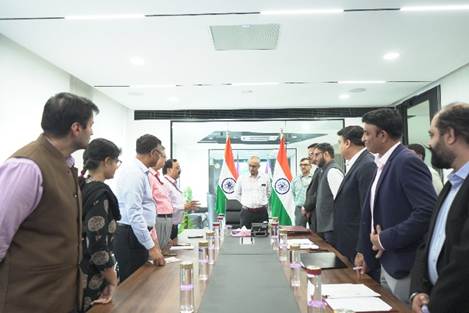
Officials gathered recently to put pen to paper. Rajesh Sharma, who heads Telecom Centres of Excellence India, signed alongside representatives from the three partner firms. Telecom Secretary Neeraj Mittal and Atul Sinha from the Business Transformation Unit watched the ceremony.
Dr Mittal spoke plainly. He asked the teams to build something that lasts and spreads. A successful trial in three villages should become a blueprint for thousands more. Sustainability, he said, matters as much as speed.
Why Three Villages Matter
Choosing Ari, Umri, Chaurawala, and Narakoduru was deliberate. Each sits in a different state, faces distinct challenges, and represents varied terrain. If the model works here, adapting it elsewhere becomes easier.
Madhya Pradesh brings central India’s dry plateaus. Uttar Pradesh adds the dense Gangetic plains. Andhra Pradesh contributes coastal humidity and different cropping patterns. Together, they test the system under real conditions.
Next Steps on the Ground
Work starts immediately. Fibre lines get pulled to the kendras. Local youth receive training to run the equipment and assist visitors. Usage data will flow back to planners, showing which services draw crowds and which need tweaks.
The pilot runs for a fixed period, but the larger aim is permanence. Once villagers rely on these centres, shutting them becomes unthinkable. The Department of Telecommunications wants the kendras to pay their own way through small user fees and government subsidies.
Broader Picture for Rural India
India’s digital push often highlights cities. High-speed trains and metro Wi-Fi grab headlines. Yet over sixty percent of the population lives outside urban limits. For them, a single reliable centre changes everything.
A mother tracks her child’s vaccination schedule without missing a day’s wage. A farmer sells produce directly to city buyers and pockets a fairer price. A young woman learns coding after household chores and dreams of a job in town. These are not slogans; they are the intended outcomes.
The Samriddh Gram experiment keeps the focus tight. Three villages, one model, measurable results. Success here will invite more partners, more funding, and more kendras. Failure will teach lessons without wasting nationwide resources.
Keeping an Eye on Progress
Residents of Ari, Umri, Chaurawala, and Narakoduru will soon see the first screens light up. Outside observers will watch attendance logs, service uptake numbers, and feedback forms. Independent auditors will check if the promised sustainability holds.
For now, the agreements are fresh, the fibre is new, and the villages wait. The coming months will reveal whether a small room with a fast connection can indeed reshape rural life.
The journey to close India’s rural digital gap has taken a concrete step forward. Stay updated as these three villages show what connected countryside can achieve.
Focused keyword: samriddh gram phygital services
Meta description: Samriddh Gram Phygital Services Pilot Project launches in three villages to deliver education, health, and governance via BharatNet.