
In a major push towards building a stronger indigenous defence ecosystem, the Defence Research and Development Organisation has completed the handover of critical technologies for eight advanced systems to several leading Indian companies. This milestone took place during the opening day of a focused industry interaction event held in Bengaluru on October 29, 2025.
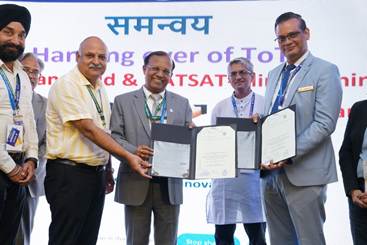
Major Systems Now Moving to Local Production
The agreements cover a wide range of electronic warfare and guidance technologies that will now be produced within the country. Companies across different regions have been selected to absorb and scale these capabilities, ensuring faster availability for the armed forces while creating new manufacturing jobs.
One of the key systems is an advanced electronic warfare suite designed for combat aircraft. This complete package, which includes jamming and threat detection modules, will now be built by a major public sector unit based in Bengaluru. The move is expected to reduce dependency on foreign suppliers for critical airborne defence electronics.
Another significant transfer involves compact satellite communication terminals in both handheld and mini versions. These devices enable secure voice and data links even in remote operational areas. A defence electronics facility in northern India will take up their production, making them available in larger numbers at shorter notice.
Naval and Land Systems Get Indigenous Boost
Maritime forces will benefit from an upgraded electronic support measure system under a naval modernisation programme. The technology, which helps detect and classify radar emissions at sea, has been passed to the same Bengaluru unit handling the aircraft suite. A companion underwater detection platform, known for its passive sensing ability, joins the production pipeline at the same location.
On the precision guidance front, a laser-based beam riding missile control system combined with an eye-safe distance measurement tool will be manufactured by two established players, one in western India and another in the south. This dual partnership ensures redundancy and faster ramp-up in output.
A compact laser designator that works reliably across temperature extremes has also been licensed to the western unit. Such devices are vital for marking targets for smart munitions without giving away the position of ground troops.
Adding to the list is a sophisticated gas detection method using laser and sound wave interaction. Four private firms from different states will produce variants of this technology, opening doors for both military and civilian safety applications.
Finally, a specialised component for high-power microwave devices, essential in radar and communication systems, goes to a medical equipment manufacturer diversifying into defence. This crossover highlights how niche industrial skills can support national security needs.
Why This Event Matters for Indian Manufacturers
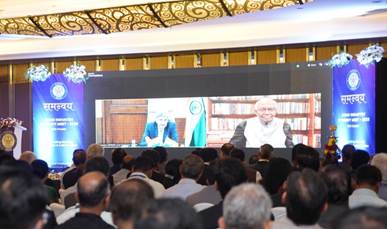
The two-day gathering has drawn more than 150 companies, with special focus on smaller enterprises and new ventures. Organised by the electronics and communication cluster of the research body, the meet serves as a platform to explain simplified procedures for working with defence laboratories.
Speaking at the virtual launch, the head of defence research emphasised that combining laboratory breakthroughs with factory floor expertise is the fastest route to self-sufficiency. He pointed out that every system now being transferred started as a concept in a government facility and is now ready for volume production by Indian hands.
A notable highlight was the address by a distinguished scientist and former head of a premier research council. He outlined practical steps for research institutions and factories to leapfrog technological gaps through structured collaboration, drawing from successful models in other sectors.
Support Structure for New Entrants
To make participation easier, every research centre now has a dedicated team to guide companies through documentation and testing requirements. This change addresses a long-standing complaint that complex paperwork kept capable firms away from defence opportunities.
The cluster director urged established players to mentor smaller units, helping them convert prototypes into reliable products. He assured full backing from government schemes that fund such partnerships, especially when the end user is the military.
Over the next day, ten focused discussions will cover funding mechanisms, quality standards, and export possibilities. Separate tracks will address the unique challenges faced by micro enterprises and the role of development partners in large projects.
Industry leaders present at the event welcomed the transparent approach, noting that clear timelines for technology absorption will help them plan investments better. Several start-up founders shared early success stories of co-developing subsystems that are now undergoing field trials.
Looking Ahead: From Lab to Battlefield
These transfers are more than paperwork; they represent a shift in how India builds its defence capabilities. With local firms taking charge of production, maintenance cycles shorten and upgrade paths open up without foreign approval delays.
The emphasis on involving diverse companies, from public giants to regional private players, spreads economic benefits wider. Towns known for engineering skills now have a direct stake in national security projects.
As the event continues, more announcements on joint development roadmaps are expected. For now, the message is clear: Indian industry has the talent, and the research organisation has the blueprint. Together, they are writing the next chapter of made-in-India defence technology.
The momentum from this Bengaluru meet is likely to inspire similar initiatives across other technology clusters, accelerating the journey towards a battlefield-ready, domestically built arsenal.