
The Indian Coast Guard has taken a bold leap into the digital era by joining hands with the National e-Governance Division under the Ministry of Electronics and Information Technology. This alliance introduces DigiLocker into the daily workings of the Coast Guard, paving the way for smoother operations and stronger security measures across maritime activities.
A New Chapter in Defence Digitisation
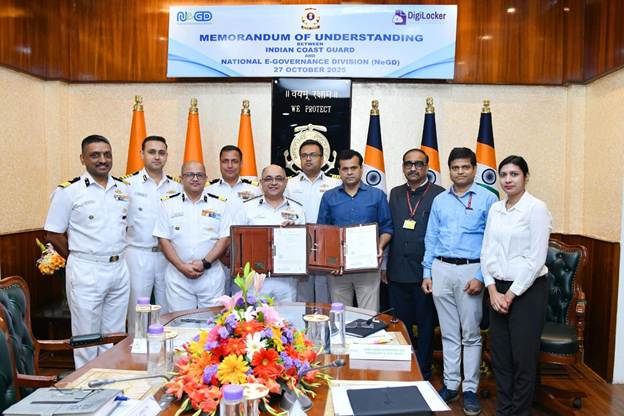
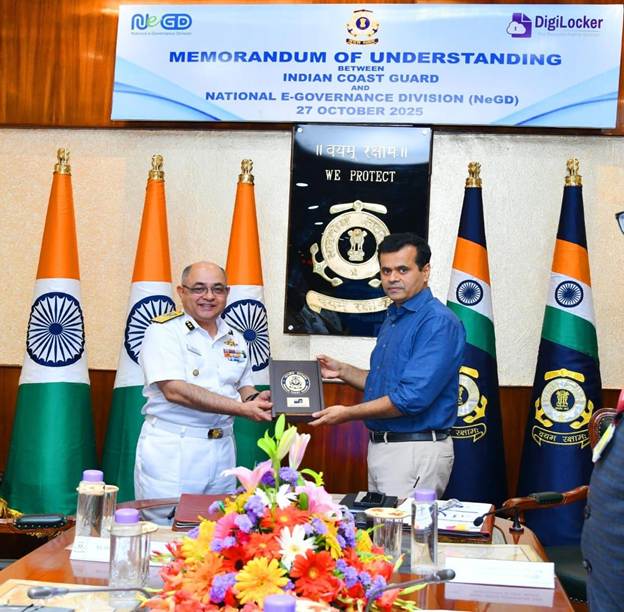
On October 27, 2025, officials from both sides came together at the Coast Guard headquarters in New Delhi to formalise this partnership through a Memorandum of Understanding. Nand Kumarum, the President and CEO of the National e-Governance Division, along with Jyotindra Singh, the Deputy Director General for Human Resource Development at the Coast Guard, put their signatures on the document. This event highlights a shared goal of making defence services more tech-savvy and efficient.
Kumarum highlighted how this step fits perfectly with national efforts to use technology in empowering government bodies. It focuses on improving data protection, speeding up processes, and delivering better services to those who safeguard our seas.
How DigiLocker Changes Daily Operations
By bringing DigiLocker on board, the Coast Guard moves away from stacks of paper towards a fully digital system for handling documents. This platform allows for the creation, sharing, and checking of official records in a secure online space. Personnel can now get their service details, training proofs, and experience certificates issued digitally, all signed and ready for instant verification.
Various sections within the Coast Guard will connect to DigiLocker, making it simple to upload and manage files. Record offices and units across the force will gain the ability to produce these digital certificates, ensuring everything remains authentic and tamper-proof.
Streamlining Recruitment and Beyond
One immediate benefit shows up during hiring new members. Instead of collecting and checking physical copies of educational qualifications, the process now happens entirely online. This not only saves time but also adds a layer of trust, as every document comes straight from verified sources.
Gone are the days of lost files or delayed approvals due to paperwork. Authorised individuals can access needed records from any location at any time, provided they have the right permissions. This flexibility proves invaluable for a force that operates across vast coastal and offshore areas.
Building a Secure Digital Ecosystem
The collaboration goes further by setting up standards for data handling. It ensures that every piece of information stored in DigiLocker meets strict security guidelines, protecting sensitive details about personnel careers and achievements.
Looking ahead, this setup opens doors for including welfare schemes and pension-related paperwork in the same digital framework. Imagine a single, unified system where a Coast Guard member handles everything from joining the force to retirement without ever needing to visit an office for documents.
The Power of DigiLocker in India
DigiLocker stands as a key pillar in the countrys push towards digital public services. It offers a cloud-based space where users store, issue, and verify documents, all backed by legal recognition under the relevant IT laws. With hundreds of millions of users and billions of documents already in circulation, it has proven its reliability on a national scale.
For the Coast Guard, adopting this tool means joining a growing list of institutions that rely on it for everyday governance. It strengthens the overall defence setup by making information flow faster and more secure, ultimately contributing to better preparedness along our maritime borders.
Why This Matters for Maritime Security
Efficient administration directly supports operational readiness. When personnel spend less time on bureaucratic tasks, they can focus more on core duties like patrolling, rescue missions, and environmental protection at sea. This digital shift also promotes transparency, reducing chances of errors or discrepancies in records.
In an age where cyber threats loom large, having a robust system like DigiLocker ensures that critical data remains safe from unauthorised access. The integration emphasises the importance of technology in modern defence strategies, aligning with broader initiatives to make India a leader in digital innovation.
This partnership serves as an example for other armed forces branches and government departments. It demonstrates how existing digital infrastructure can be adapted to meet specific needs, driving widespread adoption of paperless practices.
As the Coast Guard continues to evolve, such advancements will play a crucial role in maintaining high standards of service delivery. The move not only enhances internal processes but also sets a benchmark for efficiency in public sector operations.
The journey towards complete digitisation may take time, but steps like this one mark steady progress. They reflect a commitment to leveraging technology for the benefit of those who serve the nation at sea.