
AAIB report highlights fatal glider collision in Northamptonshire
The Air Accidents Investigation Branch (AAIB) has released its final report on the tragic mid-air collision involving two gliders near Hinton-in-the-Hedges Airfield, Northamptonshire, on 25 May 2024. The detailed findings shed light on how limited communication and reliance on visual awareness led to the accident that claimed one pilot’s life and left another seriously injured.
How the fatal accident unfolded
According to the AAIB report, both aircraft — a Discus B glider registered G-DJMD and a Standard Cirrus glider registered G-DCTB — had completed their tasks in a local gliding competition and were returning to the airfield to land. As they approached from the northeast of the airfield, both pilots began manoeuvring to align for landing.
The competition rules required pilots to report their positions on the radio when flying downwind and again on final approach. However, neither of the pilots made these calls. This lapse meant that they were unaware of each other’s position during these critical moments of the flight. Tragically, the two gliders collided shortly before landing.
Sequence of events and collision impact
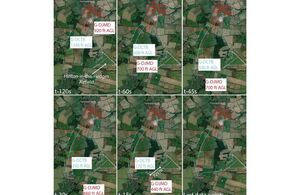
The investigation reconstructed the final two minutes before the crash. During this period, the two gliders were operating close to each other but without any radio communication. As they approached the runway, G-DCTB’s wingtip struck G-DJMD, causing both aircraft to lose control. G-DJMD subsequently hit the ground inverted, resulting in fatal injuries to its pilot. The pilot of G-DCTB sustained serious injuries but survived the accident.
Key findings from the investigation
The AAIB identified the lack of radio communication as the main contributing factor to the collision. The report stated that depending solely on visual awareness — the so-called “see and avoid” method — was insufficient in this situation. Both pilots remained unaware of each other’s proximity until it was too late to take evasive action.
The investigation also reviewed operational and licensing aspects related to airfield communication. It emphasized that when an aeronautical radio station is authorized to provide an Air Ground Communication Service, it must do so strictly within its published hours unless otherwise notified through an official NOTAM or other approved means.
Additionally, glider pilots are reminded that they must possess a valid Flight Radiotelephony Operator Licence (FRTOL) if they communicate with air traffic control, flight information services, or an Air Ground Communication Service. This ensures clarity, professionalism, and safety in radio exchanges during flight operations.
Safety actions and recommendations
Following the accident, several safety initiatives were undertaken to prevent similar incidents in the future. The Civil Aviation Authority (CAA) has reminded all radio license holders of their duty to operate their approved services as per their licence conditions. The CAA also reviewed how the Air Navigation Order’s provisions align with licensee responsibilities to ensure compliance.
The British Gliding Association (BGA) took further steps by distributing updated guidance and educational material on avoiding mid-air collisions, encouraging glider pilots to maintain radio discipline and situational awareness. In addition, the gliding clubs involved in the competition have clarified their internal policies regarding the use of onboard radios during club and competitive flights.
AAIB stresses communication discipline in gliding
The report underscores the vital role of effective communication in gliding operations, especially when multiple aircraft share airspace during competitions or training activities. The AAIB reiterated that even when visibility appears sufficient, visual scanning alone cannot always prevent collisions. Pilots must use radio calls consistently to maintain mutual awareness and safety.
This latest AAIB report serves as a crucial reminder to the aviation community of how routine safety practices — such as timely position reporting and maintaining radio contact — can make the difference between a safe landing and a tragic accident.