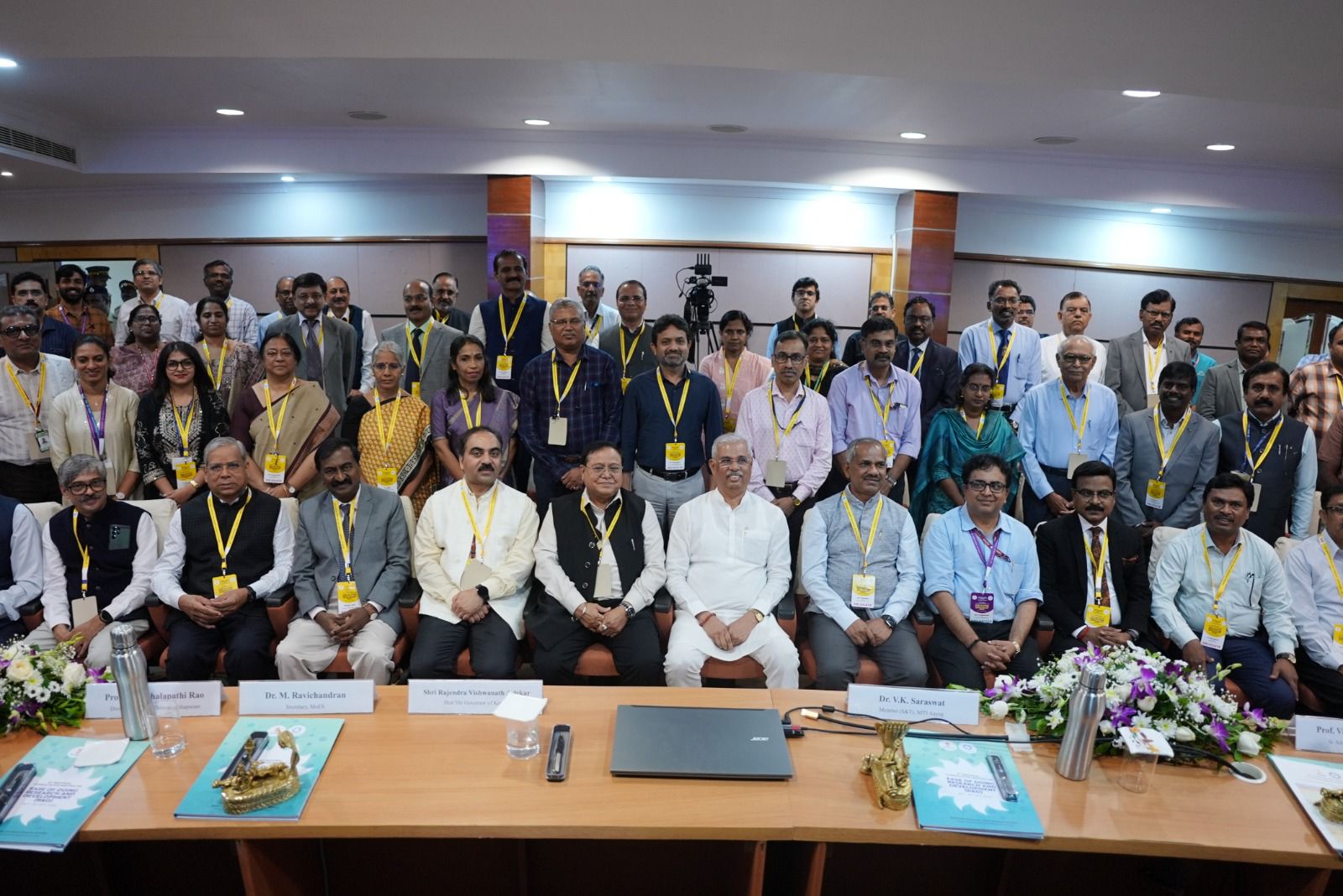
Important Facts of the News
- Event: 8th Regional Consultative Meeting on Ease of Doing Research and Development
- Organized by: NITI Aayog
- Venue: National Centre for Earth Science Studies (NCESS), Thiruvananthapuram
- Dates: 30 to 31 October 2025
- Key Framework Discussed: ROPE (Removing Obstacles, Promoting Enablers)
- Major Participants: Institutional leaders, Vice Chancellors, Scientific Ministries and Departments
- Prominent Voices: Dr. M. Ravichandran, Dr. V.K. Saraswat, Shri Rajendra Vishwanath Arlekar
- Focus Themes: Collaboration, policy support, research efficiency, science communication
Overview of the Consultation
The 8th Regional Consultative Meeting on enhancing the Ease of Doing Research and Development took place at the National Centre for Earth Science Studies in Thiruvananthapuram. It brought together representatives from universities, scientific departments, and institutional leadership for wide-ranging discussions on improving India’s research ecosystem.
ROPE Framework as a Guiding Approach
The meeting began with remarks from Prof. N. V. Chalapathi Rao, who highlighted the importance of supportive environments for research. Discussions were shaped around the ROPE Framework, introduced by Prof. Vivek Kumar Singh of NITI Aayog. The framework focuses on identifying institutional hurdles while encouraging collaboration, flexibility, and capacity-building across research bodies.
Strengthening Collaborative Ecosystems
Dr. M. Ravichandran, Secretary, Ministry of Earth Sciences, underscored the need to utilize the expertise of retired scientific professionals and improve collaboration among universities, industry, and government. He also emphasized the value of shared research data and more effective public communication of scientific findings to ensure wider societal relevance.
Balancing Internal and External Influences
Dr. V. K. Saraswat, Member, NITI Aayog, pointed out that research effectiveness depends on both internal factors such as institutional governance and external dimensions including regulatory clarity and funding channels. Addressing both aspects collectively, he noted, is essential for advancing India’s scientific standing.
Linking Research to People-Centric Development
Kerala Governor Shri Rajendra Vishwanath Arlekar highlighted that improving the Ease of Doing R&D ultimately contributes to better quality of life. He emphasized aligning science with community needs and strengthening cooperation across sectors to promote inclusive development. According to him, strong regional research systems contribute to broader national progress.
Conclusion
The two-day discussions concluded with shared commitment from academia, research organizations, and government agencies to work toward a more coherent, efficient, and collaborative research environment across the country. The consultation marked another step toward advancing India’s capabilities in research and innovation.