Nationwide Workshops Announced for Implementation of Amended Vegetable Oil Products Order, 2025
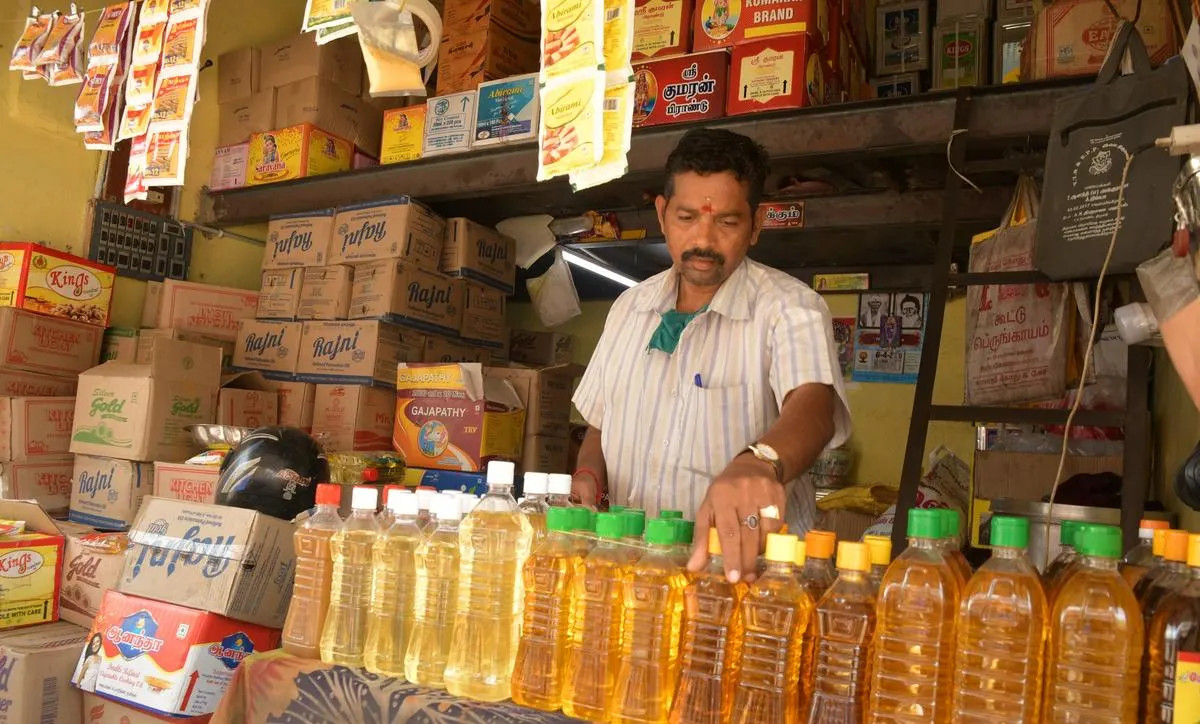
The Department of Food and Public Distribution has notified the amended Vegetable Oil Products Production and Availability (Regulation) Order, 2025 (VOPPA 2025), a major reform to improve transparency, monitoring, and data management in India’s edible oil sector. The amendment aims to strengthen national food security and ensure data-driven decision-making through accurate and timely industry reporting.
To facilitate smooth implementation, the Department will organize a series of capacity-building workshops across major cities with high concentrations of edible oil processing units. The first workshop will be held on 15 November 2025 at the Soybean Oil Processors Association (SOPA) Auditorium, Indore, Madhya Pradesh.
The sessions will highlight the importance of accurate data submission by the industry, provide demonstrations on registration through the National Single Window System (NSWS) and the VOPPA portal, and offer guidance on timely filing of monthly returns. Similar workshops will follow in other key states to ensure broad participation and compliance. The Department also plans to conduct inspection visits and direct engagements with edible oil units to promote proactive registration and reporting.
Mandatory Registration and Monthly Data Submission
Under the revised order, all producers of crude and refined vegetable oils, blended oils, vanaspati, margarine, and other specified products must register on the VOPPA portal and file monthly returns detailing production, imports, sales, stock levels, and consumption by the 15th of every month. This system ensures consistent and verifiable data for effective policy formulation and supply chain monitoring.
The amendment marks a major step toward a transparent edible oil ecosystem, enabling improved coordination between industry and government. By mandating uniform data submission, the reform aims to enhance supply chain visibility and policy responsiveness in support of India’s food security objectives.
Penalties for Non-Compliance
VOPPA registration is mandatory for all edible oil producers and packers. Non-compliance, such as failure to register or file returns, will attract strict penalties under the Essential Commodities Act, 1955 and the Collection of Statistics Act, 2008. The Department urges all edible oil units to register promptly and adhere to reporting requirements to avoid penalties and contribute to a transparent, accountable sector.
The amended order reflects a collaborative approach to build a data-driven and self-reliant edible oil ecosystem, ensuring sustainable national food security through transparency and good governance.
Department of Consumer Affairs Invites Applications for Government Approved Test Centres
The Department of Consumer Affairs, under the Ministry of Consumer Affairs, Food and Public Distribution, has launched an online portal inviting applications from private industries, laboratories, and testing facilities for recognition as Government Approved Test Centres (GATCs) under the Legal Metrology (Government Approved Test Centre) Rules, 2013. The Rules were amended on 23 October 2025 to expand private sector participation in India’s verification ecosystem. Applications can be submitted online until 30 November 2025 via https://doca.gov.in/gatc.
This initiative aims to strengthen India’s verification infrastructure by involving private entities in testing and verifying weighing and measuring instruments used in trade and consumer protection. The reform aligns with the vision of Atmanirbhar Bharat by promoting domestic testing capacity and reducing verification bottlenecks.
Eligibility, Inspection, and Fees
Eligible organizations must have modern testing and calibration facilities linked to national standards, along with qualified technical staff possessing at least three years of experience in Legal Metrology. Before approval, joint inspections by the Department and State Legal Metrology offices will verify infrastructure, staff competence, and calibration systems.
Applicants must pay an online fee of ₹2 lakh per category of instrument or equipment, applicable annually for renewal. The approved GATCs will collect verification or re-verification fees as per the new Fifth Schedule of the Rules, ensuring uniformity and transparency across the country.
| Instrument Type | Verification Fee (₹) |
|---|---|
| Domestic Water Meter | 250 |
| Commercial Water Meter | 1,000 |
| Industrial Water Meter | 2,500 |
| Sphygmomanometer | 100 |
| Clinical Thermometer | 50 |
| Non-Automatic Weighing Instrument (up to 150 kg) | 3,000 |
| Flow Meter (up to 100 mm) | 5,000 |
For instruments not listed in the Fifth Schedule, the fee structure specified under the respective State Legal Metrology (Enforcement) Rules will apply.
Expanded Scope and Global Alignment
The recognition of GATCs now covers 18 categories of measuring instruments, including water meters, clinical thermometers, energy meters, gas meters, speed meters, beam scales, load cells, and flow meters. This comprehensive scope supports critical sectors such as healthcare, transport, infrastructure, and energy, where measurement accuracy is vital.
The expanded GATC framework will enhance the capacity of State Legal Metrology Departments, allowing officials to focus on inspections, enforcement, and consumer redressal. It will also ensure that consumers and traders benefit from accurate and reliable weighing and measuring systems.
The reforms align India’s verification systems with international OIML (International Organization of Legal Metrology) standards. As an OIML Certification Authority, India can now issue globally recognized certificates, facilitating exports and strengthening the domestic manufacturing ecosystem.