Historic Jeddah Showcases Cultural Heritage at Hajj Conference and Exhibition 2025
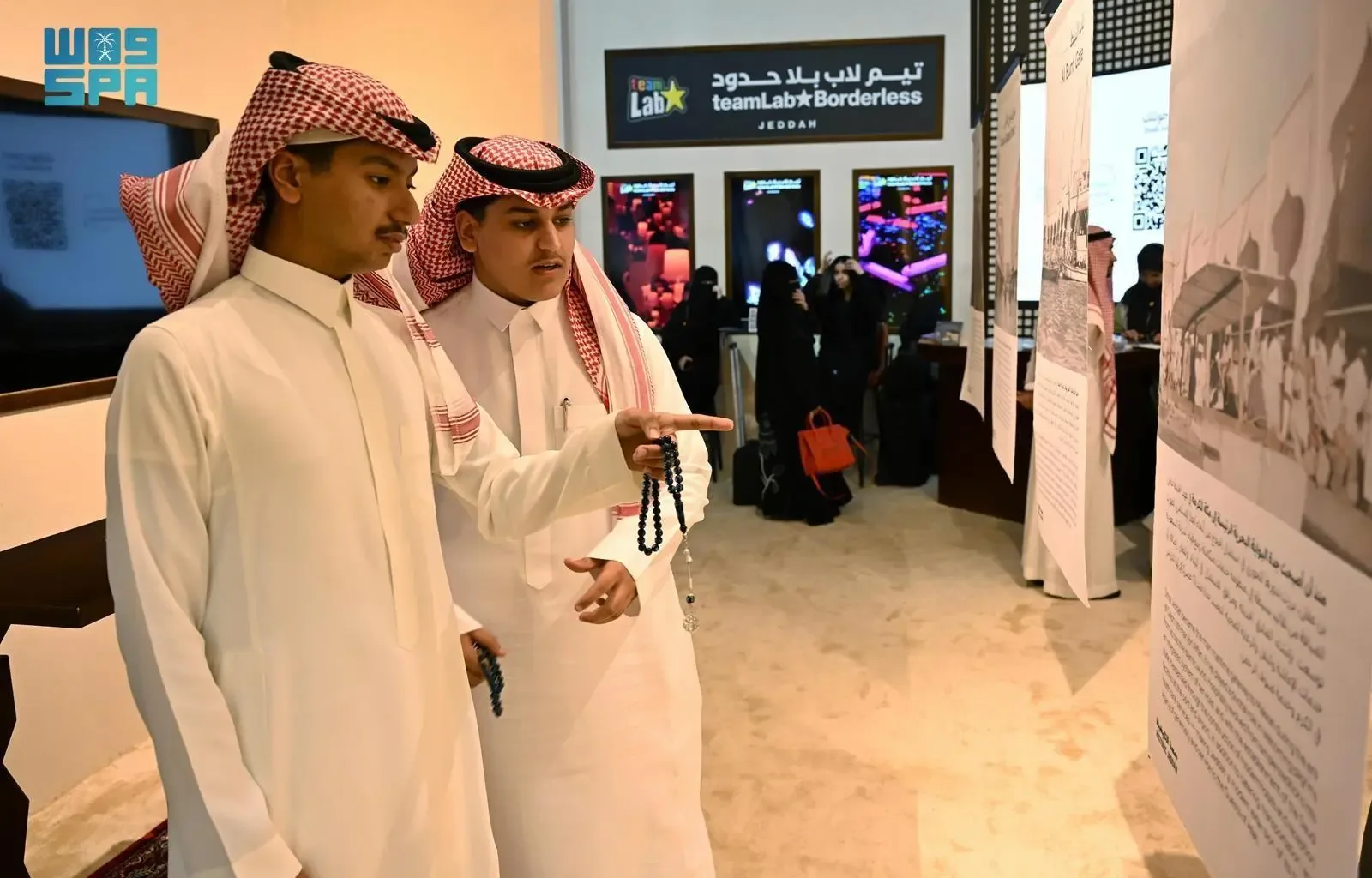
Historic Jeddah successfully concluded its participation in the Hajj Conference and Exhibition 2025, held from November 9 to 12 at the Jeddah Superdome. The event drew substantial public interest, highlighting the city’s historic role as a gateway to Makkah and a vital entry point for pilgrims arriving by sea since the early Islamic era.
Organized under the Ministry of Culture’s supervision, the exhibition celebrated Jeddah’s cultural and historical significance. The pavilion featured diverse cultural and tourism routes, with the “historic Hajj trail” attracting particular attention for its documentation of the pilgrims’ journey from port arrival to departure for Makkah.
The display integrated advanced digital technologies, offering virtual reality (VR) experiences via the Historic Jeddah page on the Google Arts & Culture platform. Visitors also explored the city’s landmarks and archaeological treasures through interactive QR-code-based tours, connecting tradition with modern digital engagement.
This initiative reflects Saudi Arabia’s commitment to preserving and promoting its cultural heritage while integrating innovative tools to enhance global accessibility and public awareness of its rich history.
KAUST Scientists Develop Affordable AI Drone System for Camel Tracking
A research team at King Abdullah University of Science and Technology (KAUST) has developed an affordable, AI-powered drone system designed to recognize and track camels from the air. The innovation aims to assist camel herders across Saudi Arabia while offering new insights into camel behavior and migration.
Developed by Professor Basem Shihada and his research team, the system utilizes commercially available drones and cameras, eliminating the need for costly GPS collars or satellite links. By capturing aerial footage of small herds in Saudi Arabia, the scientists trained a machine-learning model capable of analyzing camel movement patterns and behaviors.
KAUST researcher Chun Pong Lau noted that the findings revealed structured migration habits rather than random movement. The study also observed that camels, particularly older ones, displayed coordinated grazing migration patterns throughout the day but consistently returned to their herder by sunset. Due to their sensitivity to drone noise, the research team maintained a minimum flight altitude of 120 meters.
Camels remain vital to Saudi Arabia’s heritage and economy, contributing over SAR 2 billion annually through food, textile, and tourism industries. However, herding poses significant challenges as camels often roam up to 50 kilometers daily, leading to potential overgrazing, loss of livestock, and road accidents. The new drone-based system provides a practical and low-cost solution for monitoring these valuable animals.
The KAUST team plans to expand their research by collecting data from larger herds of diverse colors and sizes to further improve AI accuracy and reliability in real-world applications.