IMF and Sierra Leone Reach Staff-Level Agreement on ECF Program Reviews
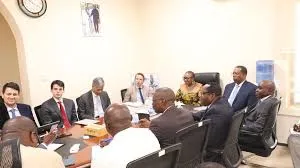
An International Monetary Fund mission led by Christian Saborowski conducted a visit to Sierra Leone from October 3 to 10, 2025, to assess the first and second reviews of the country’s economic program under the Extended Credit Facility approved on October 31, 2024. Following the visit, IMF staff and Sierra Leonean authorities reached a staff-level agreement on the economic policies required to complete the two reviews, which are expected to be considered by the IMF Executive Board in the coming weeks.
Progress on Fiscal and Monetary Policies
The IMF noted that the initial review of the program had been postponed due to spending overruns, declining reserves, and delays in structural reforms. According to the mission, improvements have since taken place as the authorities tightened fiscal measures, maintained a cautious monetary policy approach, and advanced structural reforms. Despite these efforts, pressures on the reserves of the Bank of Sierra Leone continue to present challenges.
Saborowski stated that approval of the reviews by IMF Management and the Executive Board would make available approximately US$78.8 million in financing. He highlighted that fiscal policy tightened by 1.9 percentage points of GDP less than anticipated in 2024 because of significant unbudgeted expenditures, particularly for road construction. These overruns increased the need for domestic borrowing and contributed to elevated financing costs.
The authorities aim to reach a domestic primary surplus of 0.6 percent of GDP in 2025, marking a consolidation of 3.3 percentage points of GDP compared to 2024. However, earlier commitments to expand social spending have not been fulfilled.
Economic Developments and Challenges
Monetary policy is transitioning from tightening to a neutral approach in light of subdued inflation and continued fiscal adjustment. Reserve money is expanding in line with program parameters, and the policy rate has been lowered by 6 percentage points to 18.75 percent since May.
The mission observed that the economy has remained resilient despite the policy adjustments. Growth is forecast at 4.4 percent in 2025, while inflation eased to 4.4 percent in October. Treasury bill rates have declined from above 40 percent to around 17 percent since May. Nonetheless, the fall in reserves to 1.5 months of import coverage at the end of September remains a major concern.
IMF staff and the authorities agreed that further fiscal efforts are needed to address past policy deviations and reduce the reliance on domestic financing to maintain debt sustainability. Plans for revenue mobilization include tax policy actions totaling 1.5 percentage points of GDP and measures to strengthen tax compliance and administration. Controlling expenditures will remain important, alongside safeguarding social spending.
Structural Reforms and Medium-Term Outlook
The Bank of Sierra Leone is expected to continue shifting monetary conditions toward neutrality. Upgrading the monetary policy framework and implementing safeguard measures are anticipated to support policy effectiveness.
According to the mission, rebuilding the reserve position is an urgent requirement. This will involve significant efforts to increase foreign exchange purchases from market participants, reduce government spending on imported goods and services, and limit energy subsidies. A flexible exchange rate system will remain essential for facilitating the adjustment.
The authorities reaffirmed their intention to expedite structural reforms. Enhancements in public financial management are expected to contribute to fiscal adjustment, while stronger debt management practices aim to limit debt service pressures. Addressing ongoing solvency issues in the banking sector and strengthening regulatory and oversight capacity were also identified as priorities. Governance reforms will focus on carrying out recommendations from the Governance and Corruption Diagnostic.
The IMF mission indicated that economic conditions are expected to remain stable over the medium term, with growth projected at 4.6 percent and inflation likely to stay within single digits. However, the outlook is subject to considerable risks, including potential reform fatigue, slower global economic activity, tighter global financial conditions, and geopolitical uncertainties that could affect external demand and the fiscal and external positions.
The mission expressed appreciation to Sierra Leonean authorities for their cooperation throughout the discussions. Meetings were held with Finance Minister Bangura, Governor Stevens, senior government officials, and representatives from civil society, the private sector, and development partners.