- Session highlights India’s leading Digital Public Infrastructure and the growing need for robust cybersecurity frameworks.
- Future-ready digital skills and secure technologies are essential for driving India’s socio-economic progress: DG & CEO, IICA.
- Sh. Vinay Thakur underscores the enabling role of technology as a tool of social inclusion, transparency and economic acceleration.
Session Overview
The Indian Institute of Corporate Affairs (IICA) organized an illuminating and highly impactful session with the Special Director General, BISAG-N, Ministry of Electronics & Information Technology (MeitY), and former Managing Director, NICSI, Sh. Vinay Thakur, a national expert in digital governance and cybersecurity. Sh. Thakur delivered a comprehensive talk on Digital Transformation, Solution Architecture, Cloud Deployment, Cyber Security and the emerging field of Post Quantum Cryptography (PQC).
The session opened with a warm welcome by the Director General & CEO, IICA, Shri Gyaneshwar Kumar Singh, who emphasized the importance of future-ready digital skills and secure technologies in shaping India’s socio-economic progress.
Key Focus Areas
In his address, Sh Thakur placed special focus on the scale, strength, and evolution of India’s Digital Public Infrastructure (DPI) – considered one of the most advanced in the world. He highlighted how initiatives such as:
- Aadhaar
- Unified Payments Interface (UPI)
- DigiLocker
- BharatNet
- Co-WIN
- UMANG
- MeghRaj Cloud
- GIS-based platforms of BISAG-N
have collectively transformed governance, public service delivery and citizen empowerment. He emphasised that these achievements are a direct reflection of Prime Minister Shri Narendra Modi’s visionary Digital India movement, which aims to build a digitally empowered society and knowledge economy. Mr. Thakur emphasized how the Prime Minister’s leadership has enabled technology to become a tool for social inclusion, transparency and economic acceleration.
He elaborated that Digital India is not just a programme but a transformational movement, enabling universal access to services, bridging urban–rural gaps and strengthening India’s position as a global digital powerhouse.
Cybersecurity and Data Protection
Sh. Thakur also stressed the critical need for cybersecurity frameworks to secure the nation’s growing digital ecosystem. He highlighted the rising cyber threats, importance of the DPDP Act, AI-enabled cyberattacks, urgent need for post-quantum cryptography (PQC) and the significance of indigenous solutions for digital sovereignty.
Participation and Engagement
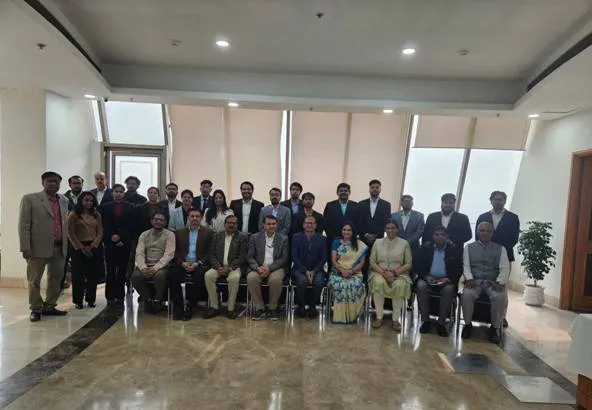
The programme witnessed enthusiastic participation from faculty members and students, who engaged deeply with the speaker. The interactive Q&A session allowed participants to explore various aspects of digital governance, data protection, cloud security and emerging technologies.
Conclusion
The session concluded with a vote of thanks, expressing gratitude for Mr. Thakur’s visionary insights and acknowledging the importance of such interactions for shaping the perspectives of future leaders.