
Walk for Dyslexia 2025: A Nationwide Movement
As part of a country-wide campaign to raise awareness, which included more than 300 persons across age groups and included people from all walks of life, the “Walk4Dyslexia” was co-organized by the Changeinkk Foundation, UNESCO MGEIP, Orkids Foundation, and Soch Foundation on Saturday, October 26th, 2025 at Kartavya Path in New Delhi.
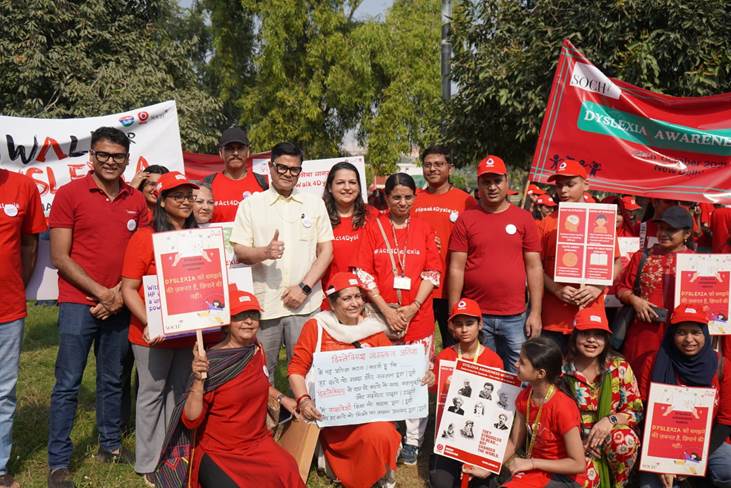
Image Source: PIB Delhi
Promoting Awareness and Inclusion
Speaking at the event, Shri Sanjay Kumar, Secretary, Department of School Education & Literacy, emphasized the importance of creating awareness and acceptance around Specific Learning Disabilities (SLDs), particularly Dyslexia, which remains one of the most common yet misunderstood learning differences among children.
“Every child learns differently. Dyslexia is not a limitation but a different way of understanding and expressing knowledge. With early identification, support, and empathy, children with Dyslexia can achieve remarkable success. Today’s walk is a walk for awareness, for compassion, and for inclusion,” said the Secretary.
He underlined the crucial role of PRASHAST 2.0, a mobile app based screening tool developed by NCERT, in helping schools identify children with disabilities, including Dyslexia, at an early stage. He noted that early detection, coupled with greater awareness among teachers, parents, and the wider community, can make a real difference in ensuring that every child with Dyslexia receives the right support and opportunities to learn and thrive within an inclusive education system.
The Secretary also acknowledged the tireless efforts of civil society organizations such as the Changeink Foundation, Orkids, and SOCH Foundation, whose initiatives have helped bring visibility and support to children and adults with learning differences.
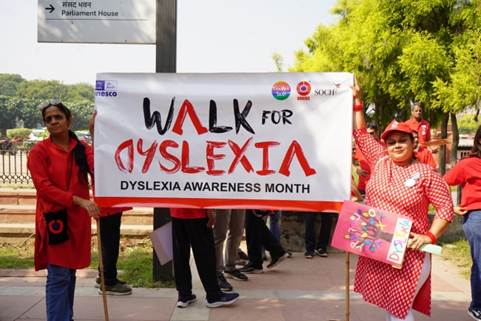
Image Source: PIB Delhi
Illuminating India in Red
Keeping the color of the walk as Red, for Dyslexia Awareness, Rashtrapati Bhawan, Secretariat, along with several other historical monuments and government buildings across the country were also illuminated in red on Sunday evening. The walk was not just symbolic, it has turned into a movement of compassion and collective responsibility for acceptance, understanding, and inclusion about awareness of Dyslexia.
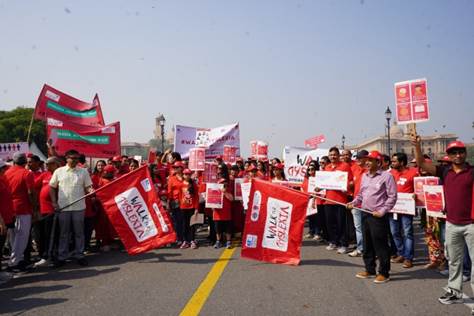
Image Source: PIB Delhi
Strengthening Support for Dyslexia
The Department of School Education & Literacy under Samagra Shiksha Scheme has undertaken several measures to strengthen early screening, identification, and support for children with SLDs, including Dyslexia. These include:
- Implementation of PRASHAST 2.0, a mobile screening app developed in collaboration with NCERT, to help teachers and special educators in screening children with disabilities, including SLDs, at an early stage.
- Inclusion of dedicated modules on inclusive education in the Integrated Teacher Education Programme (ITEP) to strengthen pre-service teacher preparation.
- Customised Learning Support including Teaching Learning Material, Necessary Aids & Appliances/Assistive Devices (Text-to-speech / reading tools etc.), Accommodation and Therapeutic Support for Children with SLD (Dyslexia).
- Block-level screening and identification camps across States and UTs in coordination with the Departments of Health & Family Welfare and DEPwD to ensure timely diagnosis and certification.
The Scale of Dyslexia in India
According to global estimates, Dyslexia affects one in every five individuals globally. As per UDISE+ 2024–25, around 12.15% of all Children with Special Needs (CwSN) enrolled in schools have been reported to have Specific Learning Disabilities (SLDs) which may include children with Dyslexia. At the same time, several civil society organisations through their surveys, estimate that the actual number of children with SLDs is likely much higher. This means that there are SLD children outside the formal schooling system, struggling silently, without support or understanding.
Policy Support and Future Vision
The impetus provided by India’s legal and policy mandates have helped gain momentum to help shed light on many strengths of the dyslexic mind and mainstream their inclusion to help them not just survive but thrive. Reflected in the NEP2020 reforms being implemented with increasing focus on early identification, building teacher capacities, and providing support and accommodations to students.
The growing support for the movement bears testimony to how individuals with learning disabilities can not only be supported, but empowered to forge diverse paths to success, ultimately advancing our society. After all, the next Nobel laureate, unicorn founder, or disruptive innovator may indeed emerge from the pool of differently abled minds in India.
Conclusion: A Commitment to Inclusion
The Walk for Dyslexia 2025 concluded with a renewed commitment from all stakeholders’ government, educators, and civil society to make classrooms more inclusive, compassionate, and responsive to the needs of every child.
Source
Posted On: 26 OCT 2025 7:07PM by PIB Delhi