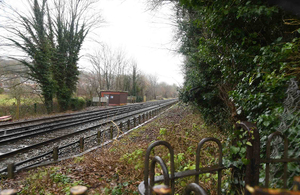
- The incident occurred on 23 January 2025 near Kenley in the London Borough of Croydon.
- An 11-year-old child was fatally struck by a passenger train while walking to school.
- The train was travelling at around 50 mph (80 km/h) at the time of the collision.
- The crossing lacked active warning systems and was classified as passive.
- The accident was likely linked to the child being distracted by a mobile phone.
- Three recommendations have been made by the RAIB to improve crossing safety.
- One recommendation addresses school curriculum setters to include rail safety education.
- Network Rail and the Rail Safety and Standards Board are urged to enhance crossing warnings.
Tragic Train Accident Involving School Child Prompts Safety Review
A Rail Accident Investigation Branch (RAIB) report released on 4 November 2025 has revealed the findings of a fatal incident involving a child at Bourneview footpath crossing in Croydon. The accident occurred at around 08:03 on Thursday, 23 January 2025, when an 11-year-old school pupil was hit by a passenger train travelling at approximately 50 mph.
How the Incident Unfolded
At the time of the accident, the pedestrian was walking to school and entered the crossing while a train was rapidly approaching. The train driver sounded the horn and applied the emergency brake after noticing the child stepping onto the tracks. Although the child glanced up in response to the horn, there was no time to move out of danger before the collision occurred.
No Active Warnings at the Crossing
Bourneview was classified as a passive crossing, lacking active visual or audio warnings. RAIB concluded that the absence of these systems likely contributed to the accident. The report further noted that the design of the crossing did little to convey the level of risk to pedestrians, particularly those who might be distracted by devices such as mobile phones.
Underlying Issues and Recommendations
The investigation also found that educational outreach on level crossing safety, especially for young people, was not widespread enough. Additionally, it flagged that existing risk assessments didn’t adequately consider the behaviour of younger users.
To address these issues, the RAIB has issued three recommendations. One encourages school curriculum developers across the UK to collaborate with rail authorities and integrate targeted railway safety lessons. Two others, aimed at Network Rail in partnership with the Rail Safety and Standards Board, call for clearer visual markers at crossings and a reassessment of risks associated with younger users.
Broader Safety Lessons
As part of its findings, RAIB also suggested a learning point focused on identifying and documenting how crossings that do not meet safety standards can be managed in the short term.
The RAIB stressed that its role is purely to prevent future incidents and does not involve assigning legal responsibility or pursuing prosecutions. However, it ensures that railway stakeholders are promptly informed of any safety concerns arising during its investigations.