
Key Highlights
- 5% GST on Pashmina, Namda rugs, and woodcrafts supports over 10,000 artisans.
- Reduced GST enhances earnings for dairy and organic farming, benefiting over 6,000 apricot-farming families.
- 5% GST on hotel tariffs up to ₹7,500 promotes affordable tourism, sustaining 25,000+ livelihoods.
- GST cuts boost yak dairy, wool products, and organic farming, fostering self-sustainability.
Introduction
Ladakh’s economy thrives on its unique blend of geography, culture, and craftsmanship. From luxurious Pashmina wool and vibrant apricot orchards to intricate Thangka paintings and sustainable tourism, the region showcases a rich heritage. Recent GST reductions on various products and services aim to bolster Ladakh’s economy by supporting artisans, farmers, and small businesses, fostering sustainable growth and cultural preservation.
Handloom and Handicraft Sector
Pashmina Wool and Products
Pashmina wool, a hallmark of Ladakh’s Changthang region, supports over 10,000 nomadic herders. Known for its warmth and softness, Pashmina is crafted into premium shawls and garments. The GST rate cut from 12% to 5% enhances the competitiveness of authentic Ladakhi Pashmina against imported alternatives, stabilizing incomes and boosting export potential.
Handwoven Woollens and Namda Rugs
In Leh and Kargil, handwoven woollens and Namda rugs made from yak and sheep wool reflect Ladakh’s textile heritage. The GST reduction from 12% to 5% lowers production costs, encouraging the revival of traditional crafts and benefiting local artisans and cooperatives.
Wool Felt Products and Accessories
Wool felt products like boots, hats, and gloves from Leh and Changthang are popular among locals and tourists. The GST cut from 12% to 5% supports small-scale cottage industries, increasing artisans’ incomes and strengthening the local economy.
Traditional Ladakhi Carpentry
Ladakhi carpentry, featuring carved wooden altars and furniture, is a cultural treasure in Leh and Kargil. The GST reduction to 5% makes these handcrafted items more affordable, supporting artisans from marginalized communities and preserving Ladakh’s artistic heritage.
Thangka Paintings
Thangka paintings, created in monasteries like Leh, Alchi, and Hemis, are intricate Buddhist artworks used for meditation and decoration. The GST cut from 12% to 5% enhances their affordability, supporting monks and artists in preserving this cultural tradition.
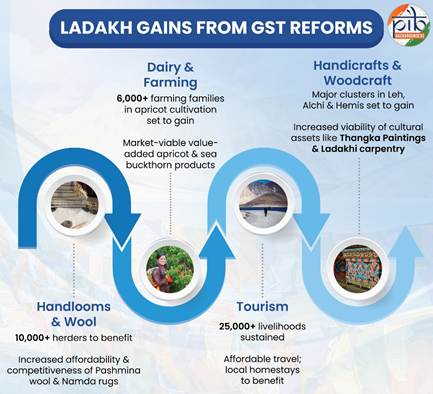
Image Source: Press Information Bureau, Government of India
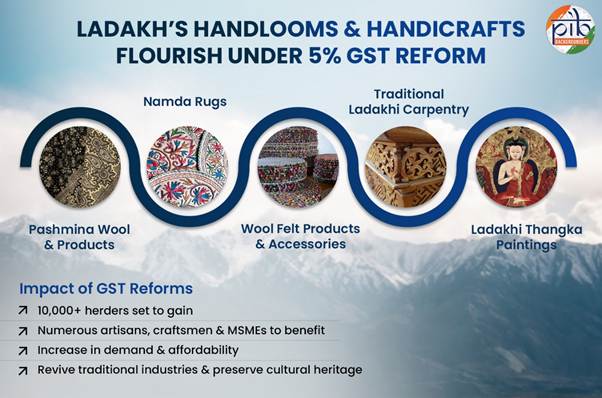
Image Source: Press Information Bureau, Government of India
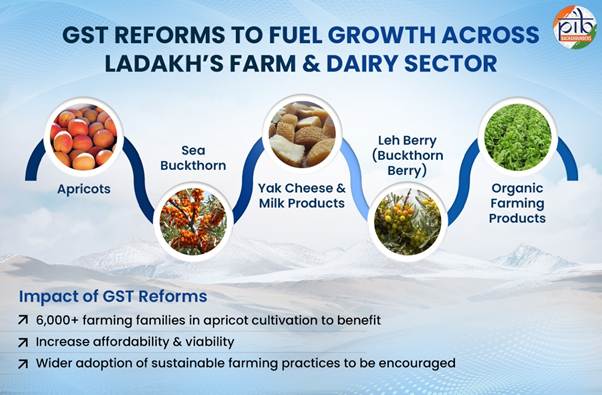
Image Source: Press Information Bureau, Government of India
Tourism and Homestays
Local tourism and homestays in Leh, Nubra, Pangong, and Kargil employ over 25,000 people. The GST reduction from 12% to 5% on hotel tariffs up to ₹7,500 makes travel more affordable, boosting eco-tourism and supporting the homestay economy during peak seasons.
Agriculture and Dairy
Apricots and Derived Products
Ladakh, India’s top apricot producer, supports over 6,000 farming families in Kargil, Leh, and Nubra. The GST cut from 12% to 5% enhances the competitiveness of apricots and products like jams and oils, improving incomes and market viability.
Sea Buckthorn Products
Sea buckthorn, grown in Nubra, Leh, and Changthang, is processed by women-led Self-Help Groups into nutritional products. The GST reduction to 5% makes these products more competitive, supporting local producers.
Yak Cheese and Milk Products
Yak cheese and milk products from Changthang and Nubra sustain nomadic communities. The GST cut to 5% promotes self-sustainability in high-altitude areas, strengthening the local dairy economy.
Leh Berry (Sea Buckthorn)
Leh berry, used in health drinks and supplements, benefits from the GST reduction to 5%, encouraging investment in agro-processing and uplifting small producers.
Organic Farming
Organic farming in Sham Valley and Kargil produces herbal teas and dried vegetables. The GST cut to 5% lowers costs, improves profitability, and promotes sustainable farming practices.
Conclusion
The GST reforms are a game-changer for Ladakh, empowering artisans, farmers, and homestay owners. By reducing costs and enhancing competitiveness, these changes promote sustainable growth, preserve cultural heritage, and make Ladakh’s products and services more accessible.
Post Metadata
Keyword: Ladakh GST reforms
Meta Description: GST reforms in Ladakh reduce rates to 5% on Pashmina, apricots, tourism, and organic products, boosting artisans, farmers, and eco-tourism for sustainable growth.