
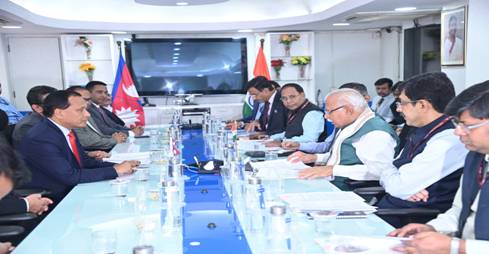
Hey, big news from the energy front today. The top energy officials from India and Nepal just sat down in New Delhi and pushed their partnership to the next level. Nepal’s Energy Minister Kulman Ghising and India’s Power Minister Manohar Lal spent quality time talking about how to make electricity flow smoother between the two countries.
Fresh Deals Seal Stronger Grid Links
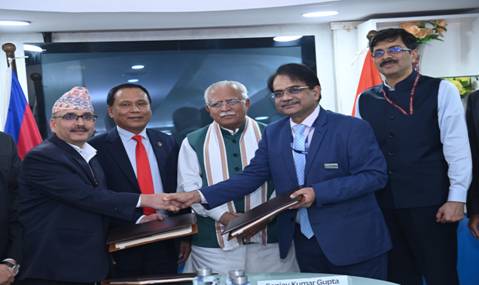
Right there in the meeting room, teams from India’s POWERGRID and Nepal’s Electricity Authority put pen to paper on some important joint venture papers. They are setting up two new companies, one in each country, to handle massive power line projects that will cross the border.
Think of it like building superhighways for electricity. These new lines will run at 400 kilovolts and use double circuits with quad moose conductors. That is heavy-duty stuff meant to carry a lot of power without hiccups.
The Two Big Transmission Projects
First up is the link from Inaruwa in Nepal straight to New Purnea in India. The second one stretches from Lamki in western Nepal all the way to Bareilly in Uttar Pradesh. Once these are up and running, moving power back and forth will become much easier and more reliable.
Why does this matter? Well, Nepal has tons of rivers perfect for hydropower plants. India needs clean energy and has a huge market. Connecting the grids tightly means Nepal can sell surplus power during monsoon months, and India can help out when Nepal faces dry seasons. It is a win-win that keeps lights on and economies growing.
Looking at the Bigger Energy Picture
The ministers did not just sign papers and leave. They dug deep into ongoing hydropower work inside Nepal. Several Indian companies are already helping build dams and turbines there. The talks covered how to speed things up and clear any roadblocks.
Then came the chat about regional power networks. Imagine a South Asia where electricity flows freely across borders like water in connected lakes. India and Nepal are taking solid steps toward that dream. Better grid ties mean less chance of blackouts, lower costs over time, and more room for solar or wind power to join the mix.
Energy security is not just about having enough fuel. It is about smart systems that bounce back from storms or breakdowns. These cross-border lines add extra backup routes. If one area faces trouble, power can reroute from the neighbor. That builds trust and stability for industries, hospitals, schools, everything.
How the Joint Ventures Will Work
Each new company will handle planning, funding, building, and running its section of the line. POWERGRID brings years of experience in giant transmission projects across India. The Nepal Electricity Authority knows the local terrain and rules inside out. Pooling knowledge like this keeps costs down and quality high.
Construction will create jobs on both sides. Engineers, technicians, laborers, even suppliers of steel towers and cables will stay busy. Once live, the lines open doors for more trade. Factories in Bihar or Uttar Pradesh might run cheaper Nepali hydropower. Villages near the border could get stable supply for the first time.
Long History Fuels Fresh Momentum
India and Nepal have shared rivers and power for decades. Old agreements laid the groundwork, but demand has exploded with growing cities and industries. Today’s moves show both governments are serious about keeping pace.
Minister Ghising highlighted how reliable Indian support has helped Nepal rebuild after earthquakes and expand its grid. Minister Lal stressed India’s push for green energy and how Nepal fits perfectly into that vision.
Environmental angles came up too. Hydropower is clean, no smoke or coal dust. Stronger links encourage more such plants instead of diesel generators that pollute. Over time, this cuts carbon footprints for both nations.
Trade numbers tell the story. Nepal already exports surplus power to India through existing lines. New capacity will multiply that volume. Indian investors feel confident pouring money into Nepali projects knowing the power can reach markets.
What Happens Next
Surveys and detailed designs start soon. Land acquisition, environmental nods, and financing will follow. If things stay on track, we could see these lines lit up in a few years. Regular review meetings are planned to keep momentum.
For everyday folks, this means potential relief on electricity bills down the line. Stable supply attracts factories, which means more jobs. Rural areas gain from extended grids. Students study longer under bright lights. It is all connected.
The meeting wrapped up with handshakes and smiles, a clear sign that India and Nepal are committed partners in energy. As climate goals tighten globally, such neighborly teamwork sets an example for others.
Keep an eye on this space. More updates will follow as shovels hit the ground and towers rise along the border.
Focused keyword: india nepal power cooperation
Meta description: India Nepal power cooperation gets a major boost as ministers sign deals for 400 kV cross-border lines and joint ventures. Hydropower and grid ties deepen.