
Nestled in the Himalayas, Uttarakhand thrives on a unique blend of agriculture, tourism, and traditional craftsmanship. From the terraced fields of Purola to the vibrant homestays of Mussoorie, the state’s economy reflects its rich cultural and natural heritage. Recent GST rate cuts are set to invigorate key sectors, including farming, hospitality, handicrafts, and manufacturing, fostering sustainable growth and supporting local livelihoods.
Agricultural Support Through GST Cuts
The GST rate reductions are poised to enhance the competitiveness of Uttarakhand’s organic and traditional produce, benefiting small-scale farmers across the state’s 13 hill districts.
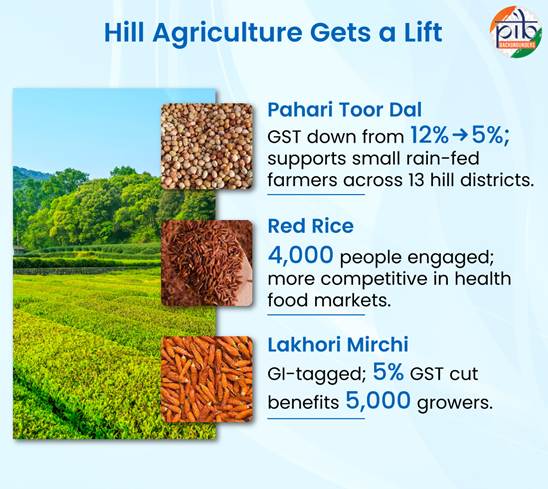
Pahari Toor Dal
Pahari Toor Dal, a staple in Uttarakhand’s cuisine, is grown using the traditional Barahnaja mixed cropping system in districts like Chamoli, Almora, and Nainital. The GST rate on this organic dal has been slashed from 12% to 5%, making it more affordable and competitive in health food markets. This change supports small farmers and promotes sustainable hill agriculture.
Uttarakhand Red Rice
Grown in Purola and Mori, Uttarakhand Red Rice is valued for its nutritional benefits and contribution to agro-biodiversity. The GST reduction from 12% to 5% is expected to lower prices, benefiting approximately 4,000 farmers and boosting the packaged food market.
Almora Lakhori Mirchi
The GI-tagged Lakhori Mirchi, known for its unique flavor, is cultivated in Almora. With the GST rate cut from 12% to 5%, this spice is set to gain a stronger market presence, supporting around 5,000 farmers and promoting local agriculture.
Boosting Tourism and Cottage Industries
Uttarakhand’s tourism and cottage industries, vital to the state’s economy, are set to benefit significantly from the GST reforms, making travel and local crafts more accessible.
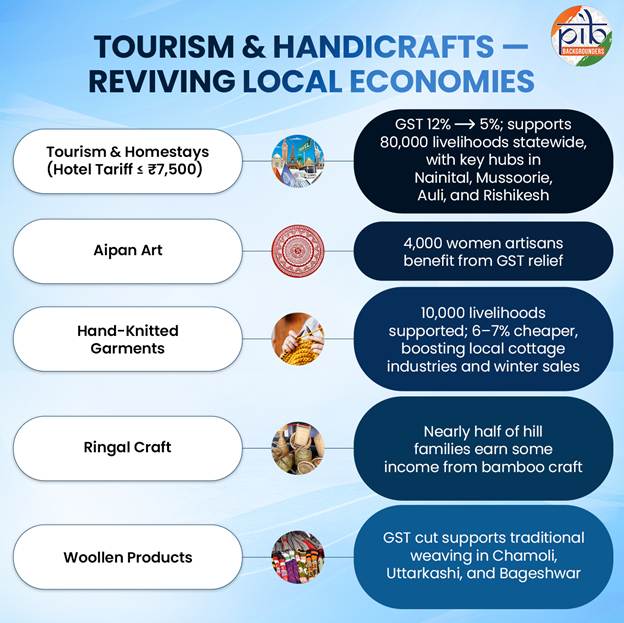
Tourism and Homestays
Contributing 13.57% to Uttarakhand’s GSDP and employing 80,000 people, tourism is a key economic driver. The GST rate on hotel tariffs up to ₹7,500 has been reduced from 12% to 5%, making travel more affordable in destinations like Nainital, Mussoorie, and Rishikesh. This benefits small hotels and homestays, enhancing tourism’s economic impact.
Aipan Art and Handicrafts
Aipan, a traditional Kumaoni art form, is practiced in Almora, Bageshwar, and Nainital. The GST cut from 12% to 5% on Aipan products, such as bags and wall hangings, supports women-led ventures and promotes the GI-tagged craft, benefiting around 4,000 artisans.
Hand-Knitted Woollen Garments
Hand-knitted sweaters, caps, and socks, crafted by hill women, are a seasonal cottage industry. The GST reduction from 12% to 5% is expected to lower prices by 6–7%, supporting 10,000 livelihoods and boosting sales during the tourist season.
Ringal (Hill Bamboo) Craft
Ringal, a dwarf bamboo used for baskets and utility items, is a key livelihood source for SC/ST communities in Pithoragarh and Champawat. The GST cut from 12% to 5% supports nearly half of hill families engaged in this craft, strengthening rural economies.
Traditional Woollen Products
Handmade woollen items like Pankhi, shawls, and stoles from Chamoli and Uttarkashi are integral to Uttarakhand’s craft heritage. The GST reduction to 5% is expected to enhance sales through local fairs and online platforms, supporting women artisans.
Images
The following images showcase Uttarakhand’s vibrant agriculture and crafts:
- Pahari Toor Dal and Red Rice fields
- Aipan art and Ringal crafts
- Traditional woollen products
Source: Press Information Bureau (PIB), Government of India
Strengthening Industry and Manufacturing
The GST reforms also bolster Uttarakhand’s industrial sectors, enhancing competitiveness and job creation.
Food Processing
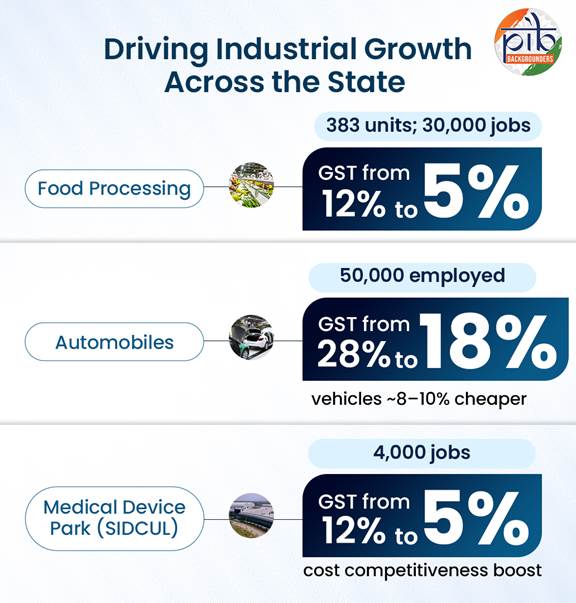
With 383 food processing units in Rudrapur employing 30,000 people, the GST cut from 12% to 5% on food processing is expected to improve margins and encourage investment in fruit processing, herbal products, and organic foods.
Automobile Sector
The automobile industry in Pantnagar, Rudrapur, and Haridwar employs 50,000 people. The GST rate on vehicles up to 1200cc (petrol) and 1500cc (diesel) has been reduced from 28% to 18%, lowering prices by 8–10% and boosting demand.
Medical Device Park
Located in SIDCUL, the Medical Device Park employs 4,000 people. The GST reduction from 12% to 5% on medical devices lowers production costs, enhancing competitiveness in the MedTech sector.
Conclusion
The GST rate cuts provide a significant boost to Uttarakhand’s economy, supporting farmers, artisans, tourism operators, and industrial workers. By reducing tax burdens, these reforms enhance affordability, promote sustainable practices, and drive inclusive growth, aligning with Uttarakhand’s vision of self-reliant development.
Keyword: GST rate cuts
Meta Description: Discover how GST rate reductions on agriculture, tourism, handicrafts, and industry in Uttarakhand boost local economies, support sustainable practices, and promote inclusive growth.