
Rajnath Singh and Yogi Adityanath Flag Off First Batch of BrahMos Missiles in Lucknow
Introduction
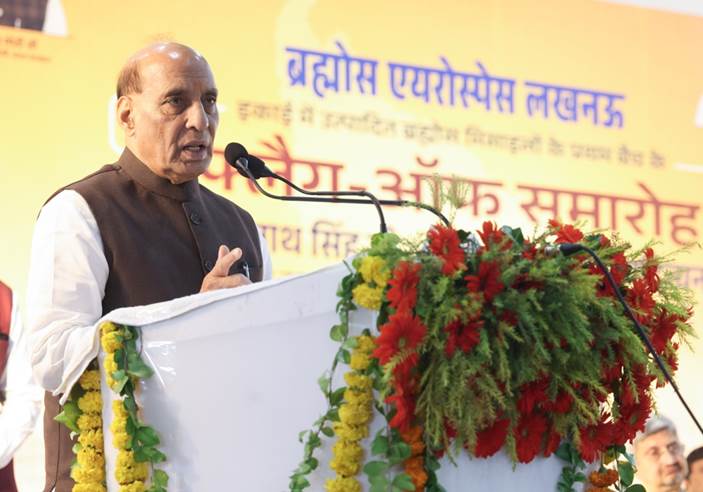
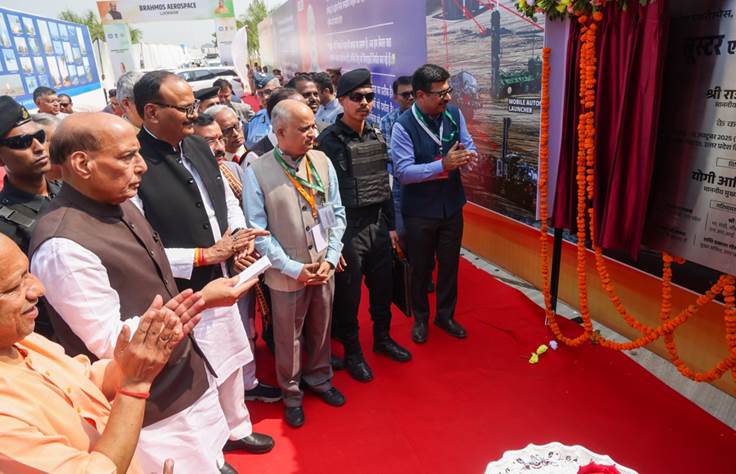
In a significant boost to India’s self-reliance in defence manufacturing under the Aatmanirbhar Bharat initiative, Defence Minister Shri Rajnath Singh and Uttar Pradesh Chief Minister Shri Yogi Adityanath jointly flagged off the first batch of BrahMos missiles on October 18, 2025. Manufactured at the cutting-edge BrahMos Integration and Testing Facility in Lucknow—part of the Uttar Pradesh Defence Industrial Corridor—this achievement was realized just five months after the facility’s virtual inauguration by the Defence Minister on May 11, 2025, underscoring India’s rapid progress in indigenous defence production.
BrahMos: Emblem of India’s Defence Prowess
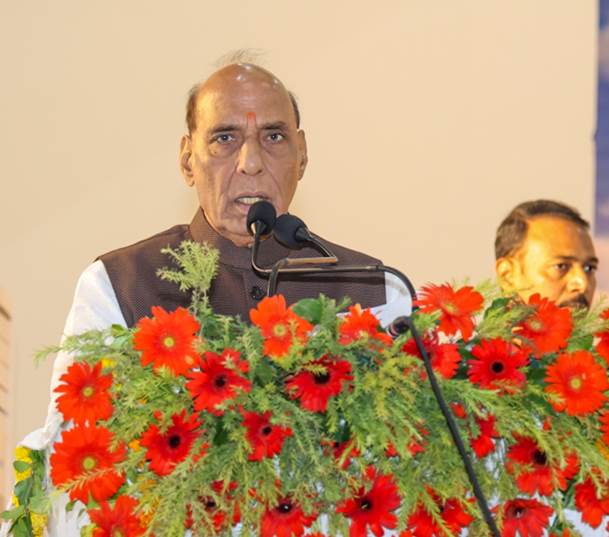
During the event, Shri Rajnath Singh portrayed the BrahMos not just as a missile, but as a symbol of India’s advancing self-sufficiency in defence technology. “Equipped with a conventional warhead, sophisticated guidance systems, and the capability to engage targets at extended ranges with supersonic velocity,” he remarked. “This combination of speed, accuracy, and lethality establishes BrahMos as one of the globe’s leading missile systems, forming the cornerstone of our Armed Forces.”
Operation Sindoor and Its Strategic Significance
Emphasizing the BrahMos’ pivotal role in Operation Sindoor, the Defence Minister highlighted its demonstrated efficacy in real-world scenarios. “Operation Sindoor illustrates that triumph is now ingrained in our operations, and we must persistently augment our capabilities,” he asserted. He further noted that the entire expanse of Pakistan’s territory falls within the BrahMos’ operational range, reinforcing its deterrent value. “The operation served merely as a preview, conveying a clear message to Pakistan regarding potential escalations.”
India’s Emergence as a Global Defence Exporter
Shri Rajnath Singh outlined India’s transformation from a defence importer to an exporter, with BrahMos epitomizing the ‘Made in India’ ethos. “From deliveries to the Philippines to prospective partnerships with other countries, India has evolved into a benefactor in international defence collaborations,” he stated. In line with Prime Minister Shri Narendra Modi’s vision since 2014, he underscored the defence sector’s vital contribution to realizing a fully developed, self-reliant India by 2047.
He disclosed that the BrahMos team has clinched contracts valued at about Rs 4,000 crore with two nations in the last month alone. “Lucknow is poised to draw global experts in the forthcoming years, evolving into a nucleus for defence innovation and expertise,” he forecasted. The facility anticipates a turnover of Rs 3,000 crore starting next financial year, accompanied by GST revenues of approximately Rs 500 crore.
Facility Details and Economic Contributions
The 200-acre BrahMos Integration and Testing Facility, constructed at a cost of Rs 380 crore, transcends its role as a defence infrastructure—serving as a driver for job creation and regional advancement. “The centre will manufacture around 100 missile systems each year,” stated Shri Rajnath Singh. “With burgeoning investments in Uttar Pradesh, this corridor heralds a new epoch of advancement in defence and economic spheres.”
Addressing vulnerabilities in global supply chains, he advocated for bolstering domestic small-scale industries. “We need to indigenously engineer all technologies—from cutting-edge seekers to ramjet engines—to maintain supply chains within India and diminish foreign dependencies,” he stressed. He proposed a strategic plan to incorporate small entrepreneurs into the defence framework, ensuring the Uttar Pradesh Defence Industrial Corridor nurtures enterprises of all sizes.
Enhancing Security and Economic Growth
The Defence Minister illustrated how these facilities fortify both national security and the economy. “GST proceeds from these missiles empower the government to finance educational institutions, healthcare facilities, and welfare programs,” he explained. Thus, each missile not only protects the nation but also fosters its prosperity.
Remarks by Uttar Pradesh Chief Minister
In his speech, Shri Yogi Adityanath lauded the BrahMos as an embodiment of Aatmanirbharta, fulfilling India’s defence requirements while propelling self-reliance. He expressed gratitude to Prime Minister Modi and the Defence Minister for elevating Lucknow’s status in this endeavour. “The missiles produced here guarantee the nation’s security and affluence,” he affirmed, highlighting that over 15,000 young individuals have secured employment across the corridor’s six nodes.
Key Milestones and Event Highlights
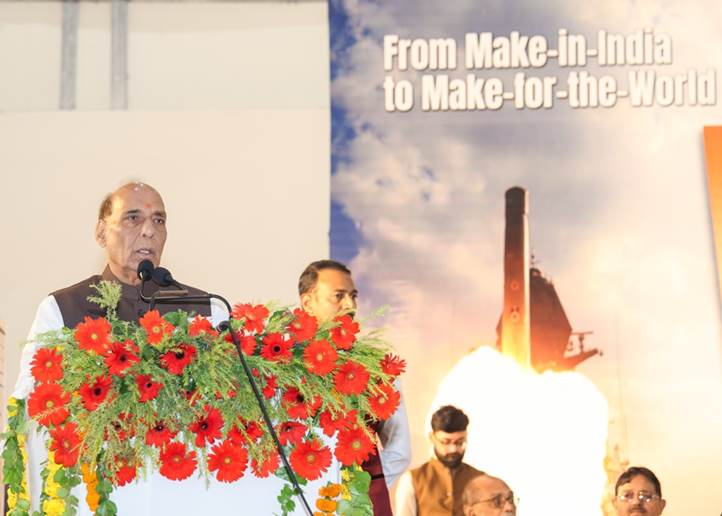
The BrahMos facility stands as a cornerstone project in the Uttar Pradesh Defence Industrial Corridor, managing comprehensive assembly, integration, and testing to international benchmarks. With the inaugural consignment dispatched, Uttar Pradesh cements its position in the ‘Make in India, Make for the World’ campaign, advancing strategic independence and industrial growth.
At the ceremony, Shri Rajnath Singh and Shri Yogi Adityanath inaugurated the Booster Building, witnessed a live booster docking demonstration, and examined presentations on airframe, avionics, pre-dispatch inspection, and warhead procedures. They also inspected BrahMos simulator equipment and a mobile autonomous launcher exhibit.
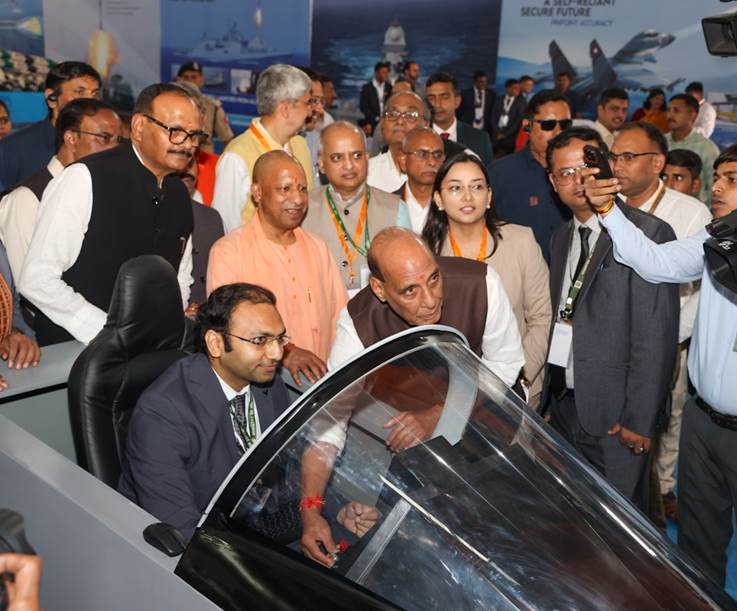
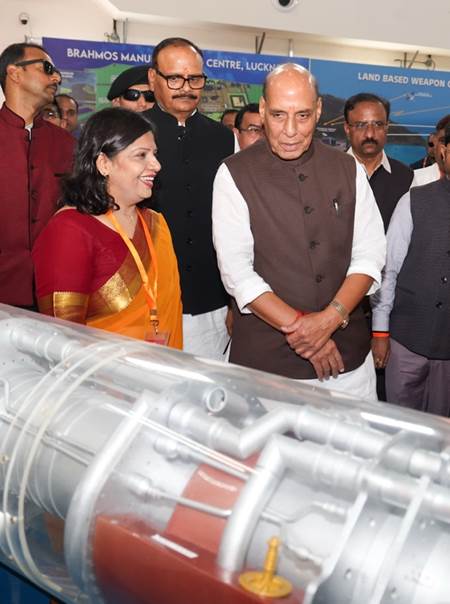
Dr Jaytirth R. Joshi, DG (BrahMos), presented a GST bill and cheque amounting to roughly Rs 40 crore to the UP Chief Minister, underscoring the state’s fiscal benefits. Notable attendees included UP Deputy Chief Minister Shri Brajesh Pathak and DRDO Chairman Dr Samir V Kamat.
BrahMos Missiles, Aatmanirbhar Bharat, Defence Manufacturing, Rajnath Singh, Yogi Adityanath, Uttar Pradesh Defence Corridor, Make in India, Indigenous Defence, Operation Sindoor, Self-Reliance Meta Description: Defence Minister Rajnath Singh and UP CM Yogi Adityanath flag off the first batch of BrahMos missiles from Lucknow, boosting India’s self-reliance in defence under Aatmanirbhar Bharat.