
Overview of the Event
The CSIR-National Institute of Science Communication and Policy Research (NIScPR) hosted a national capacity-building workshop for teachers focused on “Communication and Dissemination of Indian Knowledge Systems.” This event was part of the SVASTIK initiative, which aims to share scientifically validated traditional knowledge with society. It was organized in collaboration with the Indian National Young Academy of Science (INYAS) through its RuSETUp program and Maharshi Dayanand University (MDU) in Rohtak. Held on October 16, 2025, at MDU, the workshop attracted over 100 participants from 75 institutions.
Inaugural Session
The workshop began with a welcome address from Dr. Surender Yadav of MDU, followed by introductory remarks from Dr. Geetha Vani Rayasam, Director of CSIR-NIScPR, who participated virtually. She highlighted the SVASTIK initiative and praised the partnership between CSIR-NIScPR, INYAS, and MDU in promoting Indian Knowledge Systems (IKS) to regional educators.
Keynote Speech by Chief Guest
Padma Bhushan Dr. Anil P. Joshi, founder of the Himalayan Environmental Studies and Conservation Organization (HESCO) in Dehradun and known as the “Mountain Man of India,” delivered an inspiring keynote. He explored the interplay between economy, ecology, and environment, stressing that India’s traditional knowledge emphasizes sustainability and self-reliance. Dr. Joshi urged teachers to integrate scientific education with indigenous practices.
Remarks from Vice Chancellor
Prof. Rajbir Singh, Vice Chancellor of MDU, lauded the collaborative efforts of CSIR-NIScPR, INYAS, and MDU in advancing interdisciplinary IKS programs. He noted that teachers are pivotal in spreading knowledge and driving societal change.
The inaugural session concluded with a vote of thanks from Dr. Charu Lata, SVASTIK Coordinator, who thanked all involved for their contributions to the successful event.
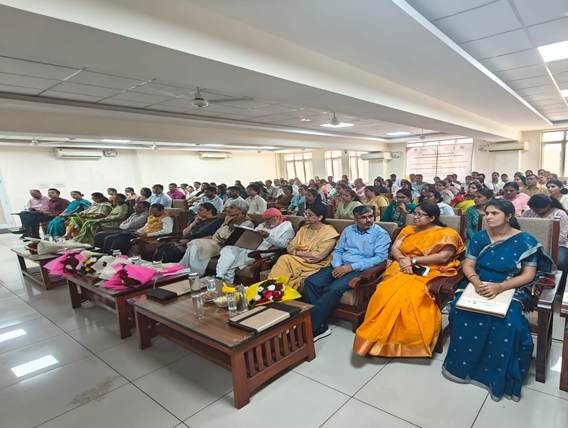
Image source: PIB Delhi
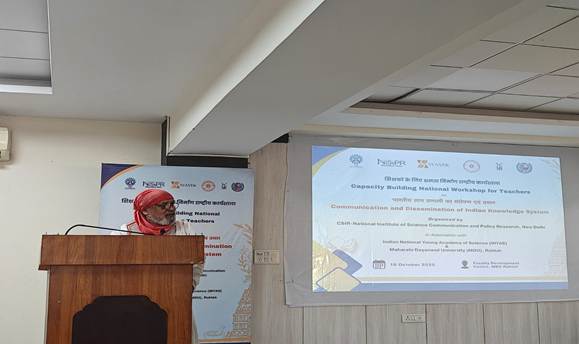
Image source: PIB Delhi
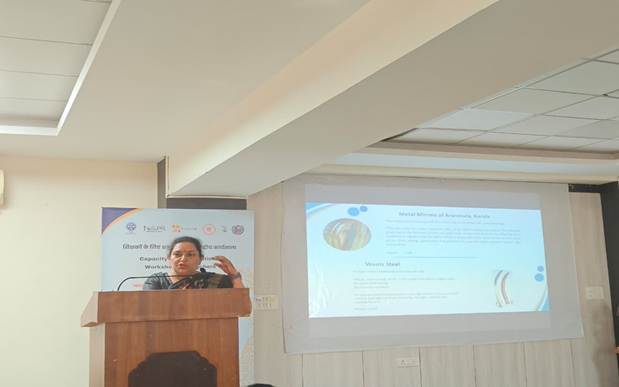
Image source: PIB Delhi
First Technical Session: India’s Science and Technology Heritage
This session delved into India’s extensive scientific legacy and its relevance today, emphasizing preservation and continuation.
Insights from Prof. Ranjana Aggarwal
Prof. Ranjana Aggarwal, an acclaimed organic chemist and former Director of CSIR-NIScPR, discussed how India’s scientific heritage combines natural, social, and spiritual elements. She warned against misinformation in the digital era and advocated for accurate communication, validation, and inclusion in education. She cited initiatives like SVASTIK, the Ministry of AYUSH, AICTE’s IKS divisions, and the National Education Policy (NEP) 2020.
Lecture on Traditional Water Management
Dr. Ashwani Tiwari, Associate Professor at Jawaharlal Nehru University’s School of Environmental Sciences, spoke on traditional rainwater harvesting techniques to combat water shortages in India. He encouraged teachers to embed this knowledge in environmental curricula to foster local conservation.
Talk on Traditional Food Wisdom
Dr. Charu Lata, Principal Scientist at CSIR-NIScPR, shared perspectives on India’s ancient food practices. She explained SVASTIK’s methodology for identifying, validating, and disseminating traditional knowledge via digital platforms. She invited attendees to become “Brand Ambassadors of SVASTIK” by sharing regional examples and emphasized the role of educators in bridging traditional wisdom with scientific evidence.
Second Technical Session: Hands-on Training and Soil Management
The session featured practical training led by Dr. Paramananda Barman, Senior Scientist at CSIR-NIScPR, and the SVASTIK team. They covered basics of science communication, including writing popular articles, creating infographics, podcasts, and social media content to make scientific ideas accessible.
Participants engaged in hands-on activities to design materials like posters, infographics, and videos on traditional practices.
Informative Session on Soil Practices
Dr. Raj Mukhopadhyay, Scientist at ICAR-Central Soil Salinity Research Institute in Karnal, discussed indigenous soil management methods that improve fertility, microbial health, and nutrient cycles.
Workshop Conclusion
The event wrapped up with a feedback session where participants from various schools and colleges shared their positive experiences. Dr. Sandhiya Lakshmanan, Senior Scientist at CSIR-NIScPR, delivered closing remarks, expressing thanks to all for their participation.
Keyword: Indian Knowledge Systems
Meta Description: Explore the highlights of the national workshop on communicating Indian Knowledge Systems, organized by CSIR-NIScPR, INYAS, and MDU, focusing on traditional wisdom, sustainability, and education.