
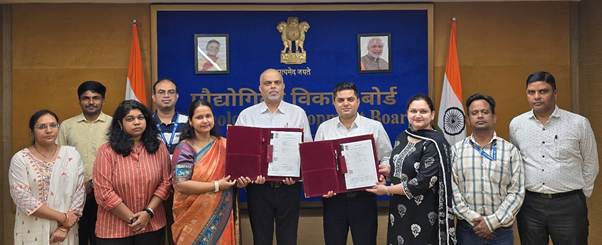
A Pune-based technology company has secured vital government backing to develop an advanced homegrown energy solution that could transform power delivery in defence and heavy industry. The Technology Development Board under the Department of Science and Technology has extended financial support to Westech Power Management Private Limited for creating a mobile, high-power supercapacitor unit housed in a container.
Why Supercapacitors Matter for India’s Future
Traditional batteries struggle when sudden bursts of energy are required. Supercapacitors fill this gap by charging and releasing power in seconds. This makes them ideal for stabilizing electricity grids, running automated factory lines, and supporting field operations in defence. The new system from Westech will work as a plug-and-play container that can be moved to any site needing instant, reliable power.
India currently imports most high-performance energy storage devices. By building this technology locally, the project aims to cut foreign dependence while creating jobs in advanced manufacturing. Every unit produced in Pune will carry Indian design and engineering from start to finish.
How the System Works in Real Life
Imagine a remote military post that needs to fire a radar or launch a missile. A supercapacitor bank delivers the massive pulse in a fraction of a second, then recharges quickly from solar panels or a small generator. In factories, the same container can smooth out voltage spikes when heavy machines switch on, preventing blackouts and protecting equipment.
The modular design allows users to stack multiple containers for larger needs. Each module handles medium to high voltage and withstands tough conditions such as heat, dust, and vibration. This flexibility suits both permanent industrial plants and temporary defence deployments.
From Lab Bench to Factory Floor
Westech Power began as a research-driven startup led by Amit Kaul Bamzai and Dr. Rohini Bhat. Early experiments received guidance from the Naval Materials Research Laboratory, part of the Defence Research and Development Organisation. That collaboration helped refine materials and prove the concept under strict military standards.
Years of in-house work have already delivered two granted patents. One covers a high-capacity cell design; the other details a 108-volt module. Five more patent applications are in process, protecting new electrode recipes, pulse power circuits, and scalable assembly methods. These intellectual property assets give the company a strong edge in the global market.
Official Support Signals Confidence
Rajesh Kumar Pathak, Secretary of the Technology Development Board, welcomed the partnership. He explained that funding homegrown deep-tech aligns with national goals of energy security and industrial strength. Such projects turn India from a buyer of foreign gear into a supplier of cutting-edge solutions.
The Westech founders thanked the board for the trust. They said the grant will speed up scaling from prototype to full production. Within months, the first commercial units should roll out of the Pune facility, ready for customers across sectors.
Building a Self-Reliant Energy Ecosystem
Every rupee invested in this supercapacitor project stays within India. Local engineers design the circuits, chemists develop the electrodes, and technicians assemble the containers. Supply chains for carbon materials, electrolytes, and housings will grow around Maharashtra, creating a cluster of specialized vendors.
Success here opens doors to export markets. Neighbouring countries and developing economies need robust energy storage but lack domestic options. Indian-made supercapacitors can compete on quality and price, earning foreign exchange while raising the country’s technological reputation.
Beyond immediate sales, the technology feeds into larger goals. Electric vehicle makers want fast-charging stations. Renewable energy plants require buffers for cloudy or calm periods. Smart cities need backup for critical infrastructure. A single versatile platform from Westech can serve all these areas.
Next Steps for Westech Power
With funding secured, the company plans to complete system integration tests by early next year. Field trials with defence units and industrial partners will follow. Customer feedback will refine the final product before mass production begins in the second half of 2026.
Young engineers joining the team will gain hands-on experience in a sunrise industry. Training programs tied to the project will spread skills to polytechnics and engineering colleges in the region. Over time, Pune could become a recognized hub for supercapacitor innovation, much like Bengaluru is for software.
The Technology Development Board continues to scout similar high-impact ideas. Entrepreneurs with proven lab results and clear market paths can approach the board for grants, loans, or equity support. Each approved project adds one more brick to a self-reliant India.
This supercapacitor initiative shows how focused public funding can ignite private ingenuity. From a small lab in Pune, a containerised power solution is set to strengthen factories, safeguard borders, and light up the path to energy independence.