
Basti in eastern Uttar Pradesh is quietly becoming the go-to place for anyone who wants to learn a trade, start a business or simply earn a steady income. The district of 2.46 million people now trains over ten thousand youngsters every year through a network of government and private centres. From wooden toys to vinegar units, from beauty parlours to mushroom farms, local skills are creating real jobs on the ground.
How the Training Network Works
Four government Industrial Training Institutes (ITIs), twenty-six private ones, two polytechnics, one Jan Shikshan Sansthan and a Rural Self Employment Training Institute together form the backbone. Each year they enrol fresh batches in trades that match what employers need right now.
The flagship Pradhan Mantri Kaushal Vikas Yojana has already put fifteen thousand local youth through short, job-ready courses. Healthcare assistants, electronics repair technicians, beauticians, handicraft artisans and food processing workers top the list. Most trainees either join a company or open their own small unit within months.
Coordination Between Departments
A single District Skill Development Plan ties together every player. The ITI principal sits with the polytechnic head, the NRLM block coordinator and private partners to map vacancies, design modules and place graduates. This removes duplication and fills real gaps.
The Rural Self Employment Training Institute has reached out to more than three hundred women self-help groups. Tailoring, beauty services, computer data entry and handicraft making are the popular choices. Over eighteen hundred rural learners, many of them first-time literates, have completed the Jan Shikshan Sansthan courses and started earning.
Wooden Toys and Vinegar Lead the ODOP Charge
Under the One District One Product scheme, Basti bets on wooden craft and vinegar. More than seven thousand seven hundred registered factories, including fourteen medium-scale plants, keep thirty thousand people busy. A walk through the industrial estate reveals rows of lathes shaping toy cars, dolls and decorative boxes that travel to markets across India.
Agriculture covers 2.7 lakh hectares of paddy, wheat, sugarcane and vegetables. Forty-three thousand livestock farmers supply milk and eggs to nearby towns. The Krishi Vigyan Kendra at Gotwa runs weekend workshops on mushroom beds, beehives, low-cost pickle units and organic compost. Farmers who attend often add a second income stream within the same season.
Women Take the Lead in Startups
The Swavalambini programme, run jointly with the Women Entrepreneurship Platform, picks college girls and housewives for a crash course in business planning. Many from Basti have already registered their ventures. Separately, two hundred forty-seven street vendors received training under the PM-SVANidhi pilot to upgrade carts, manage accounts and apply for bank loans.
Minister’s Visit and Future Roadmap
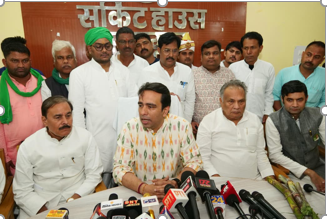
Union Minister of State Jayant Chaudhary spent a full day in the district recently. He interacted with trainees, inspected workshops and reviewed placement records. Speaking to a gathering of students and entrepreneurs, he stressed that the real power of Skill India lies in places like Basti where classroom learning meets factory floors and farm gates.
Uttar Pradesh has jumped ahead in the new ₹60,000-crore PM-SETU scheme. Three clusters in the state will get upgraded ITIs with digital labs, industry tie-ups and modern machinery. Basti is likely to be part of the next phase because its ecosystem is already in place.
Chief Minister’s Vision in Action
Chief Minister Yogi Adityanath’s slogan “work for every hand, flight for every dream” is visible on signboards outside every skill centre. Model ITIs, skill hubs and district-level kaushal kendras are expanding fast. The target is clear: turn Uttar Pradesh into India’s skill capital and help the country become the world’s training hub by 2047.
Basti shows how it can be done. A young man who once migrated to Surat for factory work now runs a toy unit employing ten neighbours. A woman who sold vegetables door-to-door has scaled up to a branded pickle label sold in local marts. These are not isolated stories; they are the new normal in a district that decided to bet on its own people.
The numbers tell the same tale. Enrollment in short-term courses is up thirty percent year-on-year. Bank linkages for micro enterprises have crossed two thousand in the last eighteen months. Placement cells report eighty-five percent job uptake within three months of certification.
Visitors to Basti these days leave with wooden souvenirs and a bottle of homemade vinegar, but more importantly with the sense that India’s growth engine is humming in its small towns and villages. Skill development here is not a government scheme on paper; it is a living, breathing economy that adds value every single day.